In 2011, MARADMIN 621/11 came down from headquarters Marine Corps.
In a nutshell — it was determined that the Marines would no longer roll up their shirt sleeves of their combat utility uniform while in garrison.
A small detail really.
Yet that small detail led to many heated debates, including this interesting one over at the Marine Corps Times.
My point?
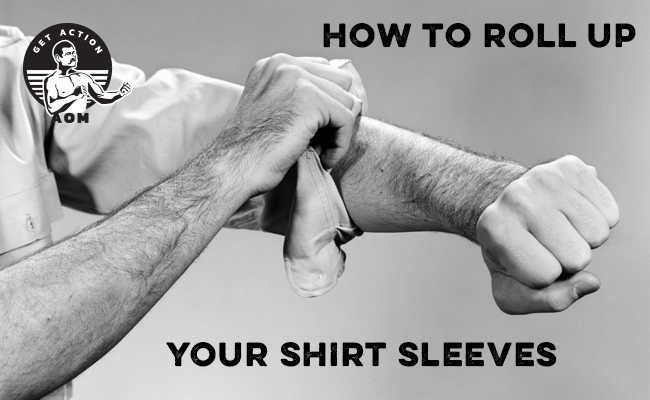
Men — and this goes for Marines and civilians alike – often care about the rolling of their sleeves, and if you’re going to do it, you might as well learn how to do it properly.

Now let me be clear — I don’t believe there is only one “right way” to roll your sleeves.
But I do think that some ways look better than others.
The goal of this article is to help you understand when sleeve rolling is appropriate and to give you three how-to options when doing so.
Rolled Sleeves: When and Why to Wear Them

Why roll your shirt sleeves? Let me give you a few reasons.
1. Practical Necessity — washing the hands, doing heavy lifting where the wrists and forearms are strained, working on something dusty, and so on are all perfectly normal reasons to pull back the shirt sleeves. Anytime your sleeves might get in the way or dirty or caught in a moving part — roll ‘em up. Thus it is the universal “men at work” style. Examples of this include unclogging a toilet, or perhaps rescuing a cat from a tree (though in the latter case you might actually leave the sleeves up to avoid scratches on your skin). On a side note — did you know that men used to roll up their jacket sleeves as well? To accommodate this, jackets had working buttons along the end of the sleeve that made the practice simple. Over the last 100 years, as mass manufacturing took over, the buttons became non-functional, but for decorative reasons clothing designers kept them in place.
You might also roll up the sleeves of a shirt that fits well, except for sleeves that are too long. But this is only a temporary solution! Be sure to get your shirt tailored for the best fit (and the ability to roll down your sleeves with confidence when the situation calls for it!).
2. Heat — When it’s very hot and stagnant, rolling up the sleeves lets air flow directly over more of your skin. Every little bit helps. While the appropriateness of rolled sleeves varies by workplace (see below), anytime you’ve got direct sunlight on your skin, rolled sleeves are acceptable. They’re also nice when you work or live inside a place where the temperature fluctuates a great deal, as it’s nice to be able to roll them down when the A/C’s blowing on you, and roll them up when the room gets stuffy.

On the campaign trail, both Obama and Romney roll up their sleeves to evince a common man, “let’s get to work!” kind of impression.
3. Casual Attitude — As a purely stylistic expression, rolled sleeves mostly serve to “dress down” something that would otherwise be too formal/dressy for the occasion; rolling back the shirt sleeves sends a visual signal that says “relaxed.” For example, upon leaving the office for a less-formal work function or social gathering, men with their jackets off and their sleeves rolled up is classic “Happy Hour” style. A collared shirt with rolled up sleeves is also a popular look for men out at clubs and bars over the weekend. And when in charge of a meeting or hosting a party, it’s a great way to signal to others that it’s okay to not worry about formalities.
This is why the question of whether rolled up sleeves at the office is appropriate comes down to the culture of a particular workplace: in a casual, informal office, rolled sleeves are often the norm, while in a very conservative corporate environment, sleeves may never leave a man’s wrists. Check out your fellow employees to see what the prevailing norm is, and even if you do work in an office where rolled sleeves prevail, I’d recommend rolling them down when meeting with an important client, or when a head honcho is visiting the office, to give yourself a more professional appearance.
To sum up: When you’re wearing a long-sleeved dress or work shirt, it’s best to wait for one of the three circumstances listed above before rolling the sleeves up. If it’s not achieving one of those practical effects, you risk looking sloppy or thoughtless.
How to Roll Your Sleeves: Basic Guidelines
There are a number of different styles for rolled sleeves; we’ll talk about three of the specific folds in a minute.
First, here are some important guidelines for any style of rolled sleeve:
- Several inches of wrist visible, at minimum. You don’t want it to look like the shirt is too big for you and you had to roll the sleeves just to keep your hands from being swallowed.
- Forearms yes, elbows only if you’re going to be working. For casual situations, keep the big, pointy, outer bone of your elbow inside the shirt.
- Suit or sport jackets usually aren’t rolled (and when they are, they are more pushed up than rolled) unless there’s an immediate and practical need. You can do it (if your jacket has working sleeve buttons), but be aware that it’s a fashion-forward look.
Regardless of the shirt or the style these are always good guidelines. If you’re going to break one, have a very clear stylistic goal in mind, and double-check the look in the mirror.
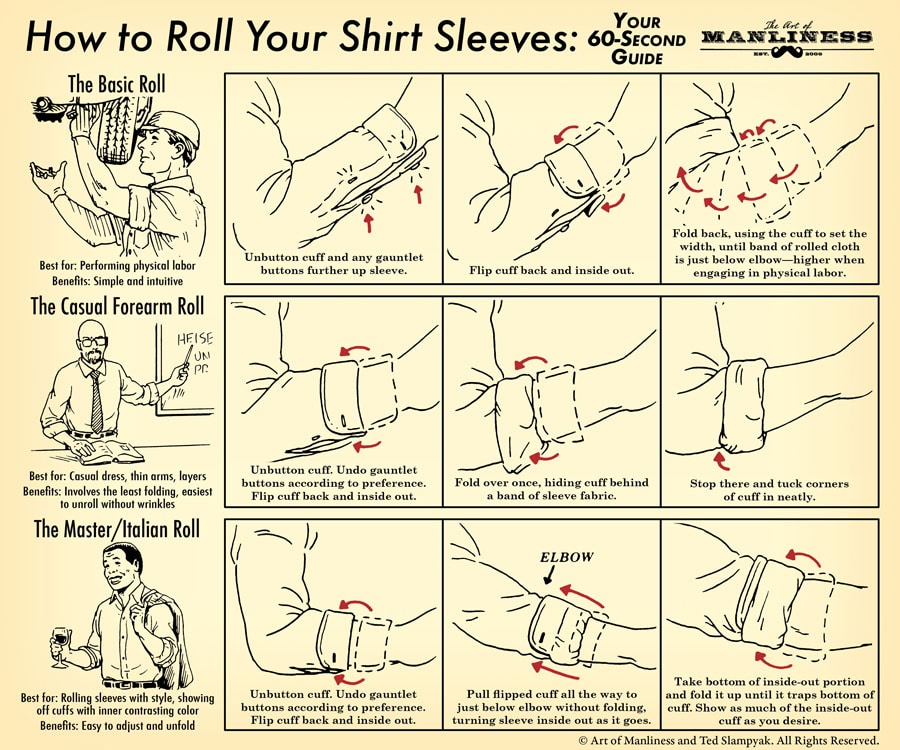
Rolling Method #1: The Casual Forearm Roll
A casual shirt roll that is also — conveniently — the easiest to roll back down without wrinkles, as it involves the least folding:
1. Unbutton the cuff and any “gauntlet” buttons further up the sleeve.
2. Flip the cuff back and inside out.
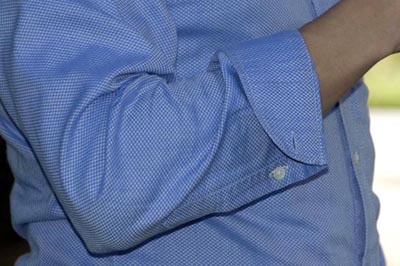
3. Fold over once, hiding the cuff behind a band of sleeve fabric.
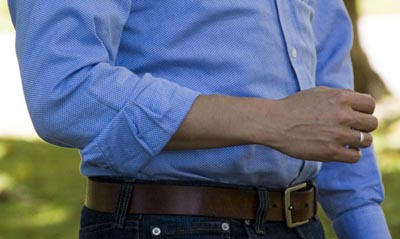
4. Stop there, tucking the corners of the cuff in neatly.
The result should be a single small roll around the middle of your forearm. It doesn’t need to be tight because it’s already as far down the arm as it’s going to slide. This is a particularly good style to use when you have multiple layers involved, such as a dress shirt under a light sweater. It also looks good on men with thin arms.
Rolling Method #2: The Master Sleeve Roll
For the most stylish look, this roll gives you a deliberately casual fold that’s not quite symmetrical and can be adjusted at will:
1. Unbutton the cuff and gauntlet buttons.
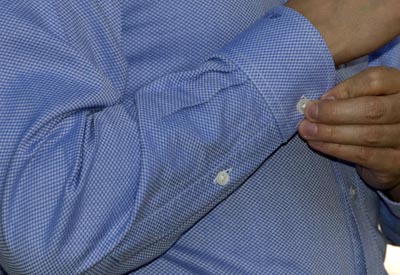
2. Flip the cuff back and inside out.
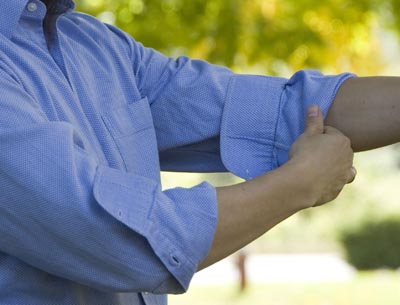
3. Pull the flipped cuff all the way to just below your elbow without folding, turning the sleeve inside out as it goes.
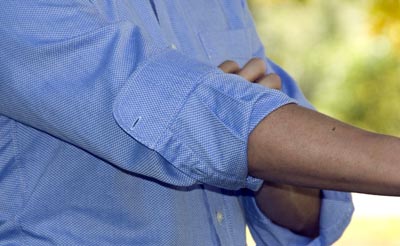
4. Take the bottom of the inside-out portion and fold it up until it traps the bottom of the cuff.
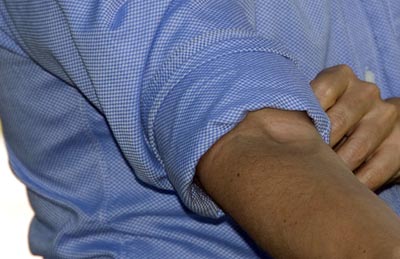
5. Leave as much or as little of the inside-out cuff showing above the fold as you desire.
This looks particularly striking when the inside of the cuff has a contrasting lining. Let enough of the inner cuff show to clearly display the lining, making it clear that you’re deliberately showing off the shirt’s accent as well as rolling your sleeves for comfort. It is also very simple to unfold — pull and you’re done.
Rolling Method #3: The Basic Roll
This style is the most intuitive way to roll your sleeves. I only recommend this roll if you’re going to be working and need your sleeves rolled past your elbow.
- Unbutton the shirt cuff and any gauntlet buttons.
- Flip the cuff back inside out.
- Fold back, using the cuff to set the width.
- Continue folding until the band of rolled cloth is just below your elbow.
- Continue past your elbow if you’ll be engaged in physical labor.
To see how each of these three folds are done, watch the video below:
Want more?
Check out these other sleeve folding guides:
- Valet’s thoughts on the best way to roll your sleeves
- The Effortless Gent weighs in on sleeve rolling
- Joe over at Dappered teaches the Italian Way
- Style Girlfriend gives her opinion on sleeve rolling
___________________________________
Written by: Antonio Centeno
Grab my FREE 47-Page eBook on Style


{ 49 comments… read them below or add one }
Living in Florida, whenever I have a long sleeved shirt, I use the Master roll. Just a tip for everyone; if you expect you’ll have reason to keep it rolled all day, or at least right once you put the shirt on, it’s easier to roll before you put the shirt on, and it typically looks neater that way too!
This article was really helpful. I normally stretch out the cuffs on my shirts, hopefully I can find a good roll, so I no longer have to yank up my sleeves.
Over this summer, I worked at Jos. A Bank. On our higher end suits (Signature and above), we can have functioning button holes put in the cuffs, as an alteration. It’s a very nice look, and definitely opens up your options will styles.
Been a “master” sleeve roller for years. Classiest way to do it.
Thank you Antonio. Forty-five years on the planet and never knew why my shirts had contrasting colours on the inside. The femmes is bout to get hit with a new style!
The McKays have put up another useful post.
There’s also the air force method, where you fold the sleeve back, roll up to the bottom of the cuff, and then fold the cuff back down over the fold. Very similar to the technique used for the “master fold”, but this one maintains the pattern on the outside of the garment. The cuff should come within an inch of, or just barely touch, the forearm when you hold your arm at a 90 degree angle. It looks kind of silly on anything except an ABU or (formerly) a BDU shirt.
They forgot one – Roll the cuff once to the inside of the sleeve. Easy, quick, clean look.
How about teaching young guys to pull their pants up?
I tend to wear plaid shirts most days (pretty much all the time when dressed casual and sometimes for work) and I’m a big fan of the basic roll just above the elbow for casual, and below the elbow for work.
A few of my suit jackets have fully functional buttons on the cuffs (not that I would ever use them of course, but they are a nice touch/detail)
As for contrasting inner cuffs on shirts, quite a few of my casual shirts have these, but I was unaware of the “master roll” until now, I will be rocking this look from now on!
I used to just jam my sleeves up. When I was domesticated many years ago my wife taught me the Casual Forearm Roll. Recently I was overdressed for a business function where I was a presenter. I removed my jacket but kept my tie and rolled up my sleeves. It was a look reminiscent of the old engineers (who were WWII vets) that I used to work for.
AoM: Can you cover the Air Force Fold?
When we are in the field, we will still get bitched out if our sleeves are rolled. So most of us have started doing what we call the engineer roll*. All that is involved is rolling the cuff once, but instead of going over the fabric you are going under it, so you don’t see the roll.
*We call it the Engineer role since we are all 1371 Combat Engineers.
Love this one. I roll my sleeves everyday at work. It’s business casual so it is fine, but have been doing it since I was a kid on my dads farm. When it’s time to work, the sleeves get rolled up.
I have never seen the Master Roll before. I tried it today and love it. Works far better for me as I am a bit short and most shirts are too long in the sleeves.
I live in Florida for an organization that has recently gone through a bit of a revolution in dress code. Two years ago I wore a tie every day; now, many employees are wearing jeans every day (I don’t most days because my boss doesn’t). Because I personally don’t like ties with short sleeved shirts (makes me feel like a video rental store manager for some reason) most of my dress shirts are long sleeved. So, I’ve been rolling up the sleeves to achieve a more casual look (and because I’m in Florida). I’m glad to learn about a different, more stylish way to do it (the Master Sleeve Roll), and I’ll be sure to try it!
There are only two ways of rolling your sleeves- either roll them at elbow height (“master style”), or don’t roll them at all.
Rolling them “casual style” makes you look like a half-assed, sloppy man and rolling them above the elbow makes you look like a douchebag.
Thanks for the mention Antonio! Lots of great tutorials here
I find that rolling the sleeves before you put the shirt on seems to make cleanest and most “sturdy” cuff.
as a Marine, I was much aggrieved when this order came out. Rolled sleeves separated us from the Army, and when done right, made your arms looks bigger and you look badasser. I am fortunate enough to have done it for 4 years and now I know something that, sadly, my junior Marines will never learn. I do however, apply the sleeve rolling techniques I learned to my long sleeve button down shirts I wear in town on the weekends, and I personally think it works wonders!
I roll my sleeves for the opposite fitting reason mentioned in the article, namely that I have a relatively lean build and have a hard time finding affordable shirts that fit my torso and arm length. So I search the sale racks for shirts that fit my chest, and roll the sleeves up. I frequently go just above the elbow with the basic roll, since I do quite a bit of lifting and moving at my job (canoe shop manager, loading trailers all day long) and casual leisure.
The rolled sleeves look really appeals to me, I’m happy to have an excuse to employ it.
I agree with Steve V that an important one was left out. My grandfather taught me if you were rolling it for manual work you used the ‘basic roll’ if more formal you rolled your sleeve underneath to the middle of the forearm. This kept the roll hidden and the lines of the shirt clean.
The Air Force roll was actually first used by (if I remember correctly) special operators. The idea was that you could grab the overturned cuff and yank the sleeve down in the case of a chemical attack.
RIP rolled sleeves!!!! What was Gen Amos thinking??
An actually worthwhile aticle. Nice to see the instructions for achieving the nice “squared away” sleeve roll. His examples of the “business cuff turn back” are spot on. For AoMers with a bent for research, You could consult John Malloy’s “Dress For Success”. The book is a bit dated as to styles (it dates to the early 1970s), but for general rules and techniques, it is still “spot on” for serious office business attire.
Very good article! I had not known about the master roll – that’s a good-looking one.
Another that I use frequently for a styled look is a variation of the casual forearm roll where I keep the gauntlet button done up. This makes the roll tighter – on most shirts, just tight enough that you can then push it up to just under the elbow and have it stay there. This gives a good combination of rolled/pushed-up look.
Stefan, I don’t know what motivated you to make such a judgemental, obnoxious post, but it’s uncalled-for.
My budget does not include a separate set of shirts for summer and winter, so my long-sleeved winter shirts get rolled to mid-bicep in the summer. Anything less than that, and I don’t get decent ventilation cooling. Why you think that makes me look like a “douchebag” I can’t imagine, but perhaps a little more courtesy to your fellow men is in order.
Sleeve rolling isn’t just for doing labour or hot weather jobs. Many doctors do it too to reduce infection spread since they can easily wash their forearms between patients but not their shirt sleeves.
GQ typically recommends the “Master technique”. Why, I do not know. To my experience, it does seem to work the best with shirts of all fabric types.
That, and you get the neatest looking roll.
The Marines roll their “blouses” in a very different fashion than described here- it was a very uniform method. Looking at the the photos of the Marines during a change of command ceremony above illustrates this point.
Nice collection.
Folding up the sleeves means you’re getting to work or about to do some work. There’s nothing sexier than that!
I don’t know it as the Air Force roll, but it’s the same as in the Army.
Here goes.
Unbutton the cuff. Fold it over and pull it up over your elbow so that your sleeve is mostly inside out over your arm. Then begin to fold the sleeve from the exposed bottom until you reach the inner edge of the cuff. At this point you fold the cuff down over the rolled sleeve giving it an almost short sleeved look to the shirt.
As someone else stated, I can’t imagine doing this in anything other than a BDU.
This is a great article. Very informative.
Who knew there was such an art to it.
Can’t wait to read more posts on this site.
Well, that was very informative article about shirt sleeves. Very simple and well explained techniques for rolling up one’s official shirt sleeves. Maybe a few more photos would make the understanding quicker and better.
A nice one! Now I should look like something between Obama and Romney :)
Enjoyed the article. As for me, I normally do the forearm roll at work which is more comfortable and yet remains professional looking. Weekends would be the basic roll or the master roll – although I find the basic roll easier and more comfortable. I guess it’s all about climate, personal taste, office etiquette. Either way, a rolled shirt sleeve with a tie looks much better than a short sleeved shirt with a tie.
I totally agree with the rule of thirds, but I can’t do the AIFA roll because it looks sloppy and feels like a monk’s sleeves. I do a modified Master roll so it still sits below my elbow.
This is never something I spent too much time contemplating, but nevertheless after stumbling across this post it transpires that this is all very helpful!
Shall be using the master roll at work this summer.
Steve @ Art Gallery.co.uk
Love this. Will be trying these techniques when I’m in the office on a hot summers day.
G
I really like this article. Lets just say most men I know don’t know how to roll their sleeves and us ladies notice. It is also helpful because I am a huge fan of chambray shirts, which are basically just collar shirts for ladies, It is nice to know how to roll the sleeves on those.
This is a great tutorial on how to roll sleeves. I have heard so many guys complain that they stretched their cuffs or can’t make a button down casual. Now I know where to point them to show them how it’s done.
Great piece – how about rolling the sleeves up when wearing an long-sleeve/sweater over a collar?
My husband doesn’t understand that rolling his sleeves up way past his elbow when he gets hot in church is a little overkill. And it’s not even a neat roll. It’s all bunched. Looks ridiculous. *Sigh* men… But now I can give him some informed pointers. He will appreciate it once he realizes how sexy I find the casual forearm roll to be. ahaha ;)
I once had a student teacher who had a fellow student observing my classroom as a favor and at the end of the lesson he asked me if I was ex-military. I am (ex-Navy, submarines). He guessed that I was by the way I rolled my sleeves! As wide as the cuff, and falling just below the elbow, as described in one of the first paragraphs here. That’s the way I learned it in boot camp, and so if it’s good enough for the USN, it’s good enough for me.
I had never really realized that I was doing it Navy-style until he pointed out out.
You didn’t metion the inside cuff roll. Instead of flipping the cuff out , you fold it in. Gives the shirt a 3 /4 slveeve look.
I prefer the Military roll(master roll, but you flip down the cuff over the sleeve). It looks very professional, especially in NWU’s.
I also like rolling the sleeves up, as it gives me more sexy look.
I learned this in the navy :) master roll is superclassy, though depends on the shirt…
I agree with the comments about rolling the sleeve once to the inside, It makes for the cleanest look and is loose enough to let a lot of air up the sleeve. By keeping the placket buttoned, it keeps it even neater and is just enough to hold the cuff. I’ve heard this called the “ward cuff” for some reason but I’m not sure where the name comes from.