





So you’re stranded in the wilderness. You consumed the last nub of your Clif Bar two days ago, and now you’re feeling famished. Civilization is still several days away, and you need to keep up your strength. The greenery all around you is looking more and more appetizing. But what to nibble on? Some plants will keep you alive and are chock full of essential vitamins and minerals, while some could make you violently ill….or even kill you.
Which of course makes proper identification absolutely critical.
Below we’ve given a primer on 19 common edible wild plants. Look them over and commit the plants to memory. If you’d like to discover even more edible wild plants, we suggest checking out the SAS Survival Handbook and the U.S. Army Survival Manual.
In the coming months, we’ll be publishing articles on edible wild roots, berries, and fungi. So stay tuned.
Plants to Avoid
If you can’t clearly identify a plant and you don’t know if it’s poisonous, it’s better to be safe than sorry. Steer clear from a plant if it has:
- Milky or discolored sap
- Spines, fine hairs, or thorns
- Beans, bulbs, or seeds inside pods
- Bitter or soapy taste
- Dill, carrot, parsnip, or parsley-like foliage
- “Almond” scent in the woody parts and leaves
- Grain heads with pink, purplish, or black spurs
- Three-leaved growth pattern
Many toxic plants will exhibit one or more of the above characteristics. Bear in mind that some of the plants we suggest below have some of these attributes, yet they’re still edible. The characteristics listed are just guidelines for when you’re not confident about what you’re dealing with. If you want to be completely sure that an unknown plant is edible, and you have a day or two to spare, you can always perform the Universal Edibility Test.
Amaranth (Amaranthus retroflexus and other species)
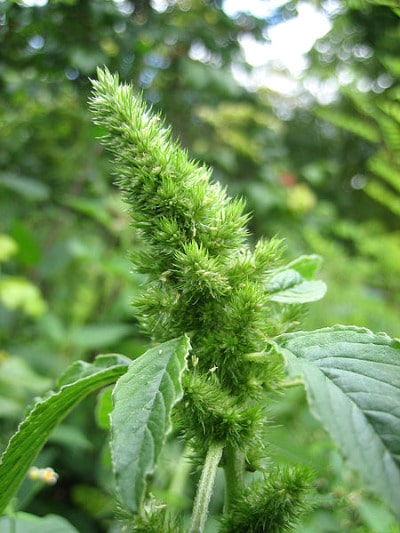
Native to the Americas but found on most continents, amaranth is an edible weed. You can eat all parts of the plant, but be on the look out for spines that appear on some of the leaves. While not poisonous, amaranth leaves do contain oxalic acid and may contain large amounts of nitrates if grown in nitrate-rich soil. It’s recommended that you boil the leaves to remove the oxalic acid and nitrates. Don’t drink the water after you boil the plant. With that said, you can eat the plant raw if worse comes to worst.
Asparagus (Asparagus officinalis)
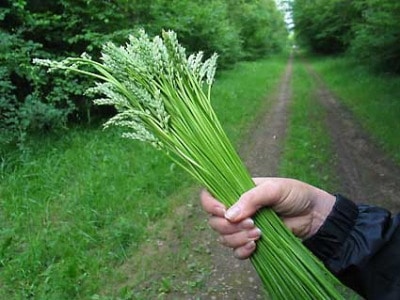
The vegetable that makes your pee smell funny grows in the wild in most of Europe and parts of North Africa, West Asia, and North America. Wild asparagus has a much thinner stalk than the grocery-store variety. It’s a great source of source of vitamin C, thiamine, potassium and vitamin B6. Eat it raw or boil it like you would your asparagus at home.
Burdock (Arctium lappa)
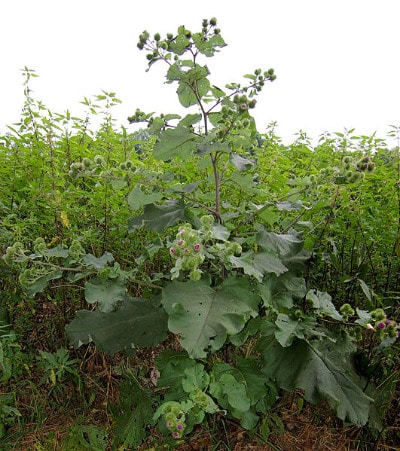
Medium to large-sized plant with big leaves and purplish thistle-like flower heads. The plant is native to the temperate areas of the Eastern Hemisphere; however, it has been naturalized in parts of the Western Hemisphere as well. Burdock is actually a popular food in Japan. You can eat the leaves and the peeled stalks of the plant either raw or boiled. The leaves have a bitter taste, so boiling them twice before eating is recommended to remove the bitterness. The root of the plant can also be peeled, boiled, and eaten.
Cattail (Typha)
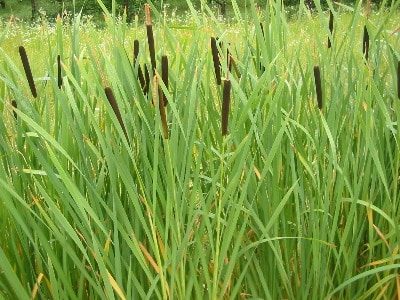
Known as cattails or punks in North America and bullrush and reedmace in England, the typha genus of plants is usually found near the edges of freshwater wetlands. Cattails were a staple in the diet of many Native American tribes. Most of a cattail is edible. You can boil or eat raw the rootstock, or rhizomes, of the plant. The rootstock is usually found underground. Make sure to wash off all the mud. The best part of the stem is near the bottom where the plant is mainly white. Either boil or eat the stem raw. Boil the leaves like you would spinach. The corn dog-looking female flower spike can be broken off and eaten like corn on the cob in the early summer when the plant is first developing. It actually has a corn-like taste to it.
Clovers (Trifolium)
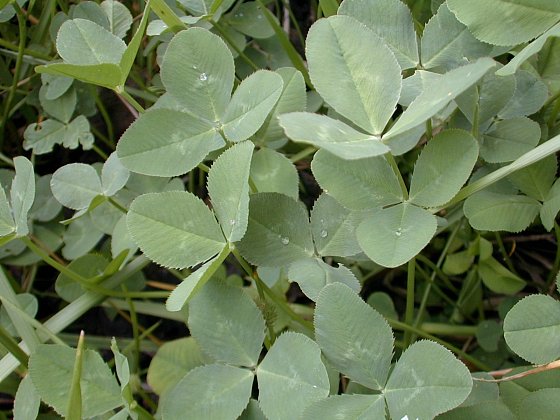
Lucky you-clovers are actually edible. And they’re found just about everywhere there’s an open grassy area. You can spot them by their distinctive trefoil leaflets. You can eat clovers raw, but they taste better boiled.
Chicory (Cichorium intybus)

You’ll find chicory growing in Europe, North America, and Australia. It’s a bushy plant with small blue, lavender, and white flowers. You can eat the entire plant. Pluck off the young leaves and eat them raw or boil them. The chicory’s roots will become tasty after boiling. And you can pop the flowers in your mouth for a quick snack.
Chickweed (Stellaria media)
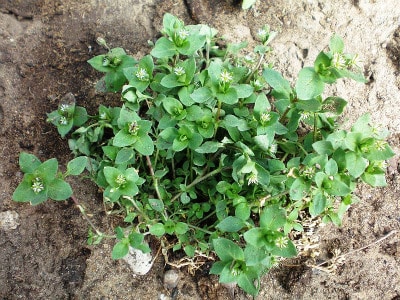
You’ll find this herb in temperate and arctic zones. The leaves are pretty hefty, and you’ll often find small white flowers on the plant. They usually appear between May and July. You can eat the leaves raw or boiled. They’re high in vitamins and minerals.
Curled Dock (Rumex crispus)
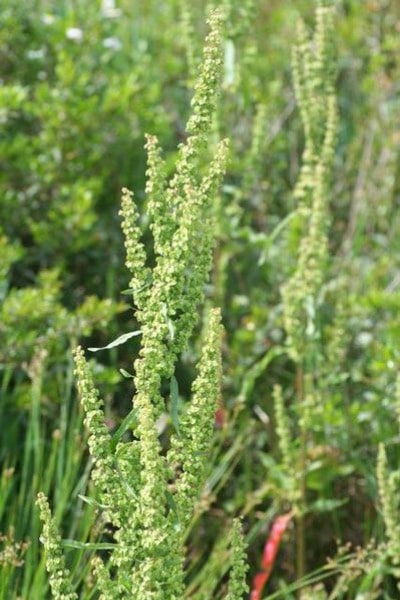
You can find curled dock in Europe, North America, South America, and Australia. It’s distinguished by a long, bright red stalk that can reach heights of three feet. You can eat the stalk raw or boiled. Just peel off the outer layers first. It’s recommend that you boil the leaves with several changes of water in order to remove its naturally bitter taste.
Dandelion (Taraxacum officinale)
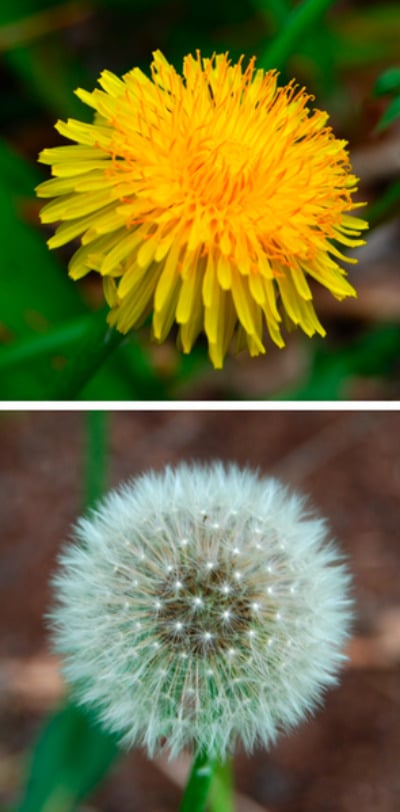
Sure, it’s an obnoxious weed on your perfectly mowed lawn, but when you’re out in the wild this little plant can save your life. The entire plant is edible- roots, leaves, and flower. Eat the leaves while they’re still young; mature leaves taste bitter. If you do decide to eat the mature leaves, boil them first to remove their bitter taste. Boil the roots before eating as well. You can drink the water you boiled the roots in as a tea and use the flower as a garnish for your dandelion salad.
Field Pennycress (Thalspi vulgaris)
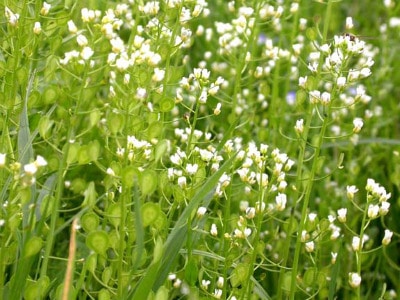
Field Pennycress is a weed found in most parts of the world. Its growing season is early spring to late winter. You can eat the seeds and leaves of field pennycress raw or boiled. The only caveat with field pennycress is not to eat it if it’s growing in contaminated soil. Pennycress is a hyperaccumulator of minerals, meaning it sucks up any and all minerals around it. General rule is don’t eat pennycress if it’s growing by the side of the road or is near a Superfund site.
Fireweed (Epilobium angustifolium)
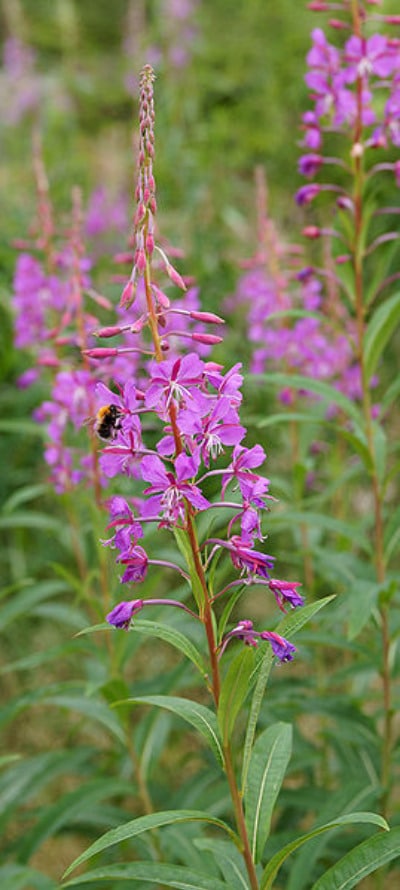
This pretty little plant is found primarily in the Northern Hemisphere. You can identify fireweed by its purple flower and the unique structure of the leaves’ veins; the veins are circular rather than terminating on the edges of the leaves. Several Native American tribes included fireweed in their diet. It’s best eaten young when the leaves are tender. Mature fireweed plants have tough and bitter tasting leaves. You can eat the stalk of the plant as well. The flowers and seeds have a peppery taste. Fireweed is a great source of vitamins A and C.
Green Seaweed (Ulva lactuca)
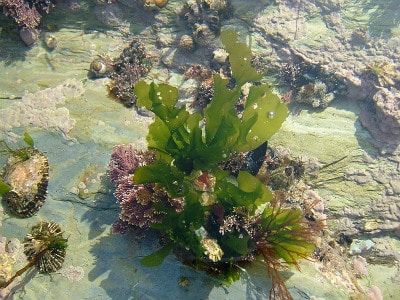
If you’re ever shipwrecked on a deserted island, fish the waters near the beach for some green seaweed. This stuff is found in oceans all over the world. After you pull green seaweed from the water, rinse with fresh water if available and let it dry. You can eat it raw or include it in a soup. Or if you’re particularly enterprising, catch a fish with your homemade spear and use the seaweed to make sushi rolls, sans rice.
Kelp (Alaria esculenta)
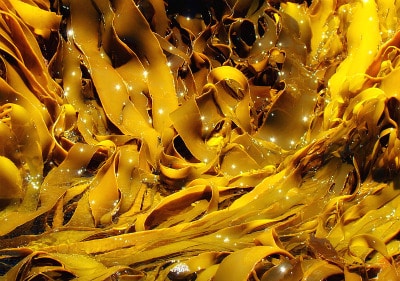
Kelp is another form of seaweed. You can find it in most parts of the world. Eat it raw or include it in a soup. Kelp is a great source of folate, vitamin K, and lignans.
Plantain (Plantago)
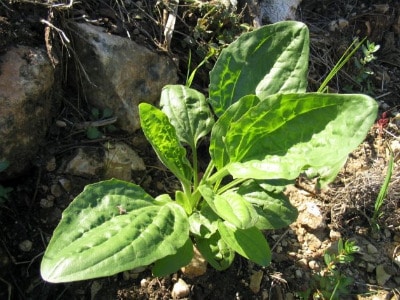
Found in all parts of the world, the plantain plant (not to be confused with the banana-like plantain) has been used for millennia by humans as a food and herbal remedy for all sorts of maladies. You can usually find plantains in wet areas like marshes and bogs, but they’ll also sprout up in alpine areas. The oval, ribbed, short-stemmed leaves tend to hug the ground. The leaves may grow up to about 6″ long and 4″ wide. It’s best to eat the leaves when they’re young. Like most plants, the leaves tend to get bitter tasting as they mature. Plantain is very high in vitamin A and calcium. It also provides a bit of vitamin C.
Prickly Pear Cactus (Opuntia)
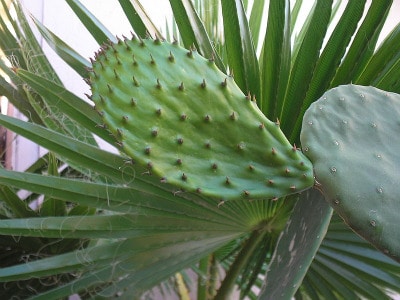
Found in the deserts of North America, the prickly pear cactus is a very tasty and nutritional plant that can help you survive the next time you’re stranded in the desert. The fruit of the prickly pear cactus looks like a red or purplish pear. Hence the name. Before eating the plant, carefully remove the small spines on the outer skin or else it will feel like you’re swallowing a porcupine. You can also eat the young stem of the prickly pear cactus. It’s best to boil the stems before eating.
Purslane (Portulaca oleracea)
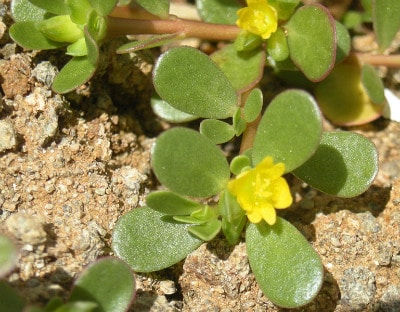
While considered an obnoxious weed in the United States, purslane can provide much needed vitamins and minerals in a wilderness survival situation. Ghandi actually numbered purslane among his favorite foods. It’s a small plant with smooth fat leaves that have a refreshingly sour taste. Purslane grows from the beginning of summer to the start of fall. You can eat purslane raw or boiled. If you’d like to remove the sour taste, boil the leaves before eating.
Sheep Sorrel (Rumex acetosella)
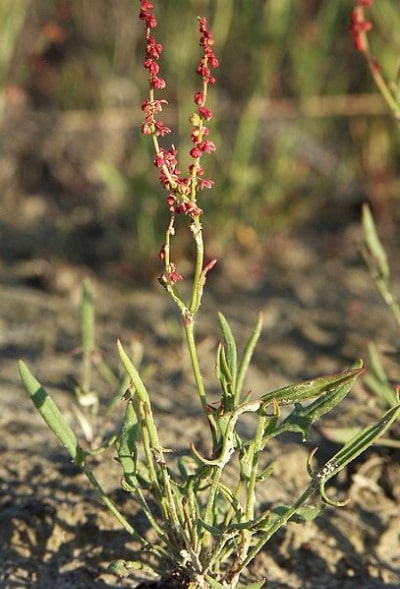
Sheep sorrel is native to Europe and Asia but has been naturalized in North America. It’s a common weed in fields, grasslands, and woodlands. It flourishes in highly acidic soil. Sheep sorrel has a tall, reddish stem and can reach heights of 18 inches. Sheep sorrel contains oxalates and shouldn’t be eaten in large quantities. You can eat the leaves raw. They have a nice tart, almost lemony flavor.
White Mustard (Synapsis alba)
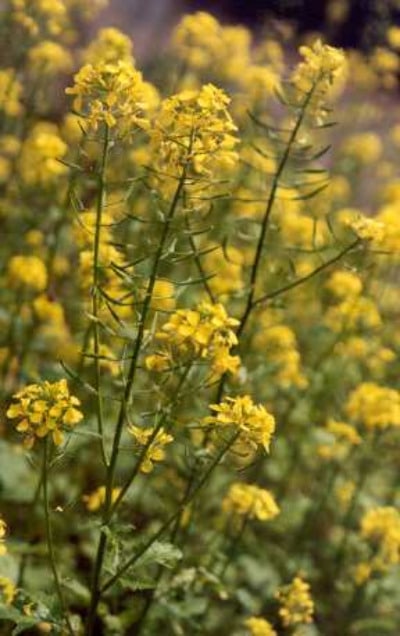
White mustard is found in the wild in many parts of the world. It blooms between February and March. You can eat all parts of the plant- seeds, flowers, and leaves.
Wood Sorrel (Oxalis)
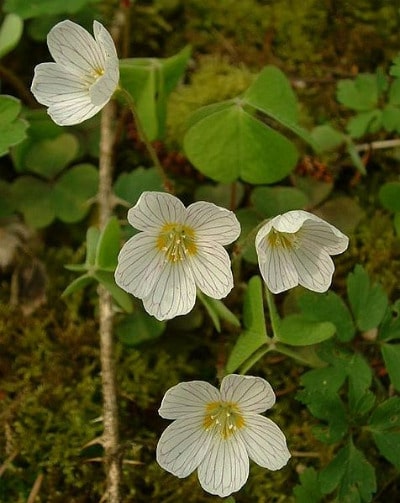
You’ll find wood sorrel in all parts of the world; species diversity is particularly rich in South America. Humans have used wood sorrel for food and medicine for millennia. The Kiowa Indians chewed on wood sorrel to alleviate thirst, and the Cherokee ate the plant to cure mouth sores. The leaves are a great source of vitamin C. The roots of the wood sorrel can be boiled. They’re starchy and taste a bit like a potato.
AoM Man Up Challenge
Go take a hike or a walk in the woods and try to locate and identify three edible plants.


{ 57 comments… read them below or add one }
Good to know that I can eat some of the weeds growing in my yard (dandilion and plantain).
I forgot to mention arrowhead root is edible. So if you’re collecting cattail look for arrow root too. I think stinging nettle is edible as long as it is boiled first.
A standard ( but worthy) edible wild plants review with some standard mistakes.So called ‘energy bars’ as noted with the CLIFF bar remark are nutritionaly poor compared to many readilly available rations. We are entering the annual appearance of that most unappreciated food source, the fruitcake; eggs,flour,nuts,fruit and a often added preservative of rum or brandy. Get a frog gig and watch your unknowing nieghbors toss out this treasure.The obligatory survival kit bulion cube is mostly salt and flavour. But in a survival situation familiar flavours will make the unpalatable palatable. Ditto the small tobasco sauce bottles available. A stressfull situation is no time to introduce our stomach to new cuisines. And this brings me to the universal taste test nonsense. Is that a shitake mushroom? YUMMMM I love shitakes, only it’s a deadly mushroom and even a tiny ingestion means an agonising death. An extreme example, but why play botanical russian roulette when a little preplanning like actually learning the edible plants AND WHERE THEY ARE EACH SEASON in each major biozone ahead of time. And finally, most of us pack a substantial fat reserve that will provide our physical, if not emotional need for nutrition for some time.
It should also be noted that if you get lost in the woods food is you last worry. Most healthy people can go over a month without food and water and shelter are far, far greater priorities.
Due to these natural foods being low in fat they tend not to be very calorific.
There’s lots of good literature about this out there, it will all agree that unless you get a certain amount of calories, fat and carbohydrate you’re better off not eating. If you keep eating small amounts you stop your body’s fasting mechanism kicking in and hasten starvation.
Shelter and water are the main priorities in a survival situation. One can go weeks without food, but only days without water and possibly hours without warmth/shelter.
Glad to see people have pointed out that food (esp. Plants) are the last thing you have to worry about.
Statistically, many people who are lost or stranded are rescued within 72 hours PROVIDED they let people know their where-abouts in advance and have a proper contingency plan – within this time frame, food is not a primary concern… the two biggest killers in that stressful 72 hours are the elements (hyper or hypothermia), dehydration, and panic.
A healthy adult can go about 3 weeks without food, provided the calories expended are MINIMAL – in a survival situation, just keeping warm and hydrated can boost your caloric output into the 4000-5000 calories per day expense. That said, after about 2-3 days without food, muscle fatigue becomes debilitating, exhaustion sets in quickly, and the mind becomes overpowered by hunger, often incurring tunnel vision (which can be VERY dangerous in a survival situation).
We’re not talking about sitting around fasting, or skipping a meal here or there – we’re talking about survival. You will likely not get sufficient calories solely by foraging, but they can round out a diet and provide tremendous sustainability long-term.
Put down your SAS Survival Handbook, switch off Survivorman, get out of your arm chair and go live in the woods/wilderness in a primitive setting for a long weekend and tell me how effective you are on the 3rd day without food.
Someone once told me that you can use your lighter to singe off the tiny thorns of a prickly pear fruit. I haven’t tried it but certainly will the next time I pick one for the kids (my thumbs were sore with those tiny thorns for days).
You’ve left out two of the most common: Queen Anne’s Lace, the tall stalk with lacy flowers that is actually nothing more than an un-domesticated carrot, and poke weed, the ubiquitous broadleaf weed (but edible only before turning red—the reddened stalk is poisonous).
I believe that Queen Anne’s lace was left off (and plants with carrot-like foliage notice for active avoidance) because they resemble hemlock, which is poisonous. Without hands-on experience most people probably couldn’t tell the difference.
Dustin is right IF the person in the survival situation does not have the skill set and basic tools to see him or her through. One of the hardest lessons is that when you step off the hard surface you become part of the food chain and you need to be ready to face the challenges that that simple fact brings.
With a simple lighter the issue of staying warm and cooking food can be mitigated. With a plain bit of copper wire animals can be trapped. A pocket fishing kit in a snap cap vial gets you a chance at some fish. A pocket knife can turn that animal or fish into something you can cook and eat plus help with shelter making and fire building. Good old 550 (Para) cord can help with shelter making. I could go on and on but my point is simple, the biggest killer when going off the hard surface is being unprepared and stupid.
As Heinlein wrote:
Stupidity cannot be cured with money, or through education, or by legislation. Stupidity is not a sin, the victim can’t help being stupid. But stupidity is the only universal capital crime: the sentence is death, there is no appeal, and execution is carried out automatically and without pity.
I agree with Dustin in that people should stop watching the survivor shows and quit reading the S A S books. GO GET SOME REAL TRAINING and get out there to see how life really is.
BTW to the list of edible plants you could add some very tasty mushrooms like Shaggy manes and Morels depending upon the season. They can be eaten after being cooked and really help with the meal. But remember while there are old mushroom pickers and bold mushroom pickers, there are no old and bold mushroom pickers. (;~>)
What if you don’t see any plants you recognize? This page has information on how to find plants that (probably) won’t kill you in an extreme emergency situation:
http://www.wikihow.com/Test-if-a-Plant-Is-Edible
I’m pretty sure I first encountered this info in my Boy Scout manual, this was just the first place I found it online.
Beware Of Clover! Red clover is indeed edible, but white clover is poisonous.
Look at the conditions where plants grow. Of course, avoid foliage near animal skat. Beware of a patch of edible plants in soil contaminated by toxins, or surrounded by poisonous plants. In some cases plants can pick up toxins from the soil.
And to think, I spent all that time ripping out purslane from my garden and throwing it away when I could have been selling it to a natural foods store. Don’t you feel sad for the folks who taught us by example that certain plants are poisonous?
Wow. you forgot a great one- the day lily- practically a supermarket, and it grows everywhere in North America. The flowers can be fried as fritters, the buds can be boiled and eaten like green beans, the stalks steamed like asparagus, and the tubers cooked like potatoes.
Eating edible wild plants certainly is interesting, though not necessarily a good thing to first try under duress, because your immediate reaction will be food when that should be last. Purslane is quite tasty, can’t stand dandelions, though, bitter little things. The common reed is a good plant to remember, to be treated like other grains. If you get lost duck hunting and you’re out of ducks, it’s a good last resort. But emphasize last. Like everyone else said, shelter fire water. Food’s for long term.
There’s a reason the French call dandelion pisse-en-lit, which means piss-in-bed: it’s a diuretic which can affect you at inconvenient moments.
Don’t forget the stinging nettle. The plant protein alone is amazing.
I eat it regularly in many dishes. The Dutch mix it in cheese and make tea from dried leaves, the Germans also use the root-extract for prostate enlargement treatment. An important and nutritious free food source.
Before there was an “Earth Day,” an EPA or even hippies, there was Euell Gibbons, an American treasure.
Euell’s book, “Stalking the Wild Asparagus,” the Bible of the outdoors as restaurant, should be entered into the Smithsonian hall of fame.
Not only surviving but thriving is the goal here, as well as how to conduct oneself as a civilized human being, a gentleman/woman.
Just Google: “Stalking the Wild Asparagus”
Say water was scarce and you were worried about how to make sure it was drinkable. I’ve read about how to make a still, etc but wouldn’t eating some of these plants provide some hydration because of their water content?
The Sego Lilly is common in the western United states in mountainous regions. The Flower and tuber are both edible raw. Boiling or roasting the tuber is akin to a baked potato. they usually grow in open meadows and pine forests and can be gathered by the manly handful.
You omitted my favorite, polk salut (poke salad) Need to boil twice. Better than any store bought greens. The purple stems and roots are poison.
We *had* a thick growth of Purslane in the flower bed ’round the Japanese Maple. I wish I had known it was edible before ripping it all out and composting it.
I would add wild violets to this list (viola genus). They’re the ones with the heart-shaped, serrated leaves which grow from a basal rosette. The flowers are various colors: most commonly purple (that is…..violet).
Elizabeth,
I believe you are mistaken. White clover is quite edible.
Why do these need to be regarded as “survival food?” I eat many of these whenever I can, they’re highly nutricious, they taste great if you know how to make them, and you feel manly for finding your own food. Do it for fun, not for survival!
OH, and by the way, clovers aren’t entirely edible. You can eat them raw, but if you eat too many raw you’ll get very sick. If you need to eat large amounts, boil them.
You guys forgot Lamb’s Quarters! (Sometimes called Goosefoot or pigweed.) It grows all over the place in much of North America and is considered a weed, but is more nutritious than spinach, being high in vitamins A, C, and calcium, while having a mild spinach-y taste. The leaves taste just fine raw or are great cooked. I use them in place of spinach in quiches and other recipes. As long as you don’t pick from an area that’s been contaminated with pesticides or right along the side of a busy road with car exhaust dousing them (which, I guess in the article’s scenario, you wouldn’t be,) then they should be good. I also am a fan of stinging nettles (though tricky to pick without getting “stung”,) as someone else mentioned.
A note about plantain plants: The seeds (grow on a long shoot where all the leaves meet) are also edible, and high in fiber too! I add them to salads and pasta dishes. I also heard that eating a lot will keep mosquitoes from biting (might want to research correct amount).
If you are going to eat anything from your yard or someone else’s, make sure pesticides haven’t been used!
Here in Texas we have a lot of mosquite trees in some areas and the beans are used to make flour or you can eat them raw. The flour is available online and is suppose to be full of nutients and protein. I have spent a great deal of time trying to rid my farm of these trees that I use to consider a nusance.
I have also started growing pomegranate trees that seem to do quiet well in Texas. We have mustang grapes that grow wild on fence lines during the summer.
I wish there were books that told of the edible plants in your specific area.
Augh, your identification of some of them isn’t right! That isn’t “clover”, it’s wood sorrel. Clovers have rounded leaves.
Lots of things have three leaves in a group. Poison ivy for one…
That’s not a picture of Asparagus!! what the heck?
What plants are edible is highly area and season specific. The best strategy is to go learn in person from someone who has expert knowledge of the local plants. In Southern California, Christopher Nyerges is one of the local gurus of edible plants. I’ve gone with him on a few foraging trips into the foothills. He is very knowledgeable and a good guide. But as mentioned by others, your primary problem in a survival situation is not food.
Very interesting. Makes me think about these less than in a survivor situation but more of a possibility of looking into free, healthy, available food outside of the supermarket.
The photo labelled Asparagus actually looks like Bath Aspraragus – Ornithogalum pyrenaicum. Related to Asparagus, but not the same thing.
I read that clover with white discoloration contains cyanide.
Thanks for the tips!! and please ignore most of the above comments, boasting that they could live a month without food, blah blah blah… they are forgetting the part that they would be too exhausted to stand up after about five days… some people just want to be an ass…
Great pictures and descriptions; the best I’ve seen. About half of these grow in my yard. In fact, I’m snacking on Chickweed right now.
PS: I might be able to live 3 weeks without food, but I would NOT be happy!
Mate, this is a great blog.
Reading this article reminds of that film ‘Into The Wild’. If I’m ever in a plane crash or head out on a camping trip gone wrong, this article will be a life saver …
here in the mountains of virginia, we have a lot of wild cherry and wild grapes. very good.
hey this sight needs to describe all edible plants and create a pamphlet
I looked up edible plants for a story I’m writing and I thought I would actually search up some edible plants to show I have used some knowledge… And to find out I can eat some things that are right outside my window is remarkable to read.
I love this kind of information. I used to reseach and try out foraging when I was a teen (instead of drugs and alcohol like my friends). Now, many years later I have taken a keen interest and practice regular forgaging. I live in Michigan and suplement many of our meals with foraged foods from the woods. Not only are they free…but they have a ton more nutrients than the over hybred varieties we find in the stores. I always add wild spinnach (pig weed) and purselane to my salads for example and top them off with red clover or tiger lilly blossoms. It makes a stunning and beautiful salad. I began by researching and purchasing books on the subject and then taking them all into the woods with ziplocks and a small garden shovel!!
very helpful. I will definetly use it in the wild.
The Polk plant can be eaten after being boiled as you do greens It has Oxalic acid in it so you need to boil at least two times pouring the water off after the first boiling. The stems can be eaten and the berry can be made into wine for medicinal purposes.
Did anyone mention that kudzu leaves are edible when the leaves are young?
I heard and read that the brown cattail “tail” could be used to make bread. I tried it. The little seeds (with tails that help them float on air) would’t mix with water no matter how hard I tried. The only thing they make is a big mess.
What about fiddleheads? I’m not sure the new stems of all ferns are edible, but I’m not sure which are. Of course, there’s also fennel, wild rose, mint and berries (cranberry, blackberry, mulberry, etc.), but in a survival situation, being a vegetarian can limit maintaining your strength – consider learning about which insects are edible as well.
I want to know if the weed with the small capsul like purple flowers in them are edible? Could you possibly figure that out for me?
Apples contain cyanide! No one has a problem eating those!
I didn’t see any mention of miner’s lettuce. It grows in northern California on moist, shady hillsides.During the gold rush it was eaten by hungry miners. Does anyone know the botanical name or where seeds are available?
You can use the leaves of the burdock plant to instantly relieve the sting from stinging nettles. Just pick a leaf and rub it on your skin. I used to walk through the woods with my grandmother and she would point out the medicinal uses of weeds. Sadly this is the only one I can remember but have used it successfully many times.
Judy, Miner’s Lettuce (Claytonia perfoliata) is available through Baker Creek Heirloom Seeds – http://www.rareseeds.com/miners-lettuce/
They’re a little slow to get started from seed, but don’t take much effort after that.
there are thousands of edible plants out their, even in north america, i’m 16 and live in southern Colorado in a high desert area. there are many plans that are surprisingly edible and nutritious, for instance. i was amazed to find that ‘tumbleweeds” are edible when they are young, along with showy milkweed.wild edibles way be great for survival,but if people incorporate them into their diets,we could truly live in a gourmet world of healthy food.
You can eat the pads of the prickly pear as well. Remove the spines, peel off the skin with a knife, cut into strips and boil. Tastes like really tart green beans.
well i know it sounds crazy but if u break off the leave of pursulin and rub the juices on ur face it willget rid of a zit thats right zits works great but it kinda smells like grass and will form like a mask .
where did u read that white clover is harmful. it s safer than red clover that can cause u problem from estrogen overload or thin your blood too much. there are no warnings for white clover
VAL you can eat fiddle heads but just watch how much u eat. they contain a chemical that uses all your vitamin b1 which could cause some issues