Transcript
Brett McKay:
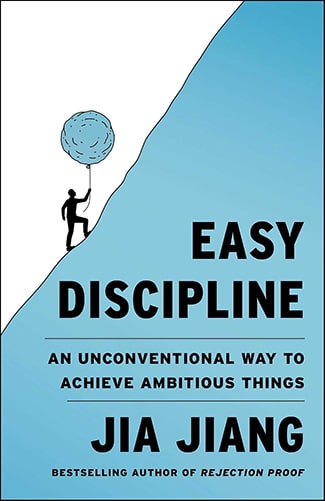
Brett McKay here and welcome to another edition of the AoM Podcast. Most people assume that if a goal is hard to achieve, getting there has to feel hard too. We tend to believe that extraordinary results require extraordinary suffering, but my guest says the secret of success isn’t gritting your teeth. It’s making the path enjoyable. His name is Jia Jiang and in his new book, Easy Discipline, he argues that consistency comes from designing your work and your life so that doing the right thing becomes something you actually want to do. Today in the show, Jia explains the difference between hard and easy discipline, why eating bitterness isn’t the best way to go after your ambitions, and how to make your work feel more like play without lowering your standards. Along the way, we discuss Soviet hockey, Japanese tea ceremonies, rejection therapy, one action goals, and the power of pursuing aims that are an expression of who you are.
After the show’s over, check out our show notes at aom.is/easy. All right, Jia Jiang, welcome to the show.
Jia Jiang:
So glad to be here, Brett.
Brett McKay:
So you got a new book out called Easy Discipline. We’re going to talk about what easy discipline means, but I want to start off with how you started your book off because you started it with the myth of Sisyphus, which is one of my favorite myths. So for those who aren’t familiar with it, what is the myth of Sisyphus?
Jia Jiang:
So Sisyphus in Greek mythology is this king and he’s really smart and he’s so smart that he tricked Zeus, the Greek God. And he tricked him three times. He even cheated death. So Zeus was rage mad. So he cursed Sisyphus to push a rock up a hill forever. And just right before the rock would hit the mountain, the rock would roll back down to the bottom and sisyphus would have to go back down to the bottom and push it again. And he does this over and over again for eternity. So I’m sure you’ve seen this picture of this guy pushing up a rock forever that symbolizes the futility of our effort. So sometimes our work, our daily life feels like we’re sisyphus. We just keep going but can never reach to the top.
Brett McKay:
And we often think, man, Sisyphus, he just must be really depressed about this. But you flip this interpretation on its head and you think, well, let’s think about this another way.
Jia Jiang:
Yeah, because first of all, this is not real. This is like Greek mythology. But I was thinking, what was this curse on? Is this curse on Sisyphus? Is he brain dead? Is he just body controlled like a zombie? Then if that’s the case, he’s already dead. This is just a horror show, not necessarily some sort of tragedy. But if this were to teach us something, that also means if Sisyphus has agency, if he’s the one who, can he choose to push the rock? If he could, that must mean that he actually is going back to the bottom with the rock on purpose, he was the one who chooses to push the rock up forever even though he never hits the top. So if he had agency, then what’s the reason for him to do this? After the first try, the second try, maybe the one millions try because this is forever, right?
He must have given up. Just do something else, have some hot pot or something. But he continued to do it. That only means probably one thing. He loves pushing rocks. So instead of being forced to push rocks, if he loved to push rocks, then this is not a curse. This is a huge blessing. Zeus just built Sisyphus as a exercise machine that’s better than Peloton or CrossFit combined. So that’s where I got this idea from. If Sisyphus loves to push rocks, of course he wouldn’t stop. And this is not a tragedy. This is a great endeavor. If it happened in modern times, people would make statues for Sisyphus and people would invite him for TED Talks and talking about how disciplined he is and what kind of work ethic he has. And the thing is in modern times though, if you see the people who are at real mountaintops, the people who are at the best of industry, the people who are breaking through, the people who are redefining industries, those are the people who are like Sysphus, the better version of Sisyphus.
They choose to push the rocks because they enjoy the work. And in reality, they not only make it to the top, they make one top to another and they just keep going. So that’s how I flip the story of Sisyphus from a tragedy to like a hero story.
Brett McKay:
Yeah. I think Albert Camus, the existential writer, he talks about this too, and he does the same sort of thing. I mean, he looks at the myth of Sisyphus and you think, “Well, he’s probably just depressed.” And he’s like, “No, let’s imagine Sisyphus happy. He’s happy just pushing this rock up.” And this ties into your idea of easy discipline because yeah, I think oftentimes when we think about being disciplined, we look at people who do great things, who exercise every day, who build big companies, who write books, and we think, “Oh my gosh, they’re just using all this willpower. They’re just white knuckling through this. ” But you’re thinking, your approach is no, most people who do things consistently, hard things consistently, they probably actually really enjoy what they’re doing and that’s why they do it. So yeah, that’s easy discipline. And I guess you contrast easy discipline with hard discipline.
Can you describe how you describe hard discipline in your book?
Jia Jiang:
Yeah. The hard discipline is really our society worships this idea that you have to tolerate pain to succeed. Because great endeavors, a great achievement, it feels like the achievements are hard. That means you must also feel hard. Who can tolerate more pain to have the great success? But the thing is that’s the wrong way to think about it because if you only love the result, which is success, money, whatever, recognition, but you don’t like the process, you just think, okay, if I can hold this long enough, somehow I can get to the other side of the rainbow and hit the gold pod. And most people think this way. What ends up happening is they never make it. And even if they make it, they give up because this is against human nature. Just like in physics, if something like pushing a rock up in physics, if the gravity is against you, you’re going to forever feel like you’re in pain.
You’re going to forever feel like you’re looking for the next out. You’re looking for the next reason to quit. And then when you quit, you’re like, okay, let me take a break. Let me have some fun. I’ll come back to this. The problem is often we never come back to this. So that’s why if you see new year’s resolutions, about 50% of people make a new year’s resolution every year. We are going to lose weight, make more money, find love, whatever that is, get a promotion, start a company. But the thing is only 9% of the people who make the resolution keep it. That’s because they only set the resolution for results and they think the results is what they want. And they don’t like the action to get there. You need consistent exercise, you need dieting. You need to network. You need to do all kinds of things you don’t enjoy, but people rely on hard discipline and they fail.
Brett McKay:
Yeah. So you’re Chinese and there’s this saying in China that you talk about this idea where you’re focused on the results, but you don’t actually want to do the thing to get you those results. It’s “high eyes, low hands” disease. What is that? Flesh that out for us.
Jia Jiang:
This is the disease people described me when I was little. So it literally means your eyes are set on high goals. You to achieve all kind of things. Whether you have this ambition in life or you just kind of want to have a new resolution or maybe you’re just motivated for today. But the low hands meaning you can’t do it. You can execute on your ambition. I had this roommate when I was in college and every day, almost every day he would talk to me about his dreams. I’m like, cool. So he want to go to Las Vegas and start a gym in Las Vegas. And he’s so passionate about it. He’s just talking about this every day, but his everyday action has nothing to do with that. He just goes home and watch TV every day. And I’m like, that’s a classic high eyes, low hands disease.
You say you have high dreams. You tell everyone about it, but you don’t do anything about it. That’s hard discipline. Yeah,
Brett McKay:
Because they don’t actually like to do the thing that will get them to that goal.
Jia Jiang:
That’s true. They just want the end result, but they don’t do it.
Brett McKay:
When you talk about in the book how in Western culture, we really moralize and valorize people who use willpower and grit their teeth and they do things even when it’s uncomfortable and unpleasant. But this idea isn’t unique to Western culture. You talk about in China where you’re from, there’s this idea of eating bitterness, which is interesting. I love that phrase, eating bitterness. What does eating bitterness mean?
Jia Jiang:
Yeah. If just anywhere you are, you grab a person who speaks Chinese, who’s familiar with Chinese culture. If you ask them, they will say, yeah, that’s really the fundamental culture in China when you’re a student. The teachers will constantly tell you to eat bitterness, meaning you have these ambitious goals and sometimes very honorable goals. The idea is to get there, you need to have a real discipline. You need to do the hard work without complaining, eating bitterness. And then if you eat enough bitterness, you get to your goal, whether that’s an individual goal or a collective goal. Now the thing is, I hate eating bitterness. I suck at eating bitterness. I didn’t want bitterness. I’m always like, “Oh yeah, I want to eat nothing. Let me work hard.” And it’s just not sustainable. I don’t want to eat bitterness for the rest of my life or even for the rest of the project.
Even I can finish one project, the next one I’m like, “Give me something sweet.” That’s really why I wrote this book about how do you find a sweetness in your work rather than bitterness?
Brett McKay:
Yeah. And I love in the chapter where you just kind of described the difference between easy and hard discipline. You have this great story from the Soviet hockey team. And for a while, they were the dominant team in hockey. And I think a lot of people thought these Soviets were so good because they were not human. They were robots. And there was some truth to that, but if you look at the story more, there was actually a period where they took the easy discipline approach to success. Tell us about these different philosophies in the same Soviet team.
Jia Jiang:
Yeah. So the background of the Soviet team was the Cold War. So after World War II, the Soviet Union was like, “We’ve got to be good at hockey because hockey started in Canada. And Russia was just like Canada in a completely different political system. They were vast. They were like, ” We’re so cold and we need to be good at hockey like the Canadians. “So they asked this guy, his name is Tarasov, Anatoli Tarasov. He’s like, ” Can you build a Russian team, a national team for us? “And he was not a hockey coach to start. He was like a watchmaker. But this guy was really smart, but also he’s very artistic. So he was like, “Okay, I can build this team. “So he didn’t have a game tape. He just knew the rules. And so he was like,” How do I design a team that is fun?
“So he used tactics from chess, from ballet, from watchmaking. He built this team of this intricate passing. And the players, instead of the Canadians just racing up and down, they’re fast, they’re strong. The Russians were skating diagonally to have this beautiful passing game. It’s almost like a ticky talker soccer. And that’s like 50 years later. So he built this scheme. But more importantly, he built a team that people loved each other. It’s funny that because during the Cold War and we have this stereotype that these Russians, they were just like machines. They would bite people. They’re just biologically engineered people who just make to play hockey. That’s why they were so good. They had like 70% gold medal rate for the Olympics and also world championships for like 40 years. That was insane. That was insane. So he built this team and the players loved the game.
And in fact, he had a requirement that if you don’t love the game, don’t play. You got to smile. So the players loved the game. The player loved each other. The players loved him. They saw him as his fatherly figure. And they all worked really hard, but no one complained. People loved it. And that’s the classic example of easy discipline. He made the game so much fun and so much camaraderie and so much love for each other that people naturally worked hard to achieve the result. Now that was only half the story because he was the Soviet team. He was for the first almost 20 years. He built this dynasty that just kept winning. And then he got fired because of course he didn’t get along with the Soviet top brass. So he got fired and the guy who succeeded him was the protege of the chief KGB boss in Soviet Russia.
And he used Tarassov’s scheme because that was proven to be successful. But his motivation tactics were completely the opposite. He borrowed KGB tactics or military training tactics or even animal training tactics. He locked these players up and trained them as hard. He used fear tactic. And he was this totally ruthless boss. And if you think in the US, we think Bobby Knight was the guy who was this big bully, but he got the results. So Tikanov was this coach. He was this Bobby Knight times 10. People hated him, but people feared him. So they also worked hard and they also succeeded. And that’s really the irony of the story. It’s different if I write a story of romance that only love can win. Only easy discipline can win. No, hard discipline can win too. But the problem is people hated him and people quit. They quit their hockey early.
And the players all looking back in those days, they were like, “I mean, they got a bunch of gold medals, but they were saying my youth was wasted. No one really liked him and sometimes didn’t even respect him as a person because he was so ruthless. And he didn’t have any invention. He won, but he didn’t define the sports the way Tarasov did. So I used the contrast of Tarasov and Tikanov to see this easy discipline versus hard discipline.
Brett McKay:
Yeah, I think it’s a great story, a great encapsulation. And I think the takeaway, I think I loved how you said hard discipline does work. It can work, but it’s not sustainable in the long run.
Jia Jiang:
No, especially not on a personal level. And if you just cycle in all kind of peoples and just run them to the ground and you get the next talent, I mean, you could do it, people do it. But the thing is, would you want to live in that world? And also, would you want to be that kind of a boss to be a big bully for the long term?
Brett McKay:
Well, so what you do in this book is you lay out some principles on how to embrace easy discipline. It’s an acronym. I love it. It’s easy, E-A-S-Y. The first principle is enjoyment. And this is all about enjoying what you do, what we’ve been talking about. If you’re going to push rocks up a mountain for eternity, well, you might as well enjoy it if that’s your thing. And with each of these principles, you’ve developed tools people can use to put them into practice. For the enjoyment one, the tool to kind of flip on the switch of enjoyment is something you call the game changer. What is that and what does that look like in practice?
Jia Jiang:
So the game changer is you are given a task, maybe you’re at work and you don’t enjoy your work. I mean, in fact, a lot of people don’t. We love to say everyone love their work. They’ll find their calling, but most people actually just do it for the paycheck or they do it, try to get to the next level. They don’t necessarily enjoy the work. And that’s why sometimes it’s hard for them to succeed. If you don’t enjoy your work, you get stuck. You just do your thing and then you move on to the next text. So I call this game changer, meaning if you don’t enjoy your work, try to play a different role. Try to change the game. Don’t play a game that everyone else is playing. You change it to a different game. I’ll give you an example. So I used to hate making sales calls because deep down, I don’t feel like I’m a pushy salesperson.
And sometimes I have a hard time to make that ask, to make that push. So I was never good at sales until one day I started switching roles. I started playing a different game. I’m like, okay, instead of trying to play the game of see how much I can sell, what if I change my role? What if I play a different game? Let me play a game of being a consultant. Let me be an advisor or even counselor. So when I try to talk to people now, even the prospect or whatever, I try to understand what his or her issues are, what their biggest challenge are, and just keep asking questions. And I would be like, okay, if after this call, if I can understand their issue more than they do, and if I can even articulate the problem they’re facing, I can help them.
So that’s the role change I do. That’s a different game I play. And then the result was amazing because now I become a way better salesperson if I ask the right questions. If I try to learn the other person rather than just try to make a sale. If I don’t focus on that result I hate, I actually get better at that result because I play a different game that I love. So that’s really game changer. You can do this in writing, in sales, in management, in leadership. If you don’t like what you’re doing, change your goal, change your game to something you love so you can get behind.
Brett McKay:
Yeah, I’ve seen that with fitness. So a lot of people, they want to exercise regularly. And so maybe they start something that they see on Instagram or YouTube and they hate it. And so they just stop. And I’m like, “Well, you need to just find something you like doing and you just haven’t found it yet. So try some different stuff.” And once you find that exercise is just going to be something you enjoy doing. You’re never going to miss a workout because you just love doing this thing.
Jia Jiang:
Yeah, absolutely. So I changed my game in this particular realm as well. Ever since I was a teenager, my uncle told me, “You got to become stronger. You’re a man. This is the art of manliness.” So he had this very kind of a little bit old-fashioned way of seeing manliness. It’s like you got to be able to be very strong. So if someday woman’s with you, she needs to feel she’s protected. So you need to go exercise, run, lift weight. So I love my uncle and I did what he said. But the thing is, I hate this idea of going to a gym and lifting weight because I was like, “What do I do? Do I do this and do I do that? ” And I started running like five miles a day and then it was never sustainable. It was great for a week.
And after that it’s over. So until I started playing different game, what really changed for me was P90X. I mean, I’m sure you’ve heard this.
In late 2000s, early 2010s, Tony Horton, he invented this kind of home gym stuff where you don’t have to think. He built a program with huge variety and you just pop back then it was a DVD. You pop the DVD in your TV. You just do what he does and you just follow him. He’s really funny. And that’s a complete game changer for me because now I don’t have to think. I just follow what he does. It was fun. Now every day I still, almost two decades now, I still do it. And not P90X, but I do different programs. I follow this woman. Her name is Caroline Gervin. I love what she does. And so she does YouTube. I just follow her. And also I bought a Peloton. Now every day I work out. I cannot not work out. I don’t feel good if I don’t work out because the things I’m doing is so much more fun than the ways I was doing before.
Brett McKay:
So the first principle is enjoyment. And one tool for that is to figure out how you can reach the same goal, but do it with an approach you actually like doing. You’re changing the game. Another tool you have for this enjoyment principle is the momentum loop. What’s the momentum loop?
Jia Jiang:
Momentum loop is if everything that you do is repetitive, if every day your work is similar, what you want is you want to build momentum into your work. I mean, I learned this playing Settlers of Catan. Now it’s just called Catan. So in Catan, everyone has a similar actions. You take turn buying stuff and the stuff will bring you more resource. You can buy more stuff and in the end see who has the most stuff wins basically. It’s kind of like monopoly. But the thing is the people who win are always the people who are very aggressive to build momentum at the beginning. So if in every turn you do your hardest to trade and build the most stuff and then those actions will have better results and the more results will get in would actually catch momentum on its own. So eventually you become a flywheel.
You just keep going and the momentum will carry you forward. So every day if you do the same task, I tell people build momentum into your work. The thing that you do, try to learn from what you did yesterday and then apply that exact thing to what you’re doing today. And then you learn the stuff you do today and apply that tomorrow. So in a way when you’re doing things, you start catching momentum, mental momentum. And the thing that you do 20 days down the road will actually be way better than what you’re doing right now. You become expert quick. You become better result quicker. So that’s what I call momentum loop.
Brett McKay:
And you talk about how you used momentum loops on this crazy experiment you did, and it’s kind of what put you on the map. It made you famous because it went viral. It was this idea of 100 days of rejection therapy where you reduced your fear of rejection by deliberately seeking it out. So instead of avoiding situations where someone might say no, you intentionally went around making these unusual and uncomfortable requests. So for example, you asked a stranger to borrow $100. Yo asked a homeowner if you could play soccer in their backyard. You asked a Southwest Airlines employee if you can make an announcement over the intercom. Tell us more about your rejection therapy experiment and how you used momentum loops in it.
Jia Jiang:
So I did this about a decade ago. My longtime dream was to be an entrepreneur. So I built my company. I was trying to look for funding. I got rejected with the investment and I found out how much I hated rejection. And the number one thought that came to my mind was I want to quit. So I was like, I can’t feel like this. I got to be tougher. I got to be more fearless toward rejection. So I did this thing called 100 Days of Rejection Therapy. The idea was instead of running away from rejection, you look for rejection. And you do this for 100 days. And I film myself doing this and I make a YouTube vlog at the time and I would share this with the world because if I do this by myself, I’ll quit easily. But if I share this with other people, people hold me accountable.
And my vlog went viral with millions of views. In fact, if you go to a TikTok nowadays or even YouTube and TikTok, you see a lot of people doing rejection therapy. And many of them started because they saw me doing this a decade ago. Sometimes crazy. It’s crazy you start a movement that just keeps going and someone else is doing it. That’s really funny. But I did this for a hundred days. So the trick is, and people are telling me, “Man, John, what you’re doing is hard. I can’t do it. It’s a rejection. This sucks. How can you do it for 100 days? It must be really courageous.” I was like, “No, I was just having fun. I was having a great time. It wasn’t courageous. Looking for rejection was fun if I saw it that way. So I made sure I had fun, but more importantly, I tried to apply what I learned today to tomorrow.
So I started coming up with a whole list of ideas. I would try to observe how my interaction went. And then I wrote down, not just wrote down, I actually wrote to other people. I shared my learnings. I started tabulating an amazing list of negotiation tactics, how my posture should be when I talk to people, what my energy should be. Should I smile? And how do I put the other person at ease? If that person says no, how do I turn a no into a yes? And how do I position my request, my question in a way that I get more yeses? So I started tapping these learnings and the egg became so good. So good. And a rejection. At the end, I feel I can ask anyone anything anywhere. And then there’s a better chance I get a yes than a no. And so much so that I develop a career out of this.
Companies start saying, “Man, this guy knows what he’s talking about. Our people are afraid of rejection, our salespeople or our employees. So let’s invite him to give a talk.” So I started speaking at different companies and I became one of the top speakers for over 10 years now because I started just catching momentum. I started writing down everything I learned and I started applying to real world experiences.
Brett McKay:
And you were having fun while you were doing it.
Jia Jiang:
100%. I think rejection therapy became this popular, become this fun is because people see the joy in this. And this is a huge paradox. How do you find joy in the most painful thing people are afraid of? But if you flip it, you add knowledge and add enjoyment and add momentum to it, you can totally have fun. You can totally make this a piece of art.
Brett McKay:
My favorite one, and I always laugh when I read it, you were at a fast food restaurant and you went up to the front and you asked them for a burger refill. Like you’d ask for a drink refill which are free and you’re like, “Hey, can I get a burger refill?” Yeah.
Jia Jiang:
Again, the thing is, the reason I was able to do this is because I was like, “I got to have fun. If I don’t crack myself up, I’m not doing this right.” So I thought, what’s funny? Let me just ask for a burger refill.
Brett McKay:
Did he say yes or no?
Jia Jiang:
He said no. But the thing is, after he said no, I stayed engaged. I kept smiling. I kept making jokes. I kept trying to negotiate. And I didn’t feel bad anymore. The first day I felt bad after making that request because I was so scared. But second day I was way calmer because I started building momentum. I started learning from the first day. I started learning that I can stay engaged after the initial rejection. I don’t have to feel too bad.
Brett McKay:
Yeah, I love that. Okay. So the first principle in the easy acronym is enjoyment. And then the second principle is A for artistry. And you say there are two mindsets we can take to whatever it is we’re doing. It’s the mechanic mindset and the artist mindset. What’s the difference between the two?
Jia Jiang:
Yeah. So the mechanic, I see this in the entrepreneurial lens. So the mechanic in entrepreneurship is the one who’s like, “I just want success. I want to succeed and how do I engineer my way to that goal?” So in the startup world, there’s this thing called a lean startup. So basically you learn, you’re a evolutionist. You have this idea, you just iterate, you just learn new things and see how it works. And so you build the most basic thing called MVP, the most ugliest, cheapest thing. Then you try to get user feedback and you put this in people’s hand and see how they use it. And then you improve it, you learn. Eventually you build a amazing product. So after a thousand iterations, this thing’s amazing. So I call this the mechanic mindset because the thing is it usually doesn’t work. There’s actually 15 years since the startup came out, there’s actually a pretty strong study to say this actually doesn’t work.
Because sometimes if you just want to succeed and you started with the worst thing like the MVP, a lot of times people wouldn’t give you the chance to improve it. Sometimes people are not drawn to it because it’s so ugly because it’s not good. And I call this the mechanic mindset. The other mindset is the artist mindset, which was, okay, what product can I make that I love? What is a thing that I can do that moves me? Instead of trying to say, what can I do to actually succeed? What moves me? What’s an expression? If I can make a product that’s expression of who I am, then I can have a better way to succeed. And I’ll also go longer. I mean, the classic example, I mean, I actually hate to use Steve Jobs as an example because so many people are so overused.
But the funny thing is, if you study Steve Jobs, he’s famous for making iPhones or computers. He want to make the inside of those product beautiful. And he would stare at the screws inside the iPhone. He would stare at the circuit boards inside the Mac and he was like, “We got to make this beautiful. We got to make this so symmetrical.” And the engineers will be like, “Are you crazy? No one’s going to see this. People are going to see the outside of the product, not inside.” But he’s like, “No. If you’re an artist that you want to make sure the inside is as beautiful It’s the outside. And then when they finish the product, they spend a lot more time to actually make the inside even more beautiful. And he will ask the people to sign the product. And it’s like artists always sign their work.
And if you look at Steve Jobs, he see himself as an entrepreneur. People think he’s a technologist, he’s a great designer, but the word he described himself the most is artist. That’s what I say, the artist mindset. The artist mindset is you want to make things beautiful. You want to make things that make you happy. You want to make things that move people. If you see actually the products that we love, whether it’s computers or cars, the most successful ones are the, they make products that people love. They didn’t make the most ugly product. They iterate their way to success. They actually make stuff that resonates with people. And that’s what I call the artist mindset. You lean deep into your emotions and build something that’s beautiful, that make you proud, and then you succeed.
Brett McKay:
And one of the tools you have for this principle is the idea of this Japanese tea ceremony, Ichigo Ichie? Did I say that right?
Jia Jiang:
Ichigo Ichie.
Brett McKay:
Yeah. Ichigo Ichie. How can this Japanese tea ceremony help us approach things more like an artist?
Jia Jiang:
So one day I went to Japan and they have this traditional tea ceremony. If you’ve ever been to Japan, that’s something I highly recommend. Not because it’s so fancy, but because it’s so central. So basically you sit there with the host and then the host will serve you tea and she’ll make moves and talk to you. And the thing is, you are so present in those moment. When you are at the tea ceremony, you’re not thinking about trying to achieve some sort of result. I wasn’t there trying to impress the host and make some sales. No, I’m just there to be present and enjoy that moment, enjoy that conversation with the host. So literally means one life, one meeting. In that moment, I’m meeting that host for the only time in our lives. And even if I meet her later and in fact, even if I meet her every day, that moment is something that cannot be replicated.
I need to be fully present. I need to be fully enjoying it. I need to give my best. By having that mindset, I start taking that mindset into everything I do, into every meeting I have, into every conversation that I have. I started to be like, how can I make art? How can I have the most fun? How can I make this conversation most impactful and meaningful? I’m enjoying this the most. So when I have that mindset, I start talking differently. I started acting differently. I started not having fear. Before, when I have sales meetings or conversations, at the back of my mind, I always had a goal. The goal was whether to make a sale or maybe make the other person like me. What ended up happening was I’m so goal oriented that I’m not very present. In fact, I’m very fearful because what if I’m not getting to my goal?
What if I’m not liking this conversation? I started contorting myself in a way trying to make the other person like me and the other person doesn’t like me that much as a result. But having this artist mindset, I lean into these conversations and all I wanted was to have fun. And I can say the weirdest thing. I can make the weirdest joke. I have no fear because I’m making art in those conversations. I end up having way better conversations. I end up having way better sales calls and consultation calls and coaching calls because I lean in, I lean deep. So that’s what Ichigo Ice taught me.
Brett McKay:
I love that. So treat every moment as a Japanese tea ceremony. Be present. Make it one of a kind. I love that. So another principle is systems. And this one’s interesting because on the surface, it looks like you’re taking a hard discipline approach to life. So what do you mean by creating systems and how does this encourage easy discipline?
Jia Jiang:
Yeah. With easy, there are four different characters. You say the enjoyment is the happy-go-lucky guy. Just go with the flow. And the artistry is the person who goes deep, who’s like, “What can I make this most amazing thing?” And system is a completely different character. It’s like this accountant, this factory worker just clocks in and clocks out. But what I’m saying is, first of all, you should already love your work. You should already love the work, but how can you get the most of your work? How can you actually get even more effort based on something you love? And that’s what I call systems. So there are a lot of systems. The thing I learned the most was from one of the most creative guys you will see. So Jim Collins, he wrote this amazing book, Good to Great and Built to Last. Two of the most transformative books in business history.
But if you ask him what is his secret, and you would think maybe he had a AI 20 years before we all did. Maybe he was just really smart. And of course he was. Or maybe he’s doing psychedelics, being so creative. No, he’s got a system. He’s like, my secret is he had a spreadsheet and he had a clock. So he would every day he has this 1000 hour rule, meaning in 365 days in a year, he want to have over a thousand hours of creative work. And he used a clock to clock himself in and out every day he’s doing creative work. And he would put that on a spreadsheet. And he’s having so much fun when he does that clock in and clock out and write it down. People think that’s crazy, but he’s got systems. And that system enabled him to keep track, to do his creative work and to be highly disciplined.
I mean, he’s been doing this for decades. So every time he looked back through for 365 days, his creative time has never dropped below 1000. And that’s what enabled him to be so prolific in writing books and being so creative. And if you look at the people who succeed in the long term, they all had a system of some sort. So Stephen King, he writes a thousand words a day. He does it. And there are people who do the most creative work in the morning and they will be like, “This is the time I do it. ” So they do time blocking. So whatever system, you want to have a system that helps you to make sure that you do this work. And you don’t have to think, “When should I work?” You just automatically do it. So that’s why I think being system smart is really important.
People think about book smart and street smart. I talk about system smart. Can you have the right system for you to do the work so you’d have to think about it?
Brett McKay:
How have you used this principle in your own life?
Jia Jiang:
Oh yeah. Oh yeah. Every day. Every day. So I built this thing called a one action goal, meaning to achieve an outcome I want, I just focus on an action. I don’t just focus on a goal. I focus on the leading indicators that maybe the actions that would take me to the goal. So I’ll give you a personal example. I have a lot of business example, but I’ll give you a personal example. I wanted to be a better father. At the time I had little kids, the kids that were three to four and five. And just to be honest, I didn’t like kids that much. I mean, I loved them. I love all of them. I would die for them for sure. But I didn’t enjoy spending time with kids. And as a result, every time I’d be like, “This is my duty. I want to be a good father, so let me play with them.” That was classic hard discipline.
My goal was to be a better father, but I didn’t enjoy the action. So I was eating bitterness. And how could I be a good father if I was eating bitterness, being there with my kids? So I said, “Okay, what can I do to actually make this easy? How can I turn this into easy discipline?” So I built a system. Instead of focusing on the result of being a better father, I built a system to make me spending better time. So I had this system called magic time. So I would set these goals, whether that’s some sort of helping us to do some house chores or whatever, or to go to bed on time. I would set these goals for the kids. If they achieve those daily goals, I’ll give them a poker chip. When they get 10 poker chips, we’d go on a father-son date over the weekend.
And on those days I would be an artist. We would just do all the craziest things. We’d have the most fun. For example, we would go to store and have the kids push me around and we’d take a nap at the dog food pile in a shelf. We would take a nap on the dog food and we’d build a fortress using toilet papers. Anyway, so we’d have the most fun. And the kids loved it and I loved it. So one, they started being much more responsible. They started trying to fulfill their goals I set for them because they want that poker chip. And the result of all their effort is spending time with me. So we both value these times. We’re very open about this. We try to have a great relationship. And now they tell me I’m a great father. So I’m very proud of that.
So that’s the one example of this one action goal, going on father-son dates with kids that enable me to achieve my ultimate goal, which is be a better father.
Brett McKay:
All right. So find a one action goal. So how would a one action goal differ from the way people typically set goals?
Jia Jiang:
Yeah. Most people set goals to our outcome goals. If you see New York’s resolution, you’re seeing people, I want to lose 20 pounds. I want to find love this year. I want to start my own company. I want to get promoted. I want to make, I don’t know, $500,000. I want to make a million dollars this year. People write these words down and those are meaningless because they’re just there. In fact, by the time February rolls in, you’re already giving up. I mean, these goals that started out as inspiration became laughingstock. I mean, it became some sort of distraction because you lose confidence every time you look at it. You’re so far away from the goal. So I don’t believe in outcome goals. I mean, I believe them, but I don’t focus on them. I said New Year’s resolution says, “This year, my goal is to have 50 Father son Days.
I want to exercise 500 hours and I want to write for 1,000 hours.” So these are the one action goals that I set. Goal to be something I do. And if I achieve those goals, by the way, I track them every day on the spreadsheet, just like Jim Collins did. And I have my own flavor. I build my own color scheme into it. I build my range to see if I’m on track or if I’m off track. So I build all these tools to actually encourage myself, keep going. And that in itself became fun. But by focusing on this one action goals, I get way better result. I became way more disciplined and I achieve those outcomes.
Brett McKay:
Yeah, I love that. So I’ve done that with my own stuff, especially with fitness. I always go back to fitness goals because I think it’s a very visceral example of putting these ideas into practice. But for me, I don’t really set goals like I need to be able to lift this amount of weight or hit this PR by this date. I did that early on when I started lifting, but after a while I kind of shifted to just, I just need to make sure I train on the days I’m supposed to train. That’s the one action. And as a result, I don’t get too distracted by the goal, like that big goal of hitting certain numbers. But because I’m consistently doing the thing, those results just naturally happen.
Jia Jiang:
Absolutely. That’s a classic example of one action goal. Focus on what you do, not what you’re trying to get.
Brett McKay:
Okay. Another part of the systems principle is you have this tool called repetition with variation. What does that look like?
Jia Jiang:
So if you have a repetitive work, if everything you do is your work’s similar to what you did yesterday. So sometimes when you do that, again, you feel like Sisyphus, like the worst version of Sisyphus. You push the rock every day, you’re repeating yourself. But what never happening is your progress will stall. And sometimes your progress both in term of result, but also your learning because your mind is so used to it. You go into autopilot and it’s no longer fun. And then you’ll no longer be able to handle variations. What if things change? What if your environment change? What if your company change? What if things change? And sometimes people are, when they’re so into this one thing, this system that they keep doing, they cannot handle change. What I tell people is you actually should build change into your daily routine, daily work.
And you repeat but has a variation. That’s what I call repetition with variation. So the thing is, what if every day you do the same work, but you actually manufacture a different environment? What if you play a different role every day when you do this? So now not only you’re doing the work, you have variation in the work. You’re having more fun in the work, but also you train your mind to be more adaptable to different environments, your developmental strength. And an example I used was the team who won the NBA championship two years ago as a Boston Celtics. And the Boston Celtics is an interesting story because they have been knocking on the door for years trying to win the championships. And they’re always at the precipice. They’re always in the final four of every NBA season, but they could never get to the top until this new coach came in.
His name’s Joe Mazula. And what he does is he’s this master of repetition with variation. He will try to change his training, his practices in a different environment every day. So one day he would ask people to play without dribbling. So everyone would just pass the ball. You can only play without dribbling. So you run and you get open, you try to pass the ball to each other. And the next day he would try to play Mozart in the background. So no talking in practice. Everyone just stays silent and they just silently packing each other. They’re making art. And the next day he was like, “Let’s play football style.” So people would tackle each other on the basketball floor. So when you have this variation, what end up happening is you are able to build this mental resilience and being very adaptable to what happens every day.
And the result of this practice is actually much more favorable to the players because they learn, they adapt and they have more fun. So that’s what I call repetition was variation.
Brett McKay:
I like that one. All right. So the final principle is why and it’s for yourself. So what’s this principle all about? What are you trying to get at with this principle to make discipline easy discipline?
Jia Jiang:
Yeah. So yourself to me is actually the most important thing. Are you goals? Are what you are doing an expression or a reflection of who you actually are? We’re all different. We’ll have different affinities. We’ll have different characters. We’ll have different personalities. So sometimes when we have goals, whether those goals are given to us by our parents or by our boss or by whoever, or maybe those goals we learn ourselves, we give to ourselves and we think that’s what we should do. Sometimes we started performing an act that’s not who we are. So I was that person when I was in China. So I came to the United States as a teenager. But when I was 14, I met Bill Gates in China. He actually went to China to promote Windows. I was mesmerized by his story and his entrepreneurial journey. I thought, okay, I know what I want to do with my life.
I want to be the Chinese version of Bill Gates. I want to IPO my company. I want to make billions of dollars. That’s what I wanted. And again, no one gave me that goal. I gave myself that goal. And I chased that goal for, I don’t know, over 20 years. And everything I did was toward that goal. The thing is, what ended up happening was the things I was doing. I mean, I liked that goal. I didn’t like the actions that goal required. Even though I became pretty good at those actions, built like three different companies. None of them were Microsoft. Some of them were successful. But the thing is during the pandemic and a lot of people started having some mental health issues and so did I. So to make myself feel better, I started writing again. And when I wrote, I just felt better.
I felt good. I didn’t want to stop. When I stopped writing and going back to my work, I felt like saying goodbye to a lover. And then I found out, man, deep down, I’m a writer. Why should I chase after this dream based on these activities that that’s not me? I could do them. I could build product. I could hire and fire. I could raise fun. But I feel much better when I was writing and expressing ideas. And that’s who I am. So I changed my goal. I changed my career. I’m like, I’ve stopped trying to be Bill Gates. I may just be the best writer I can be. Let me build a career out of who I am. So now I’m equally, if not more ambitious than I was before. I work more hard, but I feel every day I do as this author, as a speaker, I’m having so much of a better time.
I achieved true happiness, not just success, but happiness, knowing my relationship with the world. So going back to yourself, the best way to success, to succeed in whatever you do, you are the best weapon. Your personalities, your affinities, what do you like to do? What makes your soul sing? What makes you happy? Those are not just hobbies. Those are things that can become potent tools on your way to achievement. And that’s why I say yourself is I leave that as last, but also I think that’s probably the most important thing.
Brett McKay:
Yeah. So you got to figure out who you are so you can do who you are.
Jia Jiang:
Yeah. You do you.
Brett McKay:
Yeah, you do you. Yeah. And I guess that requires just paying attention while you’re in your work or in your life. What is the thing that just makes me feel most alive? Makes me feel the best like you were describing. And then pay attention. What are the things that I do that make me just feel awful and then not do that? And then figure out a way to apply these other principles, like maybe the game changer tool, maybe bring an artistry. It might mean you have to just change careers completely. I know for me, when I started my career, I thought I was going to be an attorney. And the reason I wanted to be attorney is I thought, well, that sounds like a good career. It pays well and it’s respectable, it’s prestigious. And I enjoyed law school, but then I got my first internship at a big law firm and it’s when I got my first case of heartburn.
I was working at this law firm and I was like, “This is probably not good for me if I’m already having heartburn and I don’t even have a full caseload yet.” So I didn’t become a lawyer. I’m doing this instead because this is the thing that I enjoy doing.
Jia Jiang:
Yeah, Brett, you are the quintessential example of easy discipline. You found this thing that you didn’t know before, this writing, this podcasting, and then you build a whole career out of this thing. And this is who you are. This is actually way better expression of who you are than being a lawyer. And I’m sure you’ll be a good lawyer, but you’re an amazing podcaster because you love this thing. You lean into it. You can make art with these conversations and then you build systems and this is who you are.
Brett McKay:
Are there any tools for this principle that you like that can help people become the best version of that self?
Jia Jiang:
Yeah, absolutely. So one of the best way to be who you are is to move. So I call this the movers versus shakers. Shakers are the people who try to hard discipline their way to success. They shake themselves. So it’s like, “Man, what can you be more successful? What can you do better?” So you start just shaking your own shoulders. It’s like shaking some other people’s shoulder, try to wake them up. You do it to yourself, “Be better. Work harder.” And what end up happening is you start doing hard discipline. You started losing confidence, you start hating yourself. And a mover, which was, “How do I move to a better environment so I can be better? I can let myself out more. How can I find an environment where I can have a better chance of being myself?” So I use this class example.
There’s a story, ancient China. So there’s this woman. She’s widowed. She has her little boy. And so she moved to a village and she want her son to be a scholar. In ancient China, being a scholar is held in high esteem. So in that village, there is a funeral happening every day and people are crying and those funerals. And the little boy, he would start mimicking those crying. He was mimicking those ceremonies and stuff. And then his mother is like, “I can’t raise him in this environment. Let me move.” So they moved to a big city. And in the big city, the little kid started mimicking markets, like merchants and shouting and negotiating. And then his mom is like, “Nope, let’s move.” She moved him next to a famous academy, like a school. It’s like a school housing. So she moved him there. And then he started mimicking those scholars and he started doing the writing and speaking and bowing.
And then he became one of the most famous philosophers in Chinese history. And that story of moves, three moves of Meng’s mother. So this guy, his name’s Amanxious, famous scholar, famous philosopher. But his mother is literally more famous than him because this move, instead of her shaking her son to become successful, to overcome the environment, what she did was to move to an environment where he would naturally succeed. Now you don’t have to do this yourself. You don’t have to move. I mean, it’s fine if you move. I mean, there’s a reason people in technology tend to go to Silicon Valley, people in finance tend to go to New York. So there’s this natural centers where if you move to there, you are more naturally to achieve your goals, but you can actually shape your everyday environment so you can be a better self. So I do every day to be a better writer.
I don’t write at home. I don’t like the environment. So what I do is I drive 45 minutes every day to this place, to this beautiful beach here in Northern California called Half Moon Bay. I would drive there and park my car on the beach just over a cliff. I would ride in my car. I don’t bring my phone because I’m not there to fight the temptation of getting online doom scrolling. I would do that all day if I could. But I leave my phone at home. I don’t have internet. So I go there, face the beach, face this great environment. And without internet, I write every day on my computer for hours. This is an example where I move to an environment where I can be the best self. Yeah. So that’s the tactic I use.
Brett McKay:
I like that tactic. I’ve used that too in my own life. Well, Jia Jung, this has been a great conversation. Where can people go to learn more about the book and your work?
Jia Jiang:
Yeah, so they can subscribe to my Substack, but also my book comes out in July. So if you know someone in your life who you feel like they have high eyes low hands disease, they have big goals, but they’re not that disciplined, buy this book for them. I mean, they’re going to thank you.
Brett McKay:
I love it. Well, Jia Jiang, thanks for talking. It’s been a pleasure.
Jia Jiang:
Thank you for having me, Brett.
Brett McKay:
My guest today was Jia Jiang. He’s the author of the book, Easy Discipline. It’s available on amazon.com and bookstores everywhere. You can find more information about his work at his website, jiajiang.com. Until next time, this is Brett McKay reminding you to not only listen to the podcast, but to put what you’ve heard into action.