Don’t Waste Your Twenties — Part 2: Train Your Brain for Lasting Success

by Brett & Kate McKay on February 5, 2013 · 68 comments

in A Man's Life

executive1

In Part I of this two-part series we explored the first once-in-a-lifetime opportunity of the twentysomething brain: its propensity for deep passion, a keen curiosity about others and the world, and fearlessness in the face of risk. But these qualities are only advantages if they’re used in the way they were designed: as the motivation to take intentional, forward-looking ventures – ones that lead to greater learning experiences, personal development, and independence. Taking a risk to see what it’s like to shotgun a beer won’t get you any closer to your ideal future.

Rather, at the same time you’re launching your passions, you should also be taking advantage of the second great opportunity of the twentysomething brain: the chance to take an active role in shaping the development of the executive part of your mind.

If your twenties are for launching, and your thirties are for building, then this is the opportunity to train your “builder,” the prefrontal “CEO” to which you’ll be handing over the reins to your “start-up” post-twenties. Moving from your twenties to your thirties is indeed very much like launching a company that you know you’re eventually going to leave; at the same time that you’re getting things going, you also need to train the guy who’s eventually going to take your place, giving him the skills and abilities he’ll need to steer the ship once you’re gone. The quality of this training will greatly determine the future success of the endeavor, i.e., the rest of your life.

Synaptic Pruning in the Orchard of Your Brain
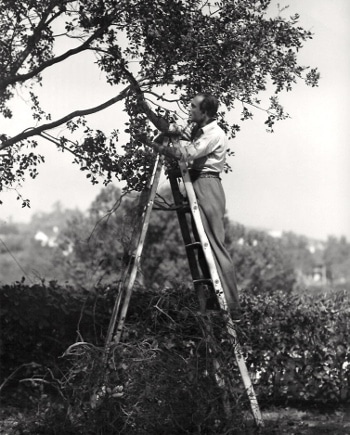
pruning

Yesterday we talked about a hugely important process happening in your brain in your twenties that’s crucial for young adults to understand: the simultaneous revving up of the intense, emotional, risk-taking limbic system, and the maturation of the steady, rational, impulse-checking prefrontal cortex. But how exactly does the prefrontal cortex mature?

The majority of our brain development happens in two stages: overproduction and pruning. First, the brain overproduces millions of synapses, more than it could ever use — it over-prepares for what’s to come. Then it organizes and prunes this abundance of neural pathways, getting rid of those not in use and strengthening and stabilizing those that are — much like an arborist prunes dead branches off a tree.

It has long been known that this overproduction/pruning process occurs during an infant’s first eighteen months of life. The brain ramps up production of cells to prepare the tot for learning an enormous amount of information about language and the world around him in a short period of time. After age three, it begins slowly pruning away the pathways not in use, so that the human brain is 95% developed by age six.

What scientists have more recently discovered is that a second round of overproduction and synaptic pruning begins in adolescence and extends into a person’s mid-twenties. This time, the brain’s overproduction of synapses is not centered on things a baby needs to know like language and motor skills, but rather on the abilities essential to navigating adulthood – rational thought, reasoning, impulse control, goal-setting, and planning. Synaptic pruning is the process through which the maturation of the prefontal cortex actually happens – the way in which you train your “CEO.”

Use It or Lose It

So how exactly does synaptic pruning work?

While the completion of the prefrontal cortex’s maturation will happen for everyone, not everyone’s corti will “set” in the same way. The development of your brain is not simply shaped by age, but also very much by experience.

Your brain does not prune its excess synapses in a willy-nilly fashion. What gets retained and what withers away is determined by what gets utilized and what is allowed to lie fallow.

As Meg Jay, author of The Defining Decade explains:

“In a use-it-or-lose-it fashion, the frontal lobe connections we use are preserved and quickened; those we don’t use just waste away through pruning. We become what we hear and see and do every day. We don’t become what we don’t hear and see and do every day. In neuroscience, this is known as ‘survival of the busiest.’”

Or as neuroscientist Dr. Jay Giedd puts it:

“If a teen [or twentysomething] is doing music or sports or academics, those are the cells and connections that will be hardwired. If they’re lying on the couch or playing video games or watching MTV, those are the cells and connections that are going to survive.”

Basically, what this means is that the education, experiences, and relationships you choose to pursue in your twenties will determine the course of your brain’s synaptic pruning process.

This means you need to be intentional about tuning your prefrontal cortex for optimal performance in the decades to come! What training do you want give to your prefrontal CEO? What skills and abilities do you want to train your brain to deftly perform for the rest of your life?

Some folks downplay the importance of the twenties by saying it’s simply a dress rehearsal for what’s to come. But if that’s the case, you need to ask yourself what role it is you’re preparing to play. If you’re eventually hoping to nab the role of loving, loyal husband, does rehearsing by having only casual hookups prepare you for that? If you’re hoping to win the part of independent business owner, what kind of practice are you getting for that role right now?

Strike While the Iron Is Hot, and the Metal Is Pliable
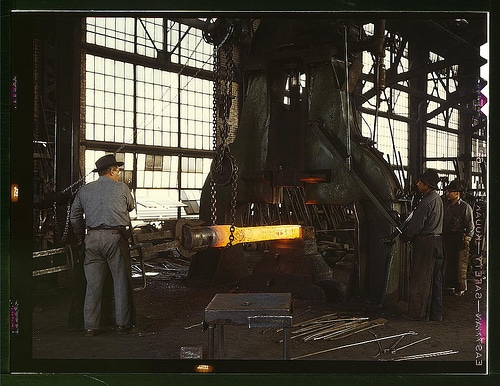
blacksmith

This final development of your brain is akin to getting a wiring upgrade – after it’s completed, the prefrontal cortex will run faster and more efficiently. But what you gain in speed, you lose in flexibility.

This makes the period before the wiring job is complete a time of enormous opportunity. While your brain is still flexible and malleable, you can – and must – take an active role in shaping how the wire is laid. Never again will it be so easy to shape yourself, learn new things, and become the man you want to be.

Now don’t get me wrong, brains are “plastic” throughout our lives. We can always change our habits and behaviors, whether we’re 20 or 60. But once the adolescent brain finishes developing and “sets,” changing our course becomes harder to do. The plastic of the adolescent brain is more malleable, while the plastic of the older brain is of a harder variety – it takes more kneading and heat to mold it.

Or think of it this way: up through your mid-twenties, molding your behavior is like making trails through a grassy field. Once your brain is finished developing, it will want to take the path of least resistance – the trails you’ve already made, the neural pathways that you’ve already forged. Creating a new trail, post-twenties, will mean hacking a path through a field that has transformed from gentle grass into a dense, weedy jungle that requires a great deal more effort to plow through. It’s doable, but difficult.
brain3

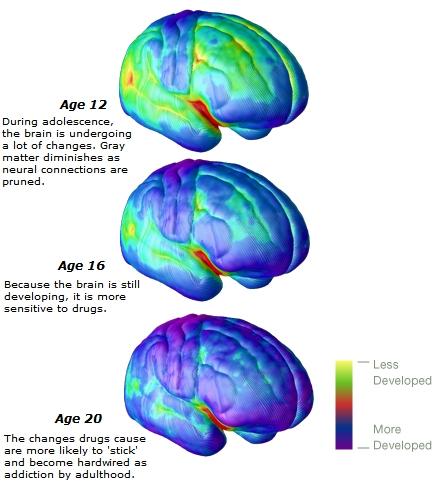
Throughout adolescence and into the mid-twenties, gray matter is pruned as neural pathways not in use “atrophy,” while those being utilized are consolidated and organized more efficiently. As the graphic alludes to, addictions that begin in adolescence get wired into the brain as it “sets,” making them hard to shake off in adulthood.

This is why researchers have found that after age thirty, your thoughts, feelings, behaviors, and personality become relatively fixed and stable. There actually isn’t much debate among experts on this point: some say almost no changes are possible after thirty, while other say small changes are, and that’s about the extent of the divide in viewpoints. What they all agree on is that the majority of who you are is crystallized by age thirty, and as Jay explains, “Our personalities change more during the twentysomething years than at any time before or after.” In our thirties, we simply “continue with, or correct for, the moves we made during our twentysomething years.”

The reason there are thirtysomething men (and women) who are still head-scratchingly immature, is that they figured they could spend their twenties drifting and partying and then one day when they turned thirty things would magically come together for them and they’d be ready to shift into another gear. But when their brains “set” – the plastic hardened — the things that were going on in their lives at the time – waking up on someone else’s floor and working at Starbucks – had been etched into their corti.

If you don’t want to be the guy who’s living like he’s twenty-three at age forty-four (even when he himself is tired of that life and is ready for a different stage) sculpt your prefrontal cortex in your twenties by seeking out experiences and commitments that will exercise and challenge your ability to plan, set goals, and discipline yourself. Stretching yourself now will solidify the best neural pathways, strengthen and season your prefontal cortex, and create a cognitive foundation that’s prepared not simply for a few years of fun, but for a lifetime of happiness and satisfaction.

Don’t Waste Your Twenties

running1

Understanding more about how the brain works shows that contrary to the idea that these years are disposable and inconsequential, the pursuits you undertake, the relationships you form, and the decisions you make during this decade can in fact have an enormous, outsized impact on who you become and how the rest of your life turns out.

This knowledge, coupled with an understanding of the special powers of the twentysomething brain we discussed last time, has hopefully convinced you that “thirty is the new twenty” is indeed a bunch of baloney. People who tell you: “Don’t worry. You’ve got all the time in the world,” may mean well, but are wrong — the twenties are not interchangeable with every other decade to come. They are certainly not disposable.

Your twenties truly represent a once-in-a-lifetime opportunity. A confluence of factors creates a powerful, but short window of time, and you owe it to yourself to make the very most of it.

But what does that mean? Must you forego exploring and adventure in your twenties and settle down as soon as possible? Hardly.

Your twenties are in fact the perfect time for adventure and exploration, but the experiences you choose should have an element of intentionality. They should not only let you see and try new things, but also broaden your horizons, impact your character, and help you learn and grow. Seek experiences that both harness your passions and exercise and stretch the executive faculties of your mind.

There’s room in your twenties for a season working the ski lift at a resort, but you should also make room for a season of leading troubled teens on wilderness expeditions. There’s a place in your twenties for an aimless backpacking trip through Europe, but there also needs to be a place for a well-building mission to Africa. It’s a good time to date, but it’s also an ideal time to get hitched.

Basically, the more of your pursuits that point, however indirectly, towards your end goals, the better. It’s not that you must complete all your goals in your twenties. When I say the twenties are the perfect time for launching big things, launching does not mean finishing – it means beginning.

While I started off the last post by listing some of the notable accomplishments made by men in their early twenties, I did so in order to showcase the vast, and often overlooked potential of young men. But just as telling as that kind of list is one that shows the things twentysomething men were doing that didn’t bring them immediate success, but put them on the path towards it:

At age 20: Plato became a disciple of Socrates, This relationship paved the way for Plato to develop new ways of thinking that would eventually become cornerstones of Western thought.

At age 21: Jack London set sail for the Klondike with the first rush of gold-seekers. His adventure in the North would create the fodder for many of his most popular articles and books.

At age 22: Charles Darwin signed on as the HMS Beagle’s naturalist for a five-year voyage to South America and the Galapagos Islands. Although his father had told him not to go, saying it would be a waste of time, the copious notes and observations Darwin made and the collection of specimens he gathered on the journey would lead him to develop his theory of evolution.

At age 25: Future mythologist Joseph Campbell rented a shack in Woodstock, NY and engaged in rigorous and intensive independent study, reading the classics for nine hours a day, for five years straight.

At age 26: “Johnny Appleseed” brought apple seeds to the Ohio Valley. Yes, he was literally planting seeds in his twenties.

At age 27: Kurt Vonnegut, Jr. quit his job at General Electric to become a full-time writer and Henry David Thoreau went off for two years to live alone in a cabin at Walden Pond.

The twenties are not about checking off all of your goals, but rather creating a foundation that will allow you to build towards them for the rest of your life. As Jay puts it: “There’s a big difference between having a life in your thirties and starting a life in your thirties.” Starting your life and creating a solid foundation involves seeking education, experiences, and pursuits that align with your goals, challenge you, and thus produce what is called “identity capital.” Identity capital includes resume entries like degrees and jobs and volunteer work, but also our people skills, the ability to be resilient in the face of setbacks, the ability to solve problems under stress, and an understanding of culture, the world, and human nature. Studies have shown, Jay writes, that “Twentysomethings who take the time to explore and also have the nerve to make commitments along the way construct stronger identities.” These identities are associated with higher self-esteem, perseverance, realistic expectations, a clearer sense of self, greater life satisfaction, better stress management, stronger reasoning, and resistance to conformity. All qualities that will stand you in good stead no matter where life’s journey takes you. Identity capital acts as the currency of careers and relationships; the more you accumulate the “richer” you become, and the more and more doors you can open as you move into your thirties and the rest of your life.

Wait Brett! I’m Over Thirty and This Series Has Seriously Bummed Me Out! Is There No Hope for Me?

I definitely noticed that were quite a few comments on the first post to the effect of: “Well, this is depressing. I wish I had read this earlier in my life. Now it’s too late for me.”

Cheer up ye thirty and fortysomethings (or ye spry, tech-savvy seventysomethings). This series was designed to inspire guys in their twenties to gain an understanding of how much potential this decade of their life holds, and that it should be taken full advantage of. But I don’t want older folks to walk away from this feeling like there’s no hope for them and they’ll just have to settle for wherever they are in life.

I do truly believe that the twenties are the ideal time to make important decisions, start big things, and make commitments – the unique but waning properties of the adolescent brain make it easier to do so than it will ever be again. But doing big things and making changes post-twenties isn’t impossible, it’s just harder. There are plenty of examples from history of men who made their greatest contribution to society later in life (we plan to put together a list of these late bloomers one of these days as well as cover steps you can take to turn things around). I also know several regular Joes who turned their lives around after 30 after spending their 20s drifting and now lead happy, fulfilling, and successful lives. For the disciplined and the dedicated, the gate to greatness is always open.

So to sum up: if you’re a youngin’, I beseech you to strike while the iron is hot and not let the opportunity of your twenties slip away. And if you’re a little longer in the tooth, don’t wish for what could have been, but push forward with your might. No matter what your age, a strong and wise captain can always turn the ship around.


Sources:

What twentysomething men were doing in their 20s was taken from ”What Other People Accomplished When They Were Your Age” generator.

{ 68 comments… read them below or add one }

1 Joshua Harris February 5, 2013 at 9:33 pm

What a great article. I would like to contribute that seeking personal development teachings from leaders such as Zig Ziglar, Jim Rohn, Brian Tracy and Earl Nightingale, would be extremely beneficial!

2 Perry February 5, 2013 at 9:39 pm

Stay hungry, stay foolish.

3 Rafeeq February 5, 2013 at 9:57 pm

I’m 22, and ready to get some things launching! And thank you for the posts, the efforts on this site are always appreciated.

4 Sean February 5, 2013 at 10:34 pm

I’m 25, just finishing college, and I still have no idea what I want to do. I’m currently reading a book about figuring out where your talent and passion intersect to form your “element”, but in all my life, I haven’t found anything that motivates me completely.

How am I supposed to go on from here?

5 M-O Amyot February 5, 2013 at 10:55 pm

22 years old here and still discovering the world. This article was facisnating, beautifully written and just gave me the motivation to learn, live and laugh even more.

I tip my hat to you two guys!

6 A_Simple_Man February 5, 2013 at 11:00 pm

Get Cracking!

No matter what your age is, there is no time like the present, to do better, to be better.

7 Wilson February 5, 2013 at 11:31 pm

Inspiring read. Every kid in high school should get a lecture on this, lest they squander their potential for success.

@Sean
Nothing completely fascinated me in college either. What I ended up doing was exploring things I enjoyed and could see myself doing, and then doing a deep dive into all the different intricacies of that field/subject. I was lucky enough that my particular interest eventually led to the discovery of a more niche (but growing) field, which then allowed me to pursue it wholeheartedly. I was about 22 when I made that discovery, and 24 now. So it’s not completely unreasonable. You just have to do as Big Brother Apple says and “think different”!

8 Alex February 5, 2013 at 11:41 pm

I was just about bummed out with the first article. I’m here at the end of my twenties, just turned 28, and couldn’t help feeling like maybe I could have done something different to make the most of my twenties.

I’m feeling much better after reading this article, feeling more empowered. I get the point that it’s not so much what I did in my twenties as it is what I did with them to ensure future success in life. All the hard work in college, the efforts to pick up and learn new skills and hobbies, setting myself up as a life long learner, those are the things that count.

Thanks! Great articles!!!

9 Mike February 5, 2013 at 11:41 pm

This was an inspiring article to read on my 25th birthday. Thank you, Brett and Kate.

10 Michael M. February 5, 2013 at 11:48 pm

Well said Brett. Love it and will share it.

11 Harriet February 6, 2013 at 2:11 am

Hi, I’m 20. At the moment, I’m just figuring out what I want to be doing (or starting to do) but I’ve been holding off, feeling like if I’m going to do something, it had better be exactly right; I hadn’t considered how you can work to go simply in the right direction. This has revealed such a fascinating way of thinking about starting goals in this period of my life, and I’m really glad you wrote this series.
As an aside, I often read the articles here; I haven’t found an equivalent for focusing on self-development and moral fibre (with such a rad mix of practical skills, and as a Classicist, I love the amount of Ancient Greek that makes its way in) anywhere in specifically female websites, so thank you for covering this bracket!

12 Fergus February 6, 2013 at 3:37 am

Really appreciate the article. This website serves as a constant inspiration to me.
I am 20 years old and barely scraping by financially as I’m a freelance film worker, but after reading this article I feel better about my choices, planting seeds from which good things will grow.

Cheers!

13 Dan February 6, 2013 at 5:29 am

For those of you struggling to find your mission or your purpose, check out paulo coelho’s alchemist. Good allegory with some solid lessons.

14 Mark February 6, 2013 at 5:35 am

I had a hard time deciding what I wanted to do at the age of 22. Done with college, I decided to enlist and join the military. Now 26, I can say its the best decision I’ve ever made and extremely rewarding. It is not for everyone but I would never have learned the things I have or traveled to the places I have without it. Great article and website, keep up the great work! You guys inspire me to be a better man daily.

15 Leonardo February 6, 2013 at 6:35 am

It was about 2 years ago that I found this blog, when randomly googling for kitchen knifes. What a priceless research =)
I’m almost 23 by now, and for sure, things changed a lot in this time frame. Exposure to new points of view, sources, subjects i’d never think about, and so on… awesome.

16 Patrick February 6, 2013 at 7:21 am

Brett, this two-part series has been excellent. The first part showed me how all these ridiculous emotions and highs and lows I’m constantly are completely normal, not to mention my frustrations with figuring out a career. Part two has inspired me to pick a direction (in this case, cultivating my writing and developing a continued desire to learn and read) with life and hopefully turn it into a career of some sort. It’s not the whole plan, but it’s a start. Thank you for these posts, and thank you for this blog!

17 Chad February 6, 2013 at 8:09 am

Awesome article. I’ve actually found in the last year or so some of the things you’d been describing in the previous article. I’m 21 now, and although I have generally been a pretty risk-averse person, I’m finding myself more drawn to opportunities that are less sure and ideas that are less concrete. These articles have helped me to see that as something good and natural, and not just as something silly! Thanks, Brett and Kate.

18 Patrick February 6, 2013 at 8:24 am

Ahh.. As invigorating as a strong cup of dark coffee in the AM! Thank you Brett for this fine read. It sent a current of self-worth and youthful energy through my veins today. –Patrick, 22

19 Aleksandr February 6, 2013 at 8:58 am

22nd birthday today, graduated from college 6 weeks ago….time to get cracking!

20 David February 6, 2013 at 8:59 am

Brett,

Good article, good job. Yet as a 59 yr-old (3 sons in their 20s) let me encourage you to give some strong attention to older achievement also, as you’ve promised. One such was a Pastor from the Netherlands named Abraham Kyper. He was accomplished as a younger man — but his greatest era of productivity and achievement was between the ages of 60-80! He started a newspaper, Seminary and became Prime Minister — ALL between 60-80! There’s also an Aussie writing books on brain research/training for executives whose name escapes me now…his book’s in my Amazon wishlist. You might wanna look at.
warmest regards,
Mr. Rockett

21 David February 6, 2013 at 9:07 am

Zig Ziglar also has a great response at the end of Juanell Teagues’ book on him _The Zig Ziglar Effect_. It a testimonial book of others helped by Zig and she interviews him at the end…asking, “Zig, what great accomplishments do you look back on in your career…” Zig, 69 at the time is playfully miffed by the question. He answers, “Juanell, my best day and greatest accomplishments are head of me. I think I’m about 10-yrs from peaking! God is not trough with me yet!” (all my paraphrase from memory). Great inspiration…for NOT quitting!

22 Kory Cochran February 6, 2013 at 10:04 am

Very interesting article, but I get that people are bummed that were not in their 20′s, as I did a bit as well. I’m currently 44 years of age, but I do think you are right on the money. I’d even go further than that and say that the first 25 years of life have a massive effect on brain development for the future. For the last 10 months, I’ve been on a journey to change my physical, financial, and spiritual health. Let me tell you, I’m learning big time that ingrained habits and thought patterns are so very hard to break, and I do believe change was so much easier before I had years to reinforce the neural pathways through bad habits. To the 20 somethings out there, learn success habits now, as it will mean much more success going forward as habit will create a exponential growth of results, bad or good, depending on the habit.

23 Red February 6, 2013 at 10:52 am

Brilliant series, well done Bret and Kate! I am always glad to see that AoM has uploaded a new article, because I can look forward to reading something both inspiring and enjoyable.

24 Austin Lumbard February 6, 2013 at 11:21 am

For the future post (men who accomplished much in a later period of their lives) see Harry Truman and George W Bush.

25 zenaxe February 6, 2013 at 11:51 am

Great article.

Request: Please make the next series: “What to Do If You’ve Wasted Your Twenties” since this is all about twenty years too late for me. ;)

26 Will Crawford February 6, 2013 at 12:31 pm

In regards to last paragraph, Bill Withers started his career in his thirties, record producers thought it was too late for him…

27 John February 6, 2013 at 12:37 pm

Excellent follow up to the last post. I want so many people I know to read this series, it is definitely a well written and interesting motivational tool.

28 bobster February 6, 2013 at 12:40 pm

to you young guys:

as a 59 year old (in his third career, with an awesome/sexy wife and 4 great kids), I really sympathize with the feeling of uncertainty/dread/hope that courses through one’s being in the 20′s. lemme suggest a few things to ponder –

1- You CAN succeed. Just start busting ass, and make it a lifestyle. Commit 8-10 hours a day to your economic effort and results will turn up.

2- Don’t waste too much time finding the exact perfect fit. You will starve before it happens.
Just get your hands moving, pile up experiences and credentials; pay your dues. Opportunities will come.

3- Being paid is a two-sided exchange. People give you their money when you give them what THEY want. If you solely focus on what YOU want to deliver without reference to the marketplace, you are headed for failure.

4- the flip-side of the butt-busting lifestyle is to commit yourself to stop the cyber-loafing. It is white sugar in the soul; It is your death sentence if you continue it.
I see some guys in my place of work surfing on the job… they are uniformly shirkers and going nowhere. First to be fired.
The best way to handle it is to designate a specific hour or half hour a day for web recreation, and then hustle the rest of the time.

5- gain achievement through accomplishment (a vibrant character and things you build),
not through purchased status (tattoos, cars, gear). Anybody can write a check for the latter.

6- put another way: as Jesus said, you sow seed in the short term and reap the harvest in the long term…. Instant gratification and its cyberloafing cousin are your two biggest enemies. Take the long view.

Times ahead may or may not be tough, but you’ve got it within your power to make stuff happen. Your 80 year adventure just beginning to blast off. Go for it!

29 Ted February 6, 2013 at 1:38 pm

I’ve been following AoM for about 2.5 years now, and I’ve read through posts made previous to when I started reading. As my first ever comment on any post I would like to note how awesome this line is: “For the disciplined and the dedicated, the gate to greatness is always open.”

Also, as a guy in my early 20s, I found this series to be very inspiring.

30 Jones February 6, 2013 at 2:21 pm

Immanuel Kant, possibly the greatest philosopher since Plato, published his first work when he was in his 50s. Hobbes, who basically invented modern political thought, published his first work, a translation, when he was 40, and his philosophical work more than a decade after that.

This isn’t to deny the point that the twenties are important, but the results may not pay off for a long time. It’s likely that most of what prepares the ground for future achievement is invisible to others, and even to ourselves.

31 Doug February 6, 2013 at 4:16 pm

Many thanks to Brett, Kay, and also the advice given by Bobster. As a 20 year old right now that literally just went through what seemed like a mid-life crisis about his major in school, In addition to being someone who is always interested about the psychology of the brain, I was very much relieved to read this article, and to also heed the advice given in the comments. Brett – Having experienced a form of it before, I’m sure it can be flattering, yet also incomplete to hear people just say “Thank you for this great article!” but no factual evidence of what they liked best, but this series in it’s entirety has truly made a difference and a positive impact of myself, and I will most certainly refer back to it in the future.

32 Martin February 6, 2013 at 5:54 pm

Very inspiring article. I am hitting 25 in a couple of days and reading this really motivates me to work even harder with the things I love.

Thank you! Love this site!

33 Doug February 6, 2013 at 7:19 pm

“Your twenties are in fact the perfect time for adventure and exploration, but the experiences you choose should have an element of intentionality. They should not only let you see and try new things, but also broaden your horizons, impact your character, and help you learn and grow. Seek experiences that both harness your passions and exercise and stretch the executive faculties of your mind.”

“Basically, the more of your pursuits that point, however indirectly, towards your end goals, the better. It’s not that you must complete all your goals in your twenties. When I say the twenties are the perfect time for launching big things, launching does not mean finishing – it means beginning.”

In reflecting on and meditating what I want to do, these are by far the best parts of this post. thanks again!

34 Ryan February 6, 2013 at 10:48 pm

Looking forward to your post on late-blooming success…. Brings to mind David Galensons book on the subject, “Old masters and young geniuses”

35 Nick February 7, 2013 at 12:44 am

This is about 8 months later than I needed it, but probably for the better. Graduated college last May, moved back with the parents. That coupled with having to work 2 jobs, having a long distance relationship (11 hours away) and fighting the urge to just up and move to Boulder or Portland means this article is just putting actual sense behind what I think I was already figured out.
Thanks for this site, truly. The article on moving back with your parents should have been seen earlier on my part, but still has a chance of securing a great relationship with my father as he struggles with letting off control for my life.
Cant thank you guys enough

36 Wesley Foster February 7, 2013 at 12:56 am

Brett,

This article could not have come at a better time for me. I needed this bit of inspiration. Thank you so much! I am currently making efforts to blaze trails of discipline in my own life and beginning to take action in my passions.

-Wes 19

37 Alex February 7, 2013 at 1:20 am

I’ve been reading this site for about 6 months now and this is the best series I’ve read. The reason I say this is because I’m 19 and and these two articles are just what I need as I prepare for the next decade. I would like to imagine that I would have accomplished a lot in my twenties even without reading these articles, but now I am at least more likely to make my twenties special. Thank you so much for the two articles and the book recommendation.

38 Brynn February 7, 2013 at 2:01 am

Astounding. I’m 24 right now, and currently in a dream job I have worked VERY hard to get. Had a lot of tough times, but things feel like they’re finally starting to coalesce. This series of articles has given me a little bit of perspective on why i’m so excited about my career but coworkers seem to be a bit more tempered.

Thank you for writing this. I hope to see more.

39 Cody February 7, 2013 at 4:19 am

About 22 is when it hit. MY problem is I wanna do everything. I make music, love sampling, mixing, the arts like drawing, painting, stop motion animation, live film, acting, screen printing, starting my own business like with chocolate or beer or designing shoes and clothes, learning about nutrition, body building, agriculture, farming, nature exploring, culture. It all interest me. We only have a finite amount of days to live before we go back into the dirt. Life is amazing duders!

40 Lawrence Edward Tonner February 7, 2013 at 7:44 am

Great article Brett and Kate! I’m nearly 27 now and I started turning myself around at 25…I got a new, much better job than the call centre I’d been in since 21, I got in shape and am now studying towards professional qualifications sponsored by my employer, and also taking any opportunity I can to meet the ‘bigshots’ in my company and others too, getting myself out there because I know it’ll be a lot harder once I hit 30!

41 Brian February 7, 2013 at 7:56 am

I’m 19 years old, and I appreciate this to no end. I’m thrilled to be entering my 20′s with a motivation like this.

Next year, I’ll have graduated college in 3 years, with hopes for grad school and a possible career waiting for me. This is encouraging me to not even be content with that, but to reach even further and accomplish much for who I, right now, think might be my future wife.

There is much to do, and I will bookmark this two-part series to remind myself of that. Thank you, very very much.

42 Rémy February 7, 2013 at 8:03 am

What a great article! I’ve discovered this site like two days ago and damn it’s one good discovery.
I’m myself 18 years old. First year college student and already in a desperate quest to find my goal in life besides finding that one woman.
It’s really motivating to dare to make some steps, to push it a little further and to throw some things in life away.

For example I’m now doing my first year in Architecture. I’ve always dreamed of becoming an architect, but now during the studies it just isn’t what I expected so now I’m planning to do Design and Concept; a college course I didn’t consider at first due to the low job possibilities. It’s a pity I need to wait half a year still because of the entry exams. Anyway I’m looking forward to the big change and this little article will help me stay strong in this quest!

43 Skyler Thornock February 7, 2013 at 11:18 am

I love this site! I stumbled on it looking for a remidy for razor burn n then found this article. Im 24 and nervous about if im making the right steps in life. With no real or successful figure in my life im keeping my eye on this site!
Im curently in school for ecinomics and just started renting a house bigger then i grew up in so I may be on the right track.

44 Zach Calhoun February 7, 2013 at 3:00 pm

Currently an 18 year old, I’m glad that I seem to be following this course! I learned about the “Hero’s Journey” while being a counselor at a summer camp. This consists of call to action, training, climaxing, and then reflection. I can’t say I’ve had the call, yet, but I’m definitely training, nevertheless. I look at Theodore Roosevelt for inspiration. He started from a young age developing the skills and character that would inevitably lead him to success as president.

45 T.O.Sam February 7, 2013 at 3:21 pm

I’ve been reading Art Of Manliness for sometime now, and really enjoy it and find it very inspirational. However, something about this article did not sit right with me. I can’t put my finger on it, but I feel like there were some pretty sweeping generalizations made about the average 20 year old life style.

46 Josh Siegl February 7, 2013 at 4:05 pm

I’m nineteen years old, I turn twenty in about six months. I can’t believe I stumbled upon this article! I couldn’t have asked for better timing, now i’m really looking forward to the immediate future in a way that I had never thought of before. Great article.

47 Timo February 7, 2013 at 9:11 pm

Excellent. Thanks. Keep up the good work.

48 Robert February 8, 2013 at 3:32 am

I’m 22 years old, just finished my apprenticeship and started to work at the same company with a nice, well payed job and with 30 days of holidays per year right away (not to mention 13th and 14th month salary). I’ve got a small apartment with a low rent and I’m single so I have a well income straight for me.

But this job is comfortable, way too comfortable. It does not demand me intellactual or is sophisticated. I have to deal with customers, manage databases and deal with customers’ orders.

This week I had to deal with Microsoft Excel and had to figure out a complex formula to solve a problem. And, damnit, I loved that! That reminded me to my physics and math lessons back at school where I had to solve complex formulas. And I’ve been thinking for a lot of months thought I COULD study natural sience. But I would have raise a credit for that and leave my comfortable live that I’m living right now behind.

But after reading these articles I’m more likely to do so. What is the worst that could happen? (here we are, I’m already analyzing it)

I should simply do for what I’ve a passion for and take the risk. And that is solving puzzles and complex logical problems. I love so much things, I’m interessted in geography, meteorology, arts, physics and math (as mentioned before), technology, health and biology, computing and the theoreticaly understanding of engineering (the lack of the practical part caused by don’t having many tools like my awesome dad :-/ ).

Thank you for this – second – article. I really appreciated it and it have changed my point of view.

49 First Hunt February 8, 2013 at 5:22 am

Great article Brett and Kate! I’m in my 20′s and hopefully on the right track.

50 Taylor Pizzuto February 8, 2013 at 2:29 pm

I just turned 20 a month ago and my mind is full of goals, aspirations, and questions. I’m hungry for more of life. I’m in college now which at times feels like a drag to my desire of going out into the world, but I know it is a good prep on what to take through life. I read these two articles at a great time to give me strength and tips to go and do and live.

51 Timmy February 9, 2013 at 9:48 am

This really hits home and is spot on, great inspiration for any guy of any age. I can eerily relate to this, after leaving a good corporate job at age 27 to pursue medical school, now I’m 33 and almost done! Dream big!

52 Sam February 10, 2013 at 3:08 am

I am in my 30′s and can definitely say that in our 20′s we have the opportunity to build a foundation but it is not a make or break era either.

Every day is a new opportunity to learn and take small steps to bigger accomplishments.

Of course, it isn’t wise to delay opportunities or to have a plan but at the same time it best to never quit, and never give up on our dreams and aspirations regardless of age or where we are in life.

-Sam

53 Saturn February 10, 2013 at 2:33 pm

Brett! Your site and particularly this article has had a huge impact on my life. Even though I’m just nineteen, there are times when I feel that my best years of my life have already passed away. It really is hard to describe the pain this causes, but it’s even harder now to express my gratitude for this site and the power I’m starting to feel in myself. I’ve always liked the idea of working hard and not giving up easily; however, my mind was influenced by so much garbage that I quickly gave in to nihilism and pointless hedonism. Although I can’t remember how I first found this site, but since that day, I started taking control of my life for the first time. Little baby steps have been made – still, I’m happier than ever. Thank you.

54 Gerald February 11, 2013 at 11:35 am

19 and currently nearly half way through university. This came at just the right time for me. For the last year and a half I’ve hardly taken a thing seriously and recently was feeling very crappy about my situation (It’s not bad but I’m wasting potential) and had no idea where to go. This has given me the confidence to forge ahead. Thank you :)

55 Josh V February 11, 2013 at 12:57 pm

This series reminded me a lot of the book “The Happiness Hypothesis” by Jonathan Haidt. This understanding of the evolutionary biology of the brain and how it applies to your psychology, philosophy, and faith is very interesting and inspirational. It opens your eyes to view the brain, your emotions, and outlook on life as things you can train just like and other muscle or skill.

56 cj February 12, 2013 at 2:40 pm

Great article. There are many things I wish had done in my twenties that I didn’t. But I did get my 10,000 hours of guitar practice in which means I get to have a guitar studio now in my 40s and I am loving it.

And I love the sceintific approach to this topic rather than some tavern, regular-type advice from the guy at the pool table.

57 Nathan February 13, 2013 at 12:51 pm

I’m a 22 year old musician and composer and you’ve challenged me to make time for the important things right now. Thanks a lot!

58 Adrián February 13, 2013 at 6:34 pm

Thanks for the article, it was kind of an eye opener for me.

59 Vinoth February 17, 2013 at 12:29 am

I gotta say this is one of the most inspiring articles I have ever read. I just recently turned 23 and finished college. I have been doing a lot of thinking about what path to take in life and where my true interests/passions lie. This article was truly eye opening for me and I will definitely be sure to take it to heart and begin taking the steps to shape my life the way I feel it should be. I kept thinking that it’s too late for me try to try new things and seek new experiences, no matter how ridiculous they may seem, but this article made me realize that it is only the beginning for me and that this is the perfect time for me to be a risk taker.

60 Alex February 18, 2013 at 1:45 pm

This happened to me at a very unconscious level starting around 21(Up to that point I was very risk averse) right around the time I bought the AOM book. I’m now 24 and ready to make some big decisions, invest the money I’ve saved,start my own business and use all the ideas I’ve studied to make my life and the world better.

I also love reading about brains. Thanks for your articulate and accessible article.

61 Bryan February 19, 2013 at 4:47 pm

Great article, would have been accessible too if I wasn’t 115 years old…

I’m actually 23, and I loved it – very encouraging and insightful. I love ideas that are grounded in biology, but can be formational to psychological/spiritual/mental development. Very interesting. Thank you!

62 Tony February 20, 2013 at 1:04 pm

Well… I’m 24 and I did nothing even remotelly important and I don’t think that is going to change…
I wasted my youth.
This series of post just makes me feel even worst.

63 Christian February 22, 2013 at 12:59 am

I’ve just turned 20 an hour ago and I just have to say thank you. I have always held a lot of importance in my third decade of life and some of my friends didn’t seem to understand why…and I couldn’t exactly articulate my feelings exactly. My main point was always that it’s a lot more badass to be young and successful than it is to be old and successful – basically, why wait? No one’s going to achieve my dreams for me. Being lazy is being wasteful of the precious seconds I have left to live. Thanks again.

64 David February 28, 2013 at 7:59 pm

I’m 20 and after reading the two articles on this and looking at what is going on in my life right now, I’m a bit freaked out because even thought I want to go out, explore, and take risks I feel boxed in by the fact that I am still at home (community college), I don’t have a job, and I have to work hard with school. I’m afraid that by the time I get out of all of this (into a four year school and have a job) I won’t have the time to do anything talked about in these articles.

65 Matt March 3, 2013 at 9:22 pm

I will be 27 this year and have been considering a career change. I have spent that last 10 years working hard and have nothing to show for it. I feel like I have wasted my youth working. I know that I have gained invaluable life skills and have grown as a person, but I am regretful and resentful also.

66 Ryan March 5, 2013 at 3:29 pm

Turned 28 a couple of months ago and was feeling pretty depressed about working constantly since I was 25 and ‘wasting’ my twenties- not getting to write every day and frittering my time when I could have been playing music, two of my ultimate goals.

It’s seductive- and as someone else said, white-sugar poison for the soul- to think ‘oh man, if I’d really started back then when I wanted, imagine how amazing I’d be NOW?!’

But now, focusing on the positives- I DID learn discipline and the ability to work hard, something I lacked and I need to learn to apply toward my goals.

I mentioned to a coworker in his late 50s once that I felt like I’d blown my chances to use my 20s to develop into a great writer and musician, and he started hysterically laughing. Reading the other posts on here by folks twice my age who are doing awesome things and only looking forward, I’m beginning to understand why..

67 Eric Scott April 10, 2013 at 2:45 pm

Your article jiggered what seem to be ancient memories. I’m 33 and consider my 20′s to be somewhat disastrous. Now however, they may not have been as bad as I thought. At 14, I lost my father which caused a massive 11 year up hill legal – identity – drug – expulsion – relationship war with myself. The dark days and tumultuous times amidst failing frequently in a wide array of areas seemed to be a time of failure and rebellion. However, now I’m a successful Multimedia Specialist transitioning into blogging and becoming an entrepreneur. My massive drive for an unconventional career and wild goals of traveling for 18 months while working now make sense. During my 20′s I was scammed, imprisoned, and fought voraciously. In my 30′s now, I’m a man of steel with gargantuan drive and passion for success and happiness. My 20′s delivered me one hell of foundation for growth and perspective in a rather twisted way. I’m constantly reading and thinking of non-linear ways to accomplish my goals. I’ve worked feverishly on impoverished maps, beliefs, and discovering my true path in life. I’m rambling and will shut-up. Great article. Thanks for the a wonderful trip down memory lane.

Furthermore, I think it’s difficult to have the understanding of what to do in your 20′s. This either comes from superior parenting, a keen sense of direction, or extreme punishment. Tony Robbins makes the point of pain and pleasure. Learn from the pain to seek pleasure.

68 Tom April 14, 2013 at 2:24 pm

Great article. For the people who are worried that they have wasted these formative years, I think it is worth mentioning that psychedelic substances- particularly the ‘classical psychedelics’ such as psilocybin (magic mushrooms), mescaline (peyote) and LSD- are known to have an anti-ageing effect on the personality. Recent studies have shown that a large part of what accounts for the unusual effects of these substances is derived from their temporary suspension of activity of the pre-frontal cortex. In this state, one’s conditioning from society, as well as self-conditioning through experience and repeated behaviour, no longer mediates our thoughts or experiences. To use the analogies of the above article, it is as if the holes in the sieve become much wider again, and the grass in the field we must hack through returns to the short length it was in our youth. As such, we are able to do our own neural pruning, discarding old patterns of behaviour which no longer serve us and carving out new routes and connections with relative ease. If you get the, dosage, intention, state of mind and setting correct (which isn’t THAT hard to do), a psychedelic experience has the potential to be one of the most profound and existentially significant experiences of one’s life. So although it may well be the case that our neural and mental constitution becomes more static in the years 25-30, this does not mean that they cannot become plastic once again for a short period of time with the help of psychedelics. While these experiences may only last a few hours, the inner mental work that we can perform on ourselves during this time can be equivalent to a complete re-wiring of the personality. I thoroughly endorse this kind of activity, but do your research first if you are thinking of this. Read Huxley’s ‘the doors of perception’ or john lilly’s ‘the human biocomputer’ and check out erowid.com. http://www.webmd.com/balance/news/20110929/magic-mushroom-drug-anti-aging-effect-personality

Leave a Comment

Previous post:

Next post:

Site Meter