Editor’s note: This is a guest post from John S. Kunze.
Falconry doesn’t have to be reserved for medieval dukes and Saturday Night Live skits. Though it has dropped out of favor in our increasingly technological society, there are still many men who enjoy practicing falconry today. Some of my best memories from childhood are of me and my dad prowling dirt roads with our eyes scanning tree tops and telephone poles, looking for the figure of a hungry hawk. Falconry is a great way to reconnect with nature, make friendships with other men, and enjoy yourself.
What is Falconry?
Falconry involves capturing, training, and housing birds of prey for use in hunting. Yeah, you’re using a bird to hunt with. How awesome is that? Falcons and hawks are both commonly used. Falconers can capture birds in the wild or buy them from breeders. Details about effective and humane traps can be found in books and guides or learned from experts. Investing the time and effort to capture your own bird can be very rewarding. Specially bred hybrids and other hard to find birds can be obtained by purchase. The bird is trained in hunting and obedience, and then the falconer “flies” the bird, hunting game such as rabbit and quail. It’s possible to keep a bird just to fly, forgoing the hunting aspect, but not everyone thinks that this is appropriate. Raptors have an instinctual desire to hunt, and forbidding them do to so while keeping them captive can be seen as arrogant.
History of Falconry
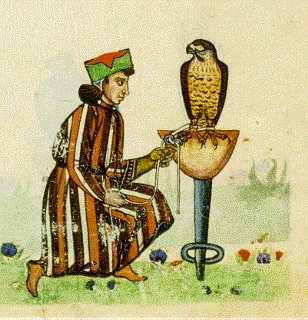
There is evidence showing that falconry was practiced anciently in virtually every part of the world, and it predates writing altogether in many places. Falconry was practiced by Mongolian soldiers during military campaigns to supplement food sources between battles and to provide recreation. Falconry was used as a symbol of status in China and as a symbol of military prowess in Japan. Falconry was hugely popular in medieval Europe, where it was often integral to a gentleman’s education and enjoyed by both kings and common men. Shakespeare practiced falconry and mentioned it several times in his plays. Although falconry declined as the use of firearms became more popular in sport and hunting, there’s no reason why men can’t enjoy the sport today.
Birds of Falconry
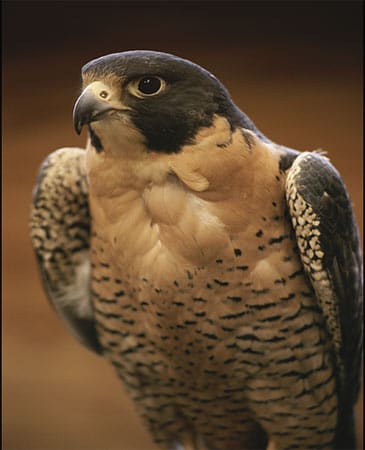
Peregrine Falcon
Falconry utilizes a wide array of raptors. The most well known bird in falconry is probably the peregrine. The peregrine is the fastest animal on earth, capable of diving at speeds above 200 miles per hour. (Take that, cheetah!) Most beginners start with either a kestrel or a red tail hawk. Kestrels can be very problematic for beginners because of their small size. They weigh only a few ounces, and an inexperienced keeper can easily run into health problems or inadvertently kill the bird. Red tails are easier to care for and are very common in North America. They are generally preferred over kestrels as a first bird.
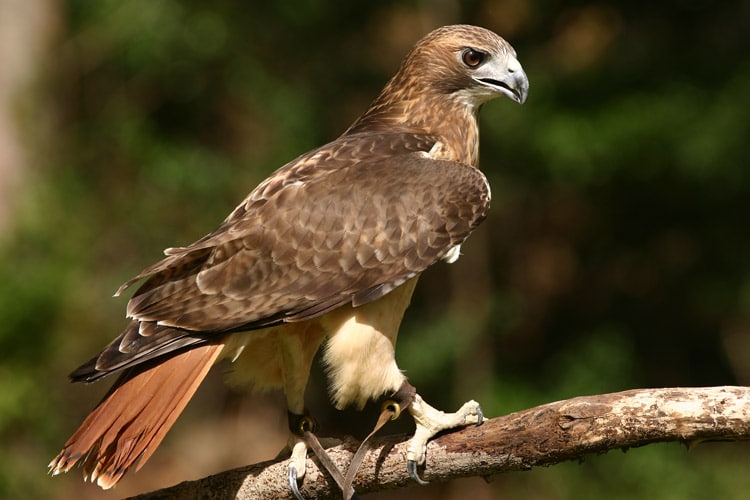
Red Tail Hawk
Getting Started
Once you’re set up, falconry is easier to practice than many outsiders may think. The hardest part is getting started, and this can indeed be daunting. You’ll need the following:
Proper licensing
Falconry is regulated in most places. In the U.S., your state’s Game and Fish Department can provide you with specifics. You can read the federal falconry regulations here. Elsewhere, contact your local game, wildlife, or hunting regulatory body for specific information. If there are no regulations on the books, falconry may not be legal in your area. In the U.S., both state and federal licenses are required to practice falconry.
There are three levels of licenses: beginner, general, and master. General and master falconers are allowed to select from a larger variety of raptors. These falconers can also keep multiple raptors, provided that all other considerations, such as housing, are in order.
In order to be issued a beginner’s permit, you have to pass a written test. A passing score is usually 80% correct answers or better. The North American Falconers Association suggests reading The Falconry Manual to prepare for your test. After obtaining a beginner’s permit, you’ll need to find an apprenticeship.
Apprenticeship
A beginner has to find an established falconer to sponsor them for an apprenticeship. If you know someone who’s a practicing falconer, that’s great. If you don’t, you can usually find a sponsor through organizations such as the North American Falconers Association or local clubs. Apprentices generally have to start with a passager. A passager is a raptor under one year old that has already learned to fly.
Apprenticeships last two years, so be sure that you’re ready for the commitment before asking someone for his time and expertise. During this time, the apprentice should be educated about the techniques and ethics of falconry, gain some hands on experience, and hopefully build a friendship with his sponsor.
Proper housing
Raptors require a level of housing beyond that of pets and many exotic animals. Housing facilities for raptors are called mews. Mews are generally the size of a bedroom or large tool shed, though they may differ in size or detail according to raptor species or other considerations such as local climate variation and whether or not you feel it’s appropriate to house a raptor indoors if you have children. You absolutely cannot scrimp on proper housing for your bird; if you’re short on space or money, hold off on constructing or buying a mew until you have the proper room and resources.
Mews need to provide the bird with a place to perch, shelter from the elements, and adequate space. They can be either indoor or outdoor facilities. Most mews utilize a “safety chamber.” This is a small entryway with one door to the housing unit of the mew and one door to the outside. By allowing the falconer to properly restrain the animal when entering and exiting the mew, safety chambers prevent birds from escaping or harming themselves. They’re also a great place to keep equipment such as gloves and scales.
Mews are regulated by falconry laws and must meet both local and national requirements. If you are building your own, be sure that your plans meet all the requirements before beginning construction, unless you’re dying for a new tool shed.
Access to land
Raptors need to be able to fly and get exercise. Not only is it very boring trying to hunt quail in your front yard, but you might scare the kiddos to boot. It’s also cruel to keep them cooped up all the time.
Knowledge of how to care for a raptor
Keeping a raptor is not like having a pet dog. In fact, it’s not like keeping reptiles or songbirds either. This bird’s a different beast, and there are a number of things you’ll need to know. Needed information can be learned from books on the subject and/or from your sponsor.
Basic veterinary knowledge concerning raptors
You need to be able to tell if your bird is sick. You also need to know what to do if your bird does get sick. Again, this information can be obtained from books and practicing falconers.
Drive
Drive is the most important thing you need to get started in falconry. Becoming a falconer is a lifestyle decision. You have to be willing to invest the time and energy it takes to care for your bird. It takes some time to get into falconry, and you’re going to need some patience, but it can be very rewarding. Remember that the apprenticeship takes two years. The necessary knowledge is not common among other forms of hunting or animal keeping, so you’ll likely have to start with a pretty blank slate.
A raptor can’t be set aside for a few weeks or months while you take a break from falconry; it needs regular attention. But if you’re up to the challenge, you can learn a great and unique sport. Many species of raptors can live twenty years or longer, and it’s likely that you’ll build a relationship with your bird just like you would with a beloved family pet. Think about the looks of amazement your buddies will have when they come to visit and you greet them with a falcon on your arm.
Are you a falconer? Any other tips on getting started? Share your experience with us in the comments.


{ 28 comments… read them below or add one }
I have always had an enthrallment with raptors, and would love to be able to do this someday. Thanks for the great ‘primer’ article!
I actually started the process of getting a beginner’s permit a while back. Unfortunately, the gentleman who was interested in sponsoring me failed to return any of my messages. So, I fell out of touch with it. Now, though, after my upcoming training, I’m hoping to re-kindle the interest. Thanks for posting this, it’s great info for a great recreation.
Interesting article, thanks. I had some acquaintances back in the 90s that trained birds and they were very good at it. Mostly pigeons and you would think they were smarter than some people I know!
Anyways, my two questions would be:
1- What makes falconry manly? Is it the art of taming a beast or the feast of eating the kill? Or both? This brings me to my next question.
2- What type of game are you going to catch with a beginner bird like the Red Tail? A mouse?? Will my family be dining on fine mice? :p
Cool article! It would be nice if you had more info on the actual training process, how to make the falcon do your bidding and how to capture one too. I wouldn’t know where to even start.
This reminded me of reading “My Side of the Mountain” when I was in grade school. The boy in the story caught a hawk/falcon (can’t remember) and trained it. I never looked into, but I wouldn’t have thought it would be so highly regulated. I’ve never known anyone who’s done this, but I don’t think I’m ready to do it myself right now. I’ll keep it in mind for the future though. It would be really awesome to learn how to train a hawk or a falcon.
Is the apprenticeship full-time or is it a weekend type of deal?
@Paul Williams – My Side of the Mountain! That’s what it was. I was thinking the exact same thing but couldn’t figure out where I remembered it from. I think I read that in 5th grade.
@Tyler: I loved that story. I even read the book again while I was in college.
@1916home Answers to your questions.
1-Falconry is manly in the sense that is the classic hunting method dating back millennia. A raptor is possibly the manliest “pet” you can train. I use “pet” in quotation marks because Ive heard falconers say that their birds are more partners than subordinates. Also, it is a great opportunity to get out in the wild and commune with nature–a manly endeavor by all standards.
2-A red-tail, although not as agile as some of the falcons is a very powerful hunter and can easily hunt rabbits, hare, grouse and other prey items.
Thanks for the article. I’ve always been fascinated with the idea of falconry; but I know I don’t have the time to devote to a bird of prey.
@ kasakka I’m glad that the article did NOT go into more about how to train or capture a falcon. I wouldn’t want someone to try to do it themselves without proper instruction. Not only are these birds rare, but they could potentially do serious damage to an inattentive handler.
What kind of time commitment is falconry? Yes, obviously the 2 year apprenticeship is extensive, but do the raptors need attention weekly? Daily? How often would you have to “walk” the bird? I think my question comes from complete ignorance. We all know the care differences between a cat (put out some food and leave for the weekend if necessary) and a dog (daily attention is *required*) but what about a raptor?
Ah, I am now Manly. Good article.
Our hawks are not anything like pets. Raptors can be tamed only to the point where they tolerate and accept you. Some might seem to have a bond with you, but it’s very shallow and tenuous. A falconer who forgets that will find himself or herself soon without a hawk.
I have had red-tails catch, among other critters, squirrels, rabbits, jackrabbits, duck, quail, and pheasant. they catch other things too that you wouldn’t normally eat yourself. And eating the game a wild animal catches with your assistance is pretty cool. Other game I’ve taken with other hawks and falcons include dove and grouse.
I can’t stress enough how closely regulated the sport is by state and federal law derived from international treaties. It takes a great amount of time, money, education, and dedication. While you have a bird in possession, you can expect to spend at least 1-2 hours a day with her when you’re not hunting or training. this time is spent feeding, cleaning, doing health checks, and other generally obsessive tasks and chores.
Sorry to here about your experience, Miles H., but it’s not all that uncommon. As a sponsor, I really look for an almost obsessive desire on the part of an apprentice to become a falconer. The reason is simple – every minute I spend helping him or her is one taken away from my own falconry. And to be a good sponsor, you end up spending a lot of time with your apprentice for his sake, the welfare of the sport, and most importantly, the welfare of any hawk he should come in contact with. Hang in there and keep trying – you’ll find someone.
I’ll check back later if anyone has any questions. For now, I’m ditching work early to head out with my hawk…
Falconer –
Is it necessary to own and house your own bird of prey as an apprentice, or can you work solely with a passager provided by your sponsor? This is something I would definitely be interested in undertaking, but based on my current living situation, ownership would not be possible at this time. Thanks!
Let me echo what Falconer said. Falconry is probably the most highly regulated sport in the US — the feds have their own set of regs and then each state has even more restrictive regulations. This takes a kind of dedication that goes beyond what many are willing to give. Falconry sponsors are very picky about who they take on as apprentices because of the time involved.
I wrote about one of the most hardcore falconers in North America in my book FALCONER ON THE EDGE so I lived and breathed falconry for a couple of years while doing the research. Falconers are like obsessed horse people or dog people only then there’s the added layer of blood sport.
Mike, at any level of falconry you have to have your own facilities and equipment and posses your own hawk to hunt. Notice I said “possess” – the law doesn’t let you own them, only have them in possession.
I waited many years, being the constant pre-apprentice, until I changed my life around (job, marriage, kids, etc.) to be able to give the commitment to it. No one who knows me expects to hold a higher place in my life than my hawk. Just the way it is.
Hi, Rachel, great book! I got it for Christmas and have finished it already. I highly recommend it it anyone who wants a good look at falconry and falconers.
Even though it does look extremely manly, it’s not for me. I’m transitioning away from animal harm, not towards. To be honest though there is hardly anything more manly looking than beckoning an animal to your every call. Cool.
Thanks, Falconer. Looks like I will be taking the same, patient approach as you then.
The Air Force Academy uses falconry during football games and other events. There are a bunch of cadets who do it including one of my best friends. They mostly use peregrines since that is our mascot. It’s pretty cool because of the correlation between this hunting activity now used for showmanship and its usage in the military.
Outstanding article. I have had a few trips to the Middle East with the Marines over the last 20 years and have witnessed some of the native peoples doing Falconry. It looks very fascinating and is the essence of manliness. On a whim, I looked at the regulations for California for Falconry on the Department of fish and Game website. After 10 pages of dizzying text on what you cannot do, I was left with this resounding thought: Do this somewhere else. It is way too painful to do it here. I am very interested to hear more from Julian on how the Air Force does it at the Academy. They probably have a very extensive program with how highly visible the venue is. Very interesting topic.
Richard, I respect your view.
One thing I would like to make certain is that our hawks view us as facilitators, not masters. They come to us only if they think it in their best interest. It is a very rare privilege to have a wild animal actively choose to remain with you every moment it is free to not do so.
Most of what they take is for them. After an exceptional hunt, we get to share. Success is very limited. You may go days or weeks without a kill, but every hunt is successful if hawk and falconer return. Some of my best memories are of hunts where the prey got away; the moves and blocks a cottontail rabbit can do to evade a predator are far more amazing than any martial artist I’ve ever seen.
Mark, California is no different than any other state in its regulations. Demonstration flying of birds of prey is quite different than falconry. And it has the same regulations as what you’ve seen plus some additional requirements to obtain that type of permit.
Prospective falconers,
I’d like to chime in about a few of my experiences as a falconer. I’m a Master falconer, I fly a Harris’ Hawk named Zen, or Z for short. We’ve been flying together for over 10 years. Here are a few things I know for certain:
1. There is no such thing as a bad hunting hawk. Take the time to give your bird good opportunities for success in the field.
2. Falconry is not just a sport, it’s a way of life. In the beginning it felt like an obsession. Over a decade later, its just part of my everyday life. Zen is just as much a part of my family as a dog or cat.
3. When you lose a bird that you’ve hunted with for years, you lose part of your soul. The bond that I had with my apprentice bird had a quality that I cannot describe using words. I miss him so much it hurts.
4. You’ll remember the day you trap your first bird, forever.
5. You’ll remember the day your first bird free flies and comes back to you, forever.
6. You’ll remember your first bird’s first quarry or kill, forever. My red tail, Nietzsche, was three weeks out of the wild when he lunged off my glove and caught his first rabbit. Ironically, he never got anything else off the glove, we both had a preference for him flying ahead and stooping down on his quarry.
7. Every day in the field is unique. Just when you think your bird is the Michael Phelps of hunting hawks, you’ll invite 15 people to come watch, and he won’t leave the truck. On the flipside, days when my bird seems crabby and impossible to deal with, he’ll follow me to the furthest ends of the earth.
8. You will strip down to your underpants and jump in freezing water if it means saving your bird. My advice, always wear nice underwear, your time is coming.
9. Your bird will never cease to amaze you. Just when you declare your bird is too slow or too fat to do something, is just when they’ll do it!!!
10. Your bird adores you. So when you’re waiting in the truck while your bird preens its feathers for 2 hours, don’t worry, it’ll come back.
11. I said adores you, not idolizes you. Watch the talons and don’t brag to your friends about how he hasn’t gotten you yet…….because you know what’s coming…you pulling a perfectly sharpened talon out of your arm.
12. There’s nothing like a day in the woods with your hunting hawk or falcon, enjoy the ride.
I’m always willing to talk….drop me a line…
Great useful information.I would say falconry has awed me since I was a child. I saw a film about traditional falconry in Mongolia with most majestic eagles. I have read that owls are much more difficult to train, and a special license is required (after a license for falconry…
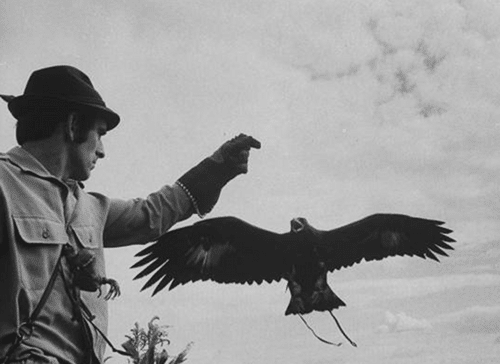
I was attracted to this article from google images of the image of the golden eagle returning to the falconers fist.
This is Ivan Marosi of the then Czeckslovakia, this picture was taken in September 1968 in Marchegg Lower Austria at the second International Falconry meet of the OFO which was the Austrian Falconers Order. I remember it well as it was the first big falconry meet I attended.
Can I ask how you came about the image.
a couple im friends with are falconers and ive been out with them a few times, it blows my mind every time how awesome it is to interact with such an intense animal
My entire family has been into falconry for a long time, and I agree with Falconer in all but one area… Though no one in their right mind considers their birds to be pets, you can have a closer relationship with some species than others. Harris’s hawks, being social animals, do bond quite closely with their trainers.
Dear all,
I have loved birds of prey from a very young age. Inspired by them i wanted to be a helicopter pilot to get as close to the feel of hunting from the sky as possible. But unfortunatly due to medical problems i had to settle with becoming a paratrooper instead! My current job means that i am never settled and am always on the move or away for days at a time. But it still remains my dream to hunt with a raptor. I am a british soldier and current reside in the UK so the US laws may vary to our own but from your wealth of knowledge and experience i would ask;
What is the best bird for hunting anything from rabbits to possibly small geese? (preferably falcon)
What is the Best bird to start off with (with respect to the first question)?
I heard that theres a difference between raising owls and falcons, What are they? (out of interest)
And finally, my dickhead mate says that birds are stupid and i should stick with my air rifle, do i punch him in the head or the gut?
All replys will be greatly appreciated
regards
H Nelson
Wonderful article,it’s gonna help a lot.
my name is Johnathan, i am 15 years old, and live in Jones OK. I love the thought of haveing a raptor as a hunting partrner, I seriously plan on becoming a master falconer someday. but for now i’m going to have to stick with teadiously studying the vocabulary requirements, and saving enough money to just get started. if anyone’s interested in teaching me as an apprentice in my area in a couple of years, please give a call
(405)778-9194
I greatly appriciated this article. I found it not only informative but also blunt.(which is good.) It explained the joy of falconry. but it also explained the comitment. I dearly want to be a falconer some day. I have always admired the birds and the sport, but, as JONATHAN stated earlier, I as well am stuck with school, the rather tedious, and at time bothersome work of algebra and latin.