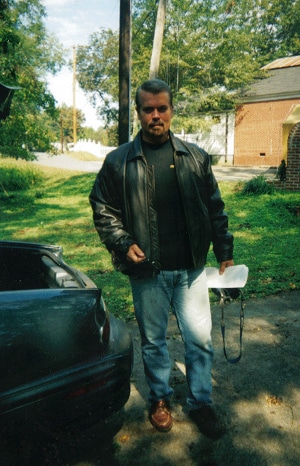






It’s once again time for our So You Want My Job series, in which we interview men who are employed in desirable man jobs and ask them about the reality of their work and for advice on how men can finally become what they always wanted to be when they grew up.
For this installment, we interviewed Mark Lemon. Mr. Lemon is a private investigator. How much does Mark’s life resemble that of Thomas Magnum? Not much it would seem. But he does sport a sweet Tom Selleck-esque stache. Thanks for doing the interview Tom!
1. Tell us a little about yourself (Where are you from? Where did you go to school? How old are you? Describe your job and how long you’ve been at it, etc).
I’m from Atlanta, GA, and graduated from the University of Georgia in 1979. I’m 53 years old
2. Why did you want to become a private investigator? When did you know that it was what you wanted to do?
Well, I became a PI in a somewhat roundabout way. I had previously been a Criminal Investigator with NCIS in North Carolina, and when my father became ill, requested to transfer at no cost to them, to the Atlanta NCIS office, so that I could be near him if he got worse. This they declined to do, and so I resigned (after all, family comes first to me, above all else). While it was good to be closer to my dad and my family, I was unemployed. Of course I had to seek employment somewhere, but didn’t really want to get back into law enforcement. As I was good at surveillance, I thought investigating in the private sector would be a good fit for me, and it was.
3. If man wants to become a private investigator, how should he best prepare? What’s the best route into the job?
Contrary to what most guys think, being a cop is actually a detriment to becoming a PI, instead of vice versa. Cops roll in loud and very obvious and visible, while a PI needs to be stealthy and very, very low profile. He needs to get information in a roundabout way, not by using the authority of his office, or uniform. So cops coming to the job find it hard to break old habits, and seldom have I seen cops become good PI’s. On the other hand, I have found that my experience in the military, especially in naval specwar, has been a great help in my current job. In my naval career, I went through BUD/S training for SEAL Teams, got injured about 2/3 of the way through, and then got into the Special Boat Units, tasked with inserting and extracting the SEALs. There, stealth and independent thinking was a valued commodity, just as it is in the PI industry. I would say that a guy with a good, practical military background (as an “operator,” not as an office “poag”) who takes the state course in licensing, who has learned a lot about deception, cover and concealment, and is a good fast thinker, will be a good PI.
4. How competitive is it to get a job as a private investigator? Do most guys set up their own business or work for someone else?
It’s not really that hard to get hired, as long as you’re qualified, but staying on the job is harder. This job has a lot of turnaround, and you see guys come and go due mostly to their own job performance. If you see a guy who has been at the same company for a number of years, it’s a safe bet that he’s getting the job done. Some guys leave and start their own businesses, but I know one such guy, who tells me that he’s being eaten up in insurance costs for himself as well as his investigators, so to me it’s not worth the hassle.
5. What is the best part of the job?
Working independently, making many of your own decisions, solving problems using your own skills and not having someone constantly looking over your shoulder.
6. What is the worst part of the job?
Boredom. Often you have to sit in a surveillance position for literally hours upon hours until something happens, if it happens at all. In such a situation, you can’t read a book, or newspaper to relieve the boredom, because as soon as you do that, something is bound to happen, and you’ll miss it. I should say here that I work workman’s comp cases exclusively, meaning that I conduct surveillances on people who claim to have been injured at work. As such, getting videotape of them changing an engine out of their truck, exercising, or other such activity, is the key to my work. Sometimes it happens, and sometimes nothing happens, but you have to remain constantly vigilant nonetheless.
8. What is the biggest misconception people have about the job?
I’m not really sure, but I feel that most people probably think it’s a lot more glamorous than it really is. It’s a lot of very hard work; doing hours of research online before you even leave the house, driving miles to the case, sitting hours on a site waiting for something to go down, getting it all on film, driving back home, and then writing it all up in a report. Not so glamorous. But there are moments, like when after hours of waiting, thinking the day’s wasted, and suddenly seeing the subject (supposedly completely disabled) drive from his place, you follow him for miles and miles to a junkyard, where he spends the next 2 hours crawling all over a junked car stripping parts off of it. And documenting it all on videotape. That makes the job worthwhile.
9. What is the work/family balance like?
Not too bad. While you may have to work some major holidays (as that’s when most people are apt to be active), you often start work very early, and so are able to return home in the neighborhood of 3 or 4 PM, instead of the 6 or 7 many others experience.
10. Any other advice, tips, or anecdotes you’d like to share?
Just an anecdote. Once I had to follow a woman back to her very secluded, rural farm house one afternoon, and set up surveillance to see if she’d do any work around the farm. This meant that I had to stay there all night, and wait until the wee hours of the morning when many folks do their farm chores. Well, there was no way I could just sit in my car in front of her house, or anywhere near it, due to the secluded nature of her place. I’d have stood out like a sore thumb. So I had to park my car about a mile away, and insert myself with my video camera into her area through some very thick woods.When I arrived, I set up my position behind a fallen tree, from which place I could see her house pretty well. I had to be very quiet as she had a lot of dogs which ran loose around her property. Well, I got into position, watched for many hours with no activity, and about 3 or 4 in the morning, fell asleep. After a while, I was startled awake by a rustling noise. I peeked over the top of the log, and saw a big black rottweiller sniffing the ground, and walking straight in my direction. I luckily had work camo fatigues, and had a navy K-Bar knife with me, as well as having sprayed myself with that scent-blocker that deer hunters use. The dog came closer and closer, and I had absolutely no choice but to become as still as I possibly could, making sure that I slowly reached down and grabbed the handle of my knife. The dog came right up to the log, stepped up on top of it, and stood looking over at me, and sniffing my clothes. After what seemed like an hour, but which was only probably 5 seconds, he stepped down, right onto my chest, then off onto the ground. He walked along about 15 more feet, then turned and ran back to the house. I lay there for about 30 minutes, making sure that he was really gone, and just trying to regroup my shaken nerves. Afterwards, I slowly made my way to another position with better concealment, from where I later got some good video of her working outside. I feel that on that day, more than on any other, I earned every penny of my salary.



{ 21 comments… read them below or add one }
AWESOME little piece, you guys.
“insert myself with my video camera into her area through some very thick woods.”
sounds dirty.
Great article-I love this series.
I had a question for Mark. You say that you work with workers comp cases, but I’m curious about the kinds of cases other PI’s do. What kind of stuff are they hired for?
Oh man, I’ve thought before that being PI might be cool next time I’m due for a career change, but when I read the rottweiler story I near peed myself in an unmanly fashion. Back to the career advisor!
@Jim,
Most of their clients are paranoid wives who hire them to follow their husbands that they suspect of cheating on them. Typically, as a nice side benefit and by-product of the wives being in such a fragile state, the PI gets plenty of good MILF action out of this scenario.
Very good summary. Mr. Lemon sounds like a skilled investigator. I’m in the private investigation business in New York. Most of my work is in the background check/due diligence/asset search areas, but we have plenty of surveillance work also, and Mr. Lemon’s description of the work is spot on, in my opinion.
Good article. I’m also a P.I. in California. I do very little surveillance. Most of my work involves criminal cases, background investigations and personal injury cases.
Overall, investigators of any stripe must be renaissance people, with broad knowledge, and a constant thirst for more. Every successful P.I. I know is an ardent reader, and is always studying something.
One skill pervades all investigative work: communication. One of the most important classes you would take in school is English. You could be the best in the world at getting information, but if you cannot communicate it thoroughly, accurately and understandably, you are worthless.
You build your reputation on thoroughness, accuracy and honesty. Anything else will leave you unemployed, or worse — much worse.
Oh, yeah, I have a rottweiler story, too. Two of them, in an unfenced yard, in the dark. At first I thought they were Clydesdales, but then they barked. I decided that I really didn’t want to go there.
Then there was the workers’ comp surveillance I did – in a patch of poison oak…
I did this type of work for an Inspector General in New York City. Its interesting work – I did all white collar crime – I was and am a lawyer – I also became a Certified Fraud Examiner. The best guys are always networking, reading as Dave said – always thinking about approaching things from a different angle. I also have to say that surveilance is exactly what Mark said – hours of sitting and then waiting for the money shot. I had to get a shot of a government employee (video) of him meeting with another person – thats just when traffic got bad and obstructed my view, a traffic enforecemnt agent tried to get me to move my car, and a bunch pf kids started telling po po (I was in the Bronx). A lot of waiting around, but the work had its moments. OH PS there is a lot of report writing and dealing with people – so you should be a good communicator
@Jim
Types of cases typically worked by private investigators:
Surveillance
Covert Video Surveillance and Photography
Mobile Surveillance (“Tailing”)
Covert Video Cameras- Sales, Rental, and Installation
Counter Surveillance and Counter Stalking
Insurance
Defense
Workman’s Compensation
General Liability
Premises Liability
Product Liability
Maritime Insurance Liability and Recovery
Automobile Insurance Fraud
Corporate Investigations
Employee and Management Awareness Training
Competitive Intelligence
Counter Espionage
Loss Prevention & Fraud, Theft, and Embezzlement
Internal Theft- Employee Malfeasance and Vendor Theft
Thefts from External Sources (Customers, Burglaries and Robberies)
Intellectual Property Management
Copyright and Patent Infringement
Signal Theft, Unauthorized Exhibition, and TV Programming Piracy
Pre-Employment Investigation
Undercover Employee Investigations
Employee Termination
Civil and Domestic Cases
Service of Process, Legal Process Servers and Subpoena Delivery
Employment Claims
Slander and Libel
Judgment Enforcement and Recovery
Nursing Home Abuse Investigations
Divorce
Activity Checks
Child Custody and Custody Exchange Stand-By
Premarital
Cheating Spouses and Infidelity
Skip Tracing and Locating Missing People
What is Skip Tracing?
Finding Friends & Family
Collections and Asset Investigations
Bail Enforcement and Fugitive Recovery (Bounty Hunting)
Missing Children
Missing Heirs
Escheat Accounts and Unclaimed Money
Collateral Recovery And Repossession
Adoptee/ Birthparent Searches
Forensic Computer Examination- Home and Business
Network Intrusion
Wireless Network Security
Personal Safety and Information Security Audits
Email Tracing
Internet Profiling
Criminal Defense Investigations
Political and Discovery Assignments
Scott Harrell
Pursuit Magazine
http://pursuitmag.com
It ‘ s very good . I like this..
That’s why I don’t do domestic cases, only non active criminal cases
Good article,but I take exception to your view that being a cop is a detriment to being a PI.I am both a former Marine Infantry and Recon SSGT and former big city cop and DA Criminal Investigator.Now if you spent twenty years driving a patrol unit or 20 years riding a bike and never got promoted beyond Senior Patrolman or Senior Corporal then yeah you have no business trying to be a PI.But if you are a narc,vice,homicide,robbery,sex crimes,intel,traffic accident or property crimes detective/investigator then you are well qualified to work as a PI.Hell,a cadet academy background investigator might make a good PI.This job is alot more that snooping around alleys.
So what would you have done if you had to kill her dog while trespassing on private property? Wouldn’t you get in trouble for trespassing? Wouldn’t you have also had the pants sued off of you for emotional trama ect. ect. and couldn’t the company that hired you be liable as well? Furthermore couldn’t you have gotten shot? I mean you where trespassing, had she of caught you stabbing her dog even if it were self defence I dont think she would have gotten in trouble if she did something. You dont have a right to trespass on people’s property like that.
Sounds like an interesting career. How would one break into a private investigation company? What type of schooling would you need?
For Mark, I asked the same question. You don’t need a college education(though it helps to have a 4yr in Criminal Justice and related fields). You want 2 years experience in pi, military or police work OR 4 years bachelors to have your own business, on top of license. But for work, you only need to apply for local pi firms and get license. Pursuit Magazine is an excellent website, and I learned alot through trail and error what I need to do to break in the biz. Hope this helps.
I wouldn’t mind trying out this type of job for a little while. I have worked as a cutter operator at a printing company for about 19 years. Could I possibly do this as a side job to make a little extra money? Maybe I could go undercover at a printing company as a bindery worker named Joe Juarez. Seriously are there simple types of cases I could try out first? I’m from Toledo, Ohio.
Oh, I also have a four-year degree in computer science and engineering.
Oh my…this is just the kind of career I’ve been dying to find. Thank you so much for sharing your story and so forth. I look forward to becoming a P.I. It sounds just perfect for my personality and life style type.
So, you trespassed and nearly killed a woman’s pet. Why would you tell people you did this?
I have a BS in Criminal Justice and am almost finished with my Masters in the same, focusing a bit more on the psychological side of criminals. I have considered being a PI but had no real idea of all it entailed or how to get into it. Glad I found this site. Sounds like it could be right up my alley – so to speak.