Most of us chase goals — starting a business, running a marathon, getting a promotion — without ever asking: What are the actual odds this will work?
My guest today says those odds aren’t just graspable — they’re hackable.
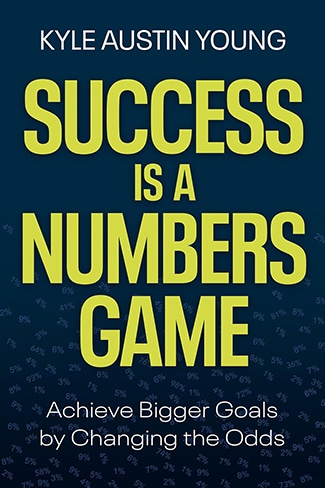
Kyle Austin Young is a strategy consultant and the author of Success Is a Numbers Game. He argues that every goal comes with a hidden probability of success or failure, and by thinking strategically — rather than just hoping for the best — you can tilt the odds in your favor.
In the first part of our conversation, Kyle explains the three common ways people pursue goals and their potential downsides. We then unpack how to approach your goals through probability hacking. We discuss how to spot the weak links in your plan, how to map out a “success diagram” that helps you avoid common pitfalls and pursue goals more intelligently, and how to use these same principles to know when you should quit a goal.
Resources Related to the Podcast
- AoM Podcast #387: Think Like a Poker Player to Make Better Decisions
- AoM Podcast #840: When to Quit
- AoM Podcast #490: Can You Learn to Be Lucky?
Connect With Kyle Austin Young
Listen to the Podcast! (And don’t forget to leave us a review!)





Listen to the episode on a separate page.
Subscribe to the podcast in the media player of your choice.
Transcript
Brett McKay:
Brett McKay here, and welcome to another edition of The Art of Manliness podcast. Most of us chase goals, starting a business, running a marathon, getting a promotion without ever asking what are the actual odds this will work. My guest today says those odds aren’t just graspable, they’re hackable. Kyle Austin Young is a strategy consultant and the author of Success is a Numbers Game. He argues that every goal comes with a hidden probability of success or failure. And by thinking strategically, rather than just hoping for the best, you can tilt the odds in your favor. In the first part of our conversation, Kyle explains the three common ways people pursue goals and their potential downsides. We then unpack how to approach your goals through probability hacking. We discuss how to spot the weak links in your plan, how to map out a success diagram that helps you avoid common pitfalls and pursue goals more intelligently. And how to use these same principles to know when you should quit a goal. After the show’s over, check out our show notes at aom.is/ProbabilityHacking. All right, Kyle Young, welcome to the show.
Kyle Austin Young:
Thank you for having me. Excited to be here.
Brett McKay:
So you got a new book out. It’s called Success is a Numbers Game, and in this book you argue that every goal, whether it’s to start a business, get a promotion, run a marathon, find a spouse even, every goal has a hidden probability of success and failure. And once you understand that, you can start hacking your probability of success. Walk us through when you first arrived at this insight.
Kyle Austin Young:
In many ways, it wasn’t necessarily a happy origin story. I think what I can trace it back to most clearly was a couple of layoffs. Early in my career, I had different management level positions at a young age, great opportunities. It was cool to have these leadership roles, and I got laid off twice in 13 months. In one case, I had just bought my first house. The second time we were in the process of adopting our daughter, which is a famously expensive process. And both times I had to go to my wife and say, I lost my income. And so as I thought about how I was going to ultimately replace that income, I was really fortunate. The day after the second layoff, I had four different people offer me positions. And what I learned from that though was that there were a lot of people who liked me.
There were a lot of people who respected the work that I was doing, and yet I was unemployed, right? And so what I ultimately drew from that is just the reality that the projects I was involved in were linked to my own future. It wasn’t enough to show up and do my job really well. If the projects weren’t successful, if the organizations didn’t succeed, I was still going to be at risk of losing my income. So ultimately, when I had those four different offers, I went to lunch with somebody who gave me some really generous advice and said, I hate seeing you have to restart over and over again. What if you took fractional roles with these four different organizations, diversified your income a little bit? So I did that, and one of the ways that I approached consulting was I wanted to do everything I could, regardless of what I was hired for, I wanted to take as much responsibility as I ethically could for that company’s success, for that project’s success.
I wanted them to be in a position where they could pay me for a long time. And so that really became the foundation of the consulting career I launched 10 years ago, and it’s grown since then. That led me to start thinking about every project having a probability of success, a probability of failure, wanting to have a sense of where those odds stood when I took on a new client. And then it was about what can I do to tilt the odds in my favor, make these people as successful as possible and reap the rewards of that shared success.
Brett McKay:
So you argue that when people establish a goal, they typically take three approaches to achieve that goal. The first one is people typically choose goals where they know the odds are on their side. They’re just like, yep, I know I can do that. I’m going to go for that. What are some examples of that and what are the downsides of pursuing this path to success?
Kyle Austin Young:
Yeah, a lot of people want to prioritize goals where they have good odds of success, and I totally celebrate that. In fact, I think that for many people, it’s wise to start with those goals before you pursue some bigger goals because typically success will beget success. The connections or the resources or the experience that you get out of these small wins will often change your odds on more unlikely pursuits. But when it comes to what are examples of people chasing goals where the odds are already on their side, a really famous example is nepo babies, the children of famous or successful individuals will have advantages at their parents’ profession. Most of us don’t identify as a nepo baby. Most of the people that we would call an nepo baby don’t identify as nepo babies. So that’s not necessarily something that’ll relate to everybody, but the reality is all of us have areas of advantage, and it doesn’t have to be an enormous advantage.
Just incremental changes in your attributes can have a huge impact on your odds. So if you’re open to it, I’ll give you an example that has some numbers that has to do with the idea of playing in the National Basketball Association. That’s a goal that a lot of guys have, especially when they’re younger. I had it when I was a kid, I don’t anymore, but that’s a goal that many people have had. And so one of the things that research has found is your height is a huge indicator of how likely you are to make it into the NBA. And so I’ll give you some numbers if you’re shorter than six feet tall, and the average US male is five foot nine, I’m shorter than six feet tall, I’m five 11. If you’re shorter than six feet tall, your odds of playing in the NBA are one and 1.2 million.
Those are terrible odds, one and 1.2 million. But what’s really interesting is if you’re between six feet tall and six three, that’s not a huge difference. Shorter than six feet to six feet tall to six three, your odds go from one in 1.2 million to one in a hundred thousand, and that’s still unlikely. But with this one small change, your outlook just got 10 times better. If you’re between six four and six foot seven, your odds are actually one in 8,000. If you’re between six eight and six 11, it’s one and 200. And if you’re one of the few people who are over seven feet tall, your odds actually according to this data published by the New York Times become an astonishing one in seven. So as we increase a person’s height, we watch their odds of playing in the NBA go from one in 1.2 million to one in seven.
That’s the difference between the total population of New Hampshire and a line at Starbucks. That’s the size of the change. And this all happened with just these incremental differences in a person’s height. So we all have areas where we have advantage. We may not have as much advantage as other people. There can certainly be wisdom in leaning into those goals, especially early in your career, early in your life. But as you’ve mentioned, there is a downside to that. And the downside is the goals where you have the best odds might not be the goals that you’re most energized to pursue. In my case, my dad’s an optometrist. He runs a successful optometry practice. I could have inherited that. Starting at your own optometry practice is a difficult thing to do. He’s done all of that. It’s already in place. I could have inherited that clientele. I could have inherited those systems, that equipment, and I would’ve had great odds at continuing the success of that practice. I didn’t want to be an optometrist. That wasn’t what ultimately made the most sense for me. So even though I have a lot of respect for what he’s accomplished, it wasn’t a goal that I wanted to own for myself. And so because of that, this opportunity where I would’ve had a pretty good chance of success was left kind of untapped by me, and I pursued different things.
Brett McKay:
So there are advantages to pursuing this path. It’s just finding out what your advantages are and capitalizing on them. But I just said, if you just pursue goals where your odds are in your favor, you might be playing it small or you might be pursuing goals you’re not particularly interested in.
Kyle Austin Young:
Yeah, absolutely.
Brett McKay:
So yeah, that takes some reflection. A second path people do when they’re going after goals is chase unlikely goals and hope you get lucky and you say, this is the most popular approach. Why is that?
Kyle Austin Young:
Yeah. And when I say the word popular, a more appropriate word might be common. I don’t think a lot of people are doing it intentionally, but the reality is that most people never stop to consider their odds of success. And I’ll probably get some opportunities while we’re talking to give examples of some of the mistakes we make in our thinking, but they don’t even stop to reflect on what their odds of success are. And most big goals are unlikely to succeed. If we think about even just the statistics that kind of circulate in the public consciousness, I’m not trying to give you numbers to cite in a research study, but it’s pretty well known this idea that nine out of 10 businesses fail. It’s pretty well known that most people who set a New Year’s resolution will fail to accomplish it. I googled that, and it actually says it’s between six and 9% of people who accomplish their New Year’s resolutions.
The vast majority are failing. So what can we take from that? Well, what we can take from that is that most big goals have bad odds of success, and most people are never even stopping to consider their odds. So I wouldn’t say that this is necessarily what most people are intentionally doing, but this is how most people are living their lives. They never stop to actually consider, is this something that I could reasonably expect to succeed at? And then they dive in with no understanding of what their odds are and hope that it goes well. But ultimately, I think that’s why we see such high failure rates to some extent. Some of it is just the inherent challenge level of these goals. Some of it is how little work people are doing to optimize their odds of success. And I’m here to help people try to do that more intentionally.
And I think that where it really starts for a lot of people is just this idea of thinking negative. And I think that’s what so many of us are afraid to do. We’re raised to think positive, we’re raised to believe, well, if it’s meant to happen, it’ll happen. We’re raised to kind of avoid the uncertainty of, in reality, there’s a chance that you’ll succeed. There’s a chance that you’ll fail. So we avoid looking at the potential bad outcomes that could sabotage our success. And when we don’t take those seriously, we don’t really give ourselves a reasonable chance of avoiding them and ultimately getting the outcome we want.
Brett McKay:
All right, so that second approach is just winging it.
Kyle Austin Young:
Yeah, it’s winging it a hundred percent. And I don’t think that people are doing it because they’re lazy, and I don’t think people are doing it because it’s necessarily what they want. I think most people believe their odds are unknowable and unchangeable, that they don’t think that they actually have a path to having a sense of what their odds of success are. And so I wrote this book to give people a way to actually understand here’s how likely I am to accomplish this goal, and then beyond that, to give them a five step framework for improving those odds so that they’ll have a better shot at getting what they want.
Brett McKay:
If I look back on all the big pursuits that I’ve taken on, I would say I was doing that second approach like, oh, that looks like fun to do. I’m going to go for it. And I really didn’t understand if it was going to succeed or fail, and I was just winging it. And I mean, some of them really paid off. So there can be some virtue in that.
Kyle Austin Young:
Totally. And there are some goals that we have a moral obligation to pursue. Even though the odds are terrible, we should try to cure cancer. That’s an unlikely goal. I’m fortunate to be an investor in a company that’s trying to create a new treatment for cancer, but obviously it’s an unlikely goal to try to cure cancer. That doesn’t mean we shouldn’t pursue it. So I’m not saying that it’s universally wrong to pursue goals with bad odds. I am saying that we have an opportunity typically to live more rewarding lives if we make space for high probability goals. And certainly if we do everything we can to optimize our odds of success at any goal we’re pursuing, regardless of how improbable it might be at the beginning.
Brett McKay:
Alright, so the third way you pursue a goal or unlikely goal is to do so strategically by plain bad odds through multiple attempts. And you say, this is the approach that artists and entrepreneurs often take. What does that look like?
Kyle Austin Young:
Sure. So a 90% chance of failure to many people means a dead end. If I were considering a goal that had a 90% chance of failure, it’s like, okay, well no point in doing that. That could never succeed. In reality, that’s not what that number is telling us. It means that for every 10 attempts, we predict one success and nine failures, but there is a predicted success. And so at a societal level, when we see those types of successes, we say that people got lucky. We say that, well, nine people failed. One person succeeded. I guess that one person got lucky. Not necessarily that person didn’t beat the odds. The odds played out as expected, and they were the beneficiary of those predicted successes. But there’s an opportunity for us as individuals to sort of act like our own miniature society and we can through repeated attempts, experience both the predicted success and the predicted failures.
And so an example of that in entrepreneurship, like you mentioned, would be a perva meta in 2020, it was eight years into the company Instacart, which he had founded, and COVID happened, and it drove thousands of new customers to give grocery delivery a try. And when that happens, he says, we saw five years of growth in a matter of five weeks. Over a span of 10 months, their valuation increased by over $9 billion. That has the appearance of incredibly lucky timing. And to some extent, I’m comfortable with people saying that it is, but it’s not miraculous timing. Meta estimates that he actually launched around 20 businesses before he founded Instacart. He started an ad network for gaming companies, a social media site for lawyers. And so it’s not that shocking that one of his 20 businesses was in the right place at the right time. So there certainly is merit in using multiple attempts to try to accomplish big goals.
And like you mentioned, that is also true in the arts. The goal of trying to create enduring works of art, it’s so unlikely that you would produce something that would still be talked about centuries later, an incredibly difficult thing to do. Some people who have accomplished it, Mozart accomplished it. Beethoven accomplished it. How did they do it? Is it this transcendent amount of talent that they had? Their talent certainly is helpful, but they’re also so much more prolific than we realized. Mozart, maybe five songs by Mozart, that’s probably how many I know. He composed over 600 pieces of music. Beethoven composed over 700 pieces of music, van Gogh painted and sketched so prolifically. He actually averaged roughly one new work of art every 36 hours for 10 years. That’s an incredible rate of production. And when you have so much input going into the world with a certain amount of talent, it dramatically increases your odds of creating something that stands the test of time.
Brett McKay:
You talk about the Miracle on Ice, when the US beat Russia, as an example of gaining success through multiple attempts. Tell us about that because people are like, well, how is it a multiple attempt? They only played Russia once. There’s that one game that decided if you got the gold or not.
Kyle Austin Young:
Sure. So in the context of that single Olympics, there was one game where they faced the Soviet Union. That’s true. What makes this an example of multiple attempts is the fact that the Olympics were played every four years for a long period of time, and the Soviet Union were absolutely this incredible favorite to win that game for nearly 20 years. They owned Olympic hockey, they won four straight gold medals than they got a bronze. And after the bronze, they went on a streak where they had 27 wins, one loss, and one tie. They outscored their opponents 175 to 44. Unbelievable how dominant they were in Olympic hockey. But there were some teams over the course of their full Olympic run that did beat them or tie them. The United States, Czechoslovakia, Canada, Finland and Sweden, those are the five teams that either beat or tied the Soviet Union out of the 17 total countries that the Russians faced.
So 17 opponents, five ever achieved some success. And it looks like a random list at first glance, but it’s not. There’s a common thread with all five of those countries. The Soviets faced the vast majority of their opponents four times or fewer. It was an average of 1.9 attempts, but five countries played the Russians more than three times that average with at least seven official attempts in Olympic play. And what five teams were those? They were the five teams that either beat or tied them. The United States, Czechoslovakia, Canada, Finland and Sweden. I got the really cool opportunity when I was writing this book to interview Jack O. Callahan, a defenseman from that 1980 US team, and he says that before they went out and took the ice coach, Herb Brooks gave a speech and Jack says he doesn’t remember exactly what the speech said. The different players on the team remembered a little bit differently, but he knows that he left thinking if we played him 10 times, they could beat us nine times, but they’re not going to beat us tonight.
And that is I think a reflection to some extent of the fact that the United States by playing them so many times, gave themselves an opportunity to win once they actually won twice. Over the course of that rivalry, the Soviets won the vast majority of the times they played, but there was some success for the United States. And because success begets success, sometimes even just one win can make a big difference. I have some stats in the book that I don’t know off the top of my head, but that show the change in makeup of the National Hockey League All-Star team after the Miracle on Ice, it inspired so many American kids to start playing hockey. And it was something like, it went from no representation on the All-Star team to now quite a few American born players are among the best hockey players in the world, and that all started with one win.
Brett McKay:
Alright, so this pursuing success through multiple attempts, it works. There are odds that are there, and if you do something enough times, the odds will maybe land on you eventually. The downside of that, I imagine, is that it could take a while or you could waste a lot of energy, time and money pursuing bad odds through multiple attempts.
Kyle Austin Young:
Yeah, that’s absolutely true. And there’s some goals where it wouldn’t work at all. If the odds are so bad, then you could spend your entire life pursuing something without ever finding success. Some goals. The nature of it makes it unlikely. Let’s take the goal of trying to graduate from college. There are people in certain circumstances who are going to be less likely to graduate from college. One filter that I show in the book is actually the size of their parents’. Income is a pretty strong predictor of how likely people who enroll in college are to actually graduate because that money that their parents have helps eliminate the risk of potential bad outcomes, being able to pay for tuition. What if my car breaks down? What if I need tutoring? Am I going to have to work a job? So it wouldn’t make sense for somebody who is trying to graduate from college to enroll in four separate universities with the hopes of playing the odds and one of them succeeding. So there are goals where it doesn’t make any sense at all. And in those situations, we certainly have an opportunity to choose goals based on our odds of success. But what I get really passionate about and the foundation of my consulting work is helping people change their odds and take something that might be a predicted failure and turn it into a predicted success.
Brett McKay:
Alright, so that takes us to the fourth way you pursue goals. This is probability hacking. This is what the book is about. But before you can understand probability hacking, you have to understand some rudimentary things about probability. The problem is humans have a really hard time understanding probability. Why is that?
Kyle Austin Young:
Well, I think that the biggest reasons, I just don’t think many of us get any education on it whatsoever. Something that I think is really interesting is that I think almost all of us took a class on trigonometry. Trigonometry is important, really interesting, but it’s for the most part, only used in really specific professions like engineering and architecture. I’ve never used trigonometry in my career. Probability affects all of us all the time, and most of us didn’t get any training on it at all. So I do think it can be difficult to understand. I think that I’ve worked hard to make it as understandable as possible, but I think the reason so many of us are struggling is nobody ever told us.
Brett McKay:
Yeah, I think I remember one section in middle school math where they talked about probability and then it was really quick and then you didn’t revisit it after that.
Kyle Austin Young:
Sure.
Brett McKay:
So when people try to think about probability, what do they typically mess up when they’re thinking about probability of goals, for example?
Kyle Austin Young:
Yeah, let’s unpack this in the context of an example. Okay, let’s say that you want to run a marathon. That’s a goal that you’ve set, but you’re doing it on sort of short notice. Let’s say you have 90 days to get ready. That’s by most standards, not a lot of time to prepare for a marathon if you’re not already an active runner. So you hire a running coach and she tells you, I can get you there. I can get you ready to go, but you’re going to have to do three things. I’ve got a three step routine. You’re going to need to eat, sleep, and train the way that I tell you to. If you do all three of those things, I can have you ready in 90 days. If you don’t do all three of those things, if you cheat on them or if you only do some of them, or if you’re inconsistent, there’s no way I can get you ready to run a marathon in three months.
So let’s take those three prerequisites to our success. We need to eat the way that we’re supposed to eat, sleep the way we’re supposed to sleep and train the way we’re supposed to train. And let’s put some numbers on it. And I’ve just picked up my cell phone, open the calculator app. This is very easy math, but let’s say that we feel pretty good about each of these things. I’m using made up numbers. Let’s say that we think that we have a 70% chance of sticking with the nutrition plan, a 70% chance of sticking with the sleep schedule and a 70% chance of sticking with the training regimen, going out and actually running. So there’s three things that need to go and we think we have a 70% chance at each of them. What many people do you ask? What are the mistakes that we make in our thinking?
What most people do is what could be called averaging. We look at the prerequisites to our success. We try to get a sense of in our minds how likely we are to accomplish each of those things, and then we typically average them. And so in this case, each of these things we think has a 70% chance of happening. Many people would say, great, I have a 70% chance of successfully running this marathon. Even the people who on pen and paper might get the math problem will still typically do that in their day-to-day thinking. But in truth, you can’t average if you have something that has to go right in order to accomplish a goal, you have to multiply those odds together if you want to get the actual estimate of how likely you are to succeed. So in this case, if we have a 70% chance of eating the way we’re supposed to, a 70% chance of sleeping the way we’re supposed to and a 70% chance of training the way we’re supposed to, we find that we actually have a 34% chance of being ready on race day. That’s a predicted failure. Even though each of these things look good individually, the goal as a whole is not expected to succeed. And I think that’s the number one mistake that people make when they’re thinking about their odds of success.
Brett McKay:
So that’s the key thing. That’s the key point you put there. Your odds of accomplishing a goal could be understood as the odds of each thing that must happen in order for you to succeed multiplied together.
Kyle Austin Young:
Right. And a lot of people miss the fact that the more things that have to go, the lower your odds are going to be. If there’s even one step that is unlikely to happen, then your overall odds aren’t going to be very high. That’s why we have to do what we can to change our odds of success.
Brett McKay:
And going back to that example of the marathon, another point about probability is as you accomplish a step, your odds start to go up. So in the beginning, it’s 34%. If you multiply 70% times 70% times 70%…
Kyle Austin Young:
Right.
Brett McKay:
Let’s say you successfully stick to the diet plan 100% throughout the thing. Well now your odds go up.
Kyle Austin Young:
Yeah, that’s absolutely true.
Brett McKay:
It’s a hundred times 70 times 70 after.
Kyle Austin Young:
Sure, that’s exactly right. In this case, the hypothetical I’ve set up is sort of poorly constructed for this in the sense that we want you to do all three of these things for 90 days, but let’s flip it. Let’s just for imagination sake say that for one month we need to follow a nutrition plan. Then for the next month we need to follow a sleep schedule. Then for the next month, we need to follow a training plan. If we were to make it through the first month, then we would only have two more prerequisites to our success. And if both of those had a 70% chance of happening exactly what you just said, we would be up to a 49% chance of success. That’s quite a bit better. If we made it through the second month for the last month, we would’ve a 70% chance of success, right? Because we’ve taken care of those other prerequisites. So you’re absolutely right for goals that have a more linear structure, which many of them do, every time you accomplish a step on the path to getting what you want, your odds improve. And if that was an unlikely step, your odds can improve enormously.
Brett McKay:
And going to that idea of an unlikely step, your odds can exceed your most unlikely step.
Kyle Austin Young:
Yeah, your odds will never be better than the least likely step. If there’s something that absolutely has to happen for you to succeed, let’s say that you have to have a certain superior’s approval in order to get a proposal through at work. Without that, it can’t happen. If you only have a 10% chance of getting that approval, then your overall odds are going to be lower than 10% because there’s probably other things that need to happen too. You can never outperform your most unlikely step, and that’s why it’s really important to prioritize those steps when you’re trying to change your odds. It can also be really important to try to front load those steps. If I need somebody’s approval in order to get a proposal passed and there’s only a 10% chance of that happening, it could be smart to start by asking for the approval so that if they say, no, I won’t waste a lot of time on trying to get other team buy-in, creating a prototype, putting pitch decks together, whatever the case may be. If I’m going to fail, it can be good to fail fast so that I can recover faster. Move on to other ideas.
Brett McKay:
Any other big picture ideas about probability that people have to understand before they can start probability hacking?
Kyle Austin Young:
I think the only other one is you need to recognize that the odds of all possible events add up to a hundred percent. If I flip a coin, there’s two possible outcomes, 50% chance of heads, 50% chance of tails in real life, our goals aren’t that simple, but the same principle holds the odds of all possible outcomes are going to add up to a hundred percent. What that teaches us is if we want to improve our odds of success, we have to get away from this idea that we’re going to somehow wish something into existence. A lot of people want to use commitment as this antidote to risk commitment doesn’t de-risk your goal at all, confidence or grit. That’s not going to reduce the risk of bad outcomes. In the case of the marathon, if we need to train for 90 days, what are some potential bad outcomes that could go wrong that could keep us from sticking to the training plan?
Maybe it’s raining on a day when we need to train. Maybe we get shin splints halfway through the 90 days. Maybe we lose our motivation and we just don’t want to get out of bed and go running. Maybe our family events happen in our lives and our schedule becomes too busy. All of those are potential bad outcomes that could keep us from accomplishing the training plan. All of those outcomes, the odds of each of the bad outcomes and the odds of the one good outcomes sticking with the training plan are going to add up to a hundred percent. And so if we want to change our odds of success, we need to think negative. We need to look at what are the bad outcomes that could keep me from getting this? How can I make those less likely to happen so that I can bring those odds over to my side? Probability can be understood a lot like how we’ve traditionally understood matter. The idea that it can’t be created or destroyed, it can just be transferred and rearranged. The odds that you want are hiding in your potential bad outcomes. We need to find those, make them as unlikely as possible and bring the odds over to our side.
Brett McKay:
Okay, so we got some basic principles of probability. I like the idea your odds of accomplishing a goal can be understood as the odds of each thing that must happen in order for you to succeed, multiply it together if there’s multiple steps in your goal, the way you figure out the probability is you figure out the probability of each step and then you multiply those together. And that leads to the idea that the more steps your goal has or more substeps your goal has, the odds are going to go down. True. Your odds of success are going to get harder because you add more things you can multiply. The odds of achieving your goal will never be higher than the odds, your most improbable prerequistie goal.
We talked about that also, commitment doesn’t magically change the odds just by wanting it more. If there’s a risk in something, then that risk still remains. Though. I do think that when commitment shows up as concrete behavior like working harder, prepping better, having a higher toleration for discomfort, it can increase your odds by shrinking specific ways you can fail. So I think those are the big things that people can think about so they can help establish goals and think about their probability of success. With that out of the way, we can start talking about probability hacking. And a key skill for this is success diagrams. So what is a success diagram?
Kyle Austin Young:
So a success diagram is where you map out everything that has to go right in order for you to accomplish a goal. And I know that’s a little bit challenging in an audio format, but you just painted I think a really good picture for us. It’s everything that has to go just lined up one after the other, and then ultimately at the end you can multiply those out and get a sense of your odds of success. And what I do is beneath each thing that has to go right, I write down the potential bad outcomes that I can imagine happening instead of what I want. So in the context of the marathon example, we made up a few for the idea of training that it could be raining on a day when I have to train, I might lose my motivation, I might deal with shin splints.
I put those beneath each. I call them critical points. But each of these prerequisite steps on the path to success. And then the probability hacking framework is really just the very fun, creative opportunity to try to systematically de-risk our goals. What can I do to make each of those bad outcomes less likely to happen if I think that it might rain on a day when I have to train, what can I do about that? Maybe I need a gym membership for the next 90 days so that I’ll have an alternative place to train. Maybe I need a treadmill in my house. If I’m worried about a lack of motivation, what can I do about that? Maybe I need a running partner, somebody who could hold me accountable, help me get through. This may be demanding season. If I’m worried about family or work swamping my schedule, what can I do about that?
Well, maybe I have an opportunity to train first thing in the morning before those things can all go wrong. Maybe I need to buy an extra pair of running shoes and keep those in my car so that if I get a gap in my schedule, I’ll be able to get out there and do this work. So you go through step-by-step potential bad outcome by potential bad outcome, trying to make each of those risks as unlikely as possible. And I want to again, just demonstrate the opportunity here. When we thought we had a 70% chance of accomplishing each of these three things, our odds were 34%. Let’s say that after this creative work of probability hacking, we think there’s a 90% chance we’ll eat the way we’re supposed to, and a 90% chance we’ll sleep the way we’re supposed to, a 90% chance we’ll train the way we’re supposed to. That’s a 73% chance of success. We’ve just taken something that was predicted to fail and turned it into something that was predicted to succeed. And we didn’t do that by really committing and really digging deep and saying, I’m going to run this marathon. That’s not going to prevent the rain. But there are some strategic steps we can take to prepare for that, to respond to that and to improve our odds.
Brett McKay:
Alright, so this is all about considering here are all the things that are going to have to go right. And then for each one of those things, here’s the potential bad outcomes that could keep us from getting what we want. And you just talked about an example where you put real numbers to certain outcomes, and that’s something you can do to ballpark the probabilities of things based on all your specific personal circumstances. And sometimes you can do research for statistics for the probabilities of things like starting a successful restaurant, but some of our goals are so personal that you’re not going to find outside numbers for it. You’re not going to be able to peg the probabilities exactly. But this framework still works to increase your chances for success. So give us another real world example where you haven’t put exact numbers, the probabilities of potential outcomes, but you can still use probability hacking to increase your odds of success.
Kyle Austin Young:
What we just did is something I call a predictive hack, but I also have in the book what I call an easy hack, where it’s not about predicting our odds of success. Predictions aren’t going to be perfect. I don’t have a model for you that’s going to give you perfect numbers. And even if I did, a 99% chance of success still says you’re going to fail sometimes, not often, but you’re going to fail sometimes. And I give some examples of people who have experienced really unlikely failures. I tell the story of a client, Marianne Roach Smith, who got this incredible book deal, did an amazing job writing a book that was so popular the day before it was supposed to be released. It was number 32 in the the entire Amazon store. This book was poised on pre-order to be one of the biggest books that have been released in years.
The next day her book comes out, she’s headed to the dentist when she gets a call from her husband, he’s the editor of a local newspaper, and he said, turn on the television. She turns on the TV, and she watched as a plane crashed into the World Trade Center. She’d launched her book on September 11th, 2001, and at that point, it didn’t matter that they were number 32 in the world the day before. All of a sudden, the media was so consumed by the news cycle surrounding the terrorist attack that there was no opportunity to launch a book. So having good odds of success doesn’t guarantee success, and that’s why sometimes it’s appropriate to even just take the numbers out of the equation. If we don’t know all of the steps that we’re going to have to accomplish, our numbers would be wrong anyway. So lemme give you an easy hack example.
When I graduated from college, I didn’t want to start with an entry level position. I just wasn’t motivated by that. I was 21 years old and I decided I was going to try something really audacious. I was going to apply to become the product development director for a health organization. If I got the job. I was going to be managing people in their fifties, sixties, and seventies, people with PhDs and master’s degrees. I was 21 years old. I had a bachelor’s degree in business administration from the University of Oklahoma. Pretty ambitious goal, pretty ambitious goal. I was interviewing against people who had so much more experience than I did, but I used the same approach, and this was years before I even started consulting. I tried to identify what are the potential bad outcomes that could keep me from getting this job. The obvious one was, what if they looked down on me because they think I’m too young?
So I took a really simple step in response to that. I just grew a beard. It wasn’t anything magical. It wasn’t anything crazy. I just grew a beard so that I could look significantly older than I looked without a beard to try to lessen some of those concerns. Another potential bad outcome was they might not want to hire me because of a perceived lack of experience. So I tried to change the conversation away from past experience. What I actually did is I wrote a book of everything I was planning to do to turn that department around and make it as successful as possible. I got that book Spiral bound. I handed it out to every person I met on interview day. And so we never talked about my past experience. We talked about here’s my plan for turning the department around. And so they never really saw these kind of glaring holes in my resume in the sense that I was a recent college graduate.
I didn’t misrepresent anything. I just tried to change the emphasis of the conversation. A third thing that I did was the concern that I wasn’t going to fit in with these other team members because they were so much older than I was. That was a potential bad outcome. So I asked one of the members of the team, have you guys as a group read any books lately? And she told me three books that they had read as a department. So I went and read all three books, and I remember one day we had a group interview. It was me and some other candidates. They all had gray hair. I was 21 years old, and I was able to make inside jokes and speak the company’s language because I’d read the same books. One of the books was a book called The Whuffie Factor. It’s about earning trust or social capital in the environment in which you’re competing.
And so when I’m using words like whuffie and my competitors are looking at me like, what on earth is he talking about? And all the internal team members are laughing, I knew that I had done a pretty effective job of hacking that potential bad outcome. The next morning after that group interview, I got an email from the CEO who I’d only met very briefly, but I’d given him a copy of one of my spiral bound plans because I’m crazy. And he said, you’re the most prepared candidate I’ve ever seen. And I knew I had a good shot after that. I ultimately did get the job, became the product development director, held that position for several years. It’s one of the jobs I was ultimately laid off from, but it absolutely positioned me for a career that I don’t think I ever would’ve had, at least not as quickly as I was able to have it without that initial success.
Brett McKay:
Okay. So yeah, so a success diagram, I’ll just recap here for our listeners. You basically establish your goal and then you break that goal into what you call critical points. These are sub goals. And then underneath each critical point or sub goal, you’re going to list out potential bad outcomes for that sub goal.
Kyle Austin Young:
That’s exactly right.
Brett McKay:
And then once you have that laid out, I mean easy as you said, you can just start looking at the potential bad outcomes and ask yourself, what can I do to eliminate or reduce this potential bad outcome? And that’s going to increase the odds that this critical point is going to be a success.
Kyle Austin Young:
As the odds of your bad outcomes go down, the odds of your good outcomes go up and your overall chance of succeeding can change enormously.
Brett McKay:
So that’s probability hacking.
Kyle Austin Young:
That’s probability hacking.
Brett McKay:
Yeah. Well, and then you also talk about something else you can do is not only look at how you can eliminate or reduce the potential bad outcomes of each critical point, but look for ways you can strap a rocket to a racehorse. What does that look like?
Kyle Austin Young:
Sure, there is some truth in that. Generally speaking, the most reliable way to change your odds of success is to go look at your potential bad outcomes. That is generally going to be the most reliable way, because that’s almost always going to work. You’re almost always going to have ways to make bad outcomes, less likely. However, you also have an opportunity, kind of like I alluded to earlier, to design the plan as a whole in a way that will optimize your success. So there might be a prerequisite where you need a person’s approval. Let’s use that again. I gave that example earlier, and we think that we only have a 10% chance of getting it. That’s meaning that our overall odds of success with this current path are terrible. They’re less than 10%. So we have to have this person’s approval and we don’t think we’re going to get it.
So how do you strap a rocket to a racehorse? Well, if we can design a path to that goal that does not require that person’s approval, that’s going to be really important. Is there another way to get around that? Or instead of thinking through the bad outcomes, why is this person likely to reject my proposal? That would certainly be one way to do it. There may be an opportunity to kind of circumvent that and just make a deal with the person. If you back my proposal here, I’ll back this thing that you’re interested in in the future. In that case, the bad outcomes aren’t given an opportunity to materialize because you just sort of took them off the table. There wasn’t really an opportunity to reject the proposal. You made the conversation about something mutually beneficial.
Brett McKay:
That’s another useful aspect of probability hacking, because not only can you see how you can eliminate the risk or reduce the potential bad outcomes, you can look at your plan and figure out, well, how can I rearrange things so that my odds go up? I think it’s a great, and it’ll help you determine whether you should even pursue the goal. Oh, a hundred percent. If there’s a prerequisite that’s like, yeah, that’s just not going to happen. It’s like, well, maybe I don’t pursue this goal.
Kyle Austin Young:
I try to step first.
Brett McKay:
Yeah. Even though you could do all the other stuff.
Kyle Austin Young:
Totally. I think a lot of people who are frustrated with some of the results they’ve gotten in life are people who pursued a goal that probably did not have high odds of success. They did it anyway. They didn’t really try to front load the riskier steps. In many cases, we actually avoid the steps that we’re most scared of. And so only after they’d invested significant amounts of time and money did they get to the steps where they were unlikely to ultimately be able to continue forward. And the losses that come from that can be detrimental to our lives for years. And so it’s really important certainly to optimize your odds of success also to, again, front load the steps that are unlikely to work if you have the opportunity to do that. And then to some extent, choose our goal strategically. If somebody told me they were trying to cure cancer, I probably wouldn’t talk ’em out of that. I think that’s a great thing. But if you’re just choosing between should I start company A or company B, I want you to start the company that’s more likely to be successful.
Brett McKay:
So you’ve been working with clients doing consultant work, and you’re doing this success diagramming with them. Are there examples from your own line of work where you saw people who had the same talent or opportunity but then one hacked their odds while the other didn’t?
Kyle Austin Young:
Yeah, I’d be a little bit hesitant to pit clients against each other. But I can tell you something that happened recently that I think is a really good picture of this framework in action. Because again, it all starts with a success diagram. It all starts with getting a bird’s eye view of here’s what’s going to have to happen for me to be successful and realizing that I have an opportunity to take ownership and change my odds. So recently I was hired by a nonprofit that does incredible work, helping the victims of human trafficking, of homelessness, of addiction, hunger, poverty. They’re in a part of the country that has a tremendous amount of need. It takes around 25 million a year for them to do this work. And about half of that money comes in through their thrift stores. They’re able to subsidize it through thrift stores that they own, which is really cool.
The other half comes in through donations, and they had noticed a decline in their donations, and they blamed it on the belief that the newsletters they were sending out were becoming less effective. People were getting bored with it. They thought the content was stale. So they hired different consultants to come in and try to revamp it. And finally they turned to me. When I got brought in really with the goal of creating a new content strategy, I did what I always do. I diagrammed out what’s everything that has to go right for someone to go from subscriber to regular donor for this ministry? And one of the things that was immediately obvious is people need to actually receive the emails. If there’s anything that’s causing them to not get the email where we need them to receive it, then it’s not going to matter how good the content is.
So I did some digging and found that there was actually a glitch in their technical setup that was causing emails to go to spam for a lot of people, and it was a different inbox than what the team was using. So they didn’t know that. They didn’t realize that a huge percentage of their emails were going to spam. I fixed that. And the content that they were already creating already sending out finally reached people and they were able to start to turn around this decline in donations that they had seen. So anytime you’re hacking your odds of success, there’s certainly cases and competitive goals where you have an opportunity to head to head out, maneuver someone else through your probability hacking. I can give some examples of that, but in the context of my client work, it’s usually about what is ultimately keeping us from accomplishing what we want. And a lot of times, it’s not necessarily the thing that I’m getting hired to fix. I go find it anyway.
Brett McKay:
Well, you talk about using probability hacking in competitive head-to-head games, and this is reverse probability hacking.
Kyle Austin Young:
Yeah.
Brett McKay:
What is that?
Kyle Austin Young:
Yeah, so reverse probability hacking, we’ll start with the default in probability hacking. I’m trying to make my potential bad outcomes as unlikely as possible. In reverse probability hacking. I’m trying to make my competitors’ potential bad outcomes as likely as possible. I’m trying to bring those bad outcomes to life. I give a couple of examples in the book. One is in the world of competitive swimming, when these super suits, as they were sometimes called, came out, these new swimsuits were designed that were incredibly aerodynamic. And as a result of that, all of these world records were falling. And there was a period of time where most of the top athletes were arguing that the ability to win a gold medal and the ability to set world records had in large part more to do with the swimsuit you were wearing than how talented you were. And I would totally call that an example of probability hacking.
There were people who found a way to minimize resistance in the water, and all of a sudden athletes who maybe were more physically gifted people who were more used to winning these races and setting these records found themselves on the wrong side. There was a really interesting season at the World Championships, I think it was in 2009, where some of the athletes felt so disadvantaged by the swimsuit companies. They had contracts with that they were putting duct tape over the logos of other companies’ swimsuits so that they could try to get away with swimming in what they saw as a faster suit without potentially being sued or fined by their sponsors. So that would be one example. But another one that I talked about in the book is in 2012, the presidential election. So not getting into politics here, certainly a less divisive political time over 10 years ago.
But when Barack Obama ran against Mitt Romney, Mitt Romney was very wealthy, very successful businessman, and one of the real perceived potential bad outcomes for him, both by his own team and by the Obama campaign team, was people might see him as out of touch because of how much money he had, especially in some of the blue collar states where he really needed to compete. So the Obama campaign very strategically did everything they could to further the argument that he was so wealthy that he was going to be out of touch with middle class Americans. And he only won, I believe it was one out of nine battleground states. So many people would argue that that was a successful example of reverse probability hacking.
Brett McKay:
Yeah, I went to law school. I have a law background, and you’d see this sort of thing. It’s basically gamemanship is what you’re doing.
Kyle Austin Young:
Sure.
Brett McKay:
You see this in lawsuits when an opposing party makes a discovery request. Well, instead of giving them exactly what they wanted, you just dump as much stuff on them as possible. So they got to spend money and time sorting through all this documentation, and the goal was just to muck things up for them as much as possible. And it sounds like that’s an example of reverse probability hacking.
Kyle Austin Young:
Yeah. I think it is. A potential bad outcome for those people is missing a key insight in the discovery process, and you’ve increased the odds of that happening.
Brett McKay:
How can you use probability hacking and success diagrams to know when you should quit a goal?
Kyle Austin Young:
So this is fairly intuitive, but if you have a good sense of what needs to go right in order to accomplish your goal, and you’ve been able to make estimates that you feel good about when it comes to each of these steps that you’re going to have to accomplish, and again, the success diagram process is designed to really be a gut check for that. This is a similar tool to what leading forecasters use to predict world events, but forcing a person to reckon with, here’s all the things that are going to have to go right. We’re going to stop and really consider what those things are for each one of those things. Here’s the potential bad outcomes that could keep us from getting what we want. And the odds of all of those potential bad outcomes, plus the odd of the good outcome, have to add up to a hundred percent.
Right? The good outcome can only be what’s left over after we’ve accounted for all the bad outcomes. When you do that, you get a more reliable understanding of how likely you are to accomplish a goal. So then you try to probability hack, you try to creatively and systematically de-risk your goal. You try to take out those bad outcomes as much as you can, and if at the end of it you still don’t like your odds of success, then you should really consider potentially pivoting to a different goal. And that doesn’t mean that you’re never going to be to accomplish that goal. I think that’s one of the biggest things that I try to emphasize. Well, there’s two things. One is, again, a success diagram is a path to a goal. It’s possible that you can find another path to the same goal. Maybe you’re not going to be able to accomplish it with this plan, but there might be a totally different plan.
So before you waste a lot of time and money trying to do what you’ve laid out, see if there’s a better way to get that done. But if you can’t think of anything and you ask for input, one of the great things about a success diagram is it’s visual. So you can show it to other people and they can look at it and they can give you feedback. But if you can’t find a way to breakthrough your odds still look bad, then I would encourage you to consider pursuing a different goal. But here’s what I would tell you to do, and I think this is so incredibly important. Don’t throw that diagram away. That diagram is a blueprint for what you’re going to need for your odds to one day change. I think about that in the context of ultimately getting this book published. That was a goal that I had since I was a child.
It’s a weird memory, but as I recall it, I was leaving my great-grandfather’s funeral when my mother asked me, what do you want to do when you grow up? That’s how I remember it. I could be wrong, but she said, what do you want to do when you grow up? And I said, I want to be a writer. And I remember that. I think I was like 11 at the time. It was a long, long time ago that this happened in my mid thirties now. So it took 25 years for me to ultimately accomplish the goal of writing a book. But the goal never left. I knew what I was going to need. I was going to need an agent. I was going to need an audience of people I could sell books to. I was going to need a message. I was going to need some credentials.
Like being a writer for Harvard Business Review and Forbes and Fast Company and Psychology Today, those are certainly things that gave me credibility in a publishing houses’ eyes. And so because I knew that, I was able to very leisurely almost collect those advantages over time to bring this childhood dream to life. So if it is time to quit a goal, if the odds look bad, don’t think of it as quitting it. Think of it as pausing it. Keep that diagram around. And as you live your life, look for ways to rack up advantages in the same way that maybe an under leveled character in a video game might go complete some side quests before they come back to fight the really big boss. You have an opportunity to do that with your goals.
Brett McKay:
I love that. One tip you mentioned, this came from Annie Duke. We had her on the podcast a while back. Instead of vaguely asking, do I think this will happen or not? Ask yourself, would you bet on this? And Annie says, as soon as you start thinking in terms of bets, you’re reminded that each decision has a risk and it forces you to think less vaguely. It’s like, okay, you think this is going to happen? Well, how sure are you? I mean, would you bet on it? And how much money would you bet on it? So it pushes you to be a bit more honest with your probabilities.
Kyle Austin Young:
Absolutely. Because I recall the Annie Duke book, Thinking In Bets includes a section where she references a study where a group of scientists were asked to make predictions on certain outcomes, and then the next time they were asked to make predictions with some hypothetical money, they were supposed to place bets. And I don’t even think it was real money. I think it was hypothetical money, but as I recall, the study found that they were more accurate when they had even this imaginary money on the line. Again, it’s a gut check. It forces you to stop and really do business with the things that might go wrong.
Brett McKay:
If there was one thing that people could start doing today to start probability hacking, what would it be?
Kyle Austin Young:
Think negative. Think negative. Everybody’s telling you to think positive. I think about the Pixar movie Inside Out 2. There’s the scene where anxiety is sending up all of these potential bad outcomes, and to some extent, they’re kind of dismissive of them. It’s like, well, don’t think like that. No, I say Do think like that, but don’t wallow in despair and fear. Instead, just really practically list out the things that could go wrong and do everything you can to make those less likely. I don’t think that it’s a problem to stop and really visualize the risks associated with our goals, unless we’re just going to let that cause us to give into discouragement. It doesn’t need to. We have an opportunity to respond proactively. So when you think negatively, when you recognize that sort of like how mattered cannot be created or destroyed as we traditionally understood it, your odds of success, you can’t add to your odds of success. You have to go take those odds from your potential bad outcomes. And when you do that consistently in the context of one goal, it can change your outcome over the context of several goals. It can change your career and over the context of a lifetime of goals, it can even change your legacy.
Brett McKay:
Well, Kyle, it’s been a great conversation. Where can people go to learn more about the book in your work?
Kyle Austin Young:
Sure. You can find the book anywhere books are sold. You can find it on Amazon, find it on Barnes and Noble. You can find it on the Penguin Random House website. You are more than welcome to come to my website, KyleAustinYoung.com. That’s a place where we can route you out to a lot of those retailers. If you want to connect with me, please also consider reaching out on LinkedIn. Kyle Austin Young.
Brett McKay:
Fantastic. Well, Kyle Young, thanks for your time. It’s been a pleasure.
Kyle Austin Young:
Thank you. Enjoyed it.
Brett McKay:
My guest, it was Kyle Austin Young. He’s the author of the book Success is a Numbers Game. It’s available on amazon.com. You can learn more information about his work at his website, KyleAustinYoung.com. Also, check out our show notes at aom.is/ProbabilityHacking, where you can find links to resources to delve deeper into this topic.
Well, that wraps up another edition of the AoM podcast. Make sure to check out our website at artofmanliness.com where you’ll find our podcast archives. And while you’re there, sign up for Art of Manliness Newsletter. We got two options. It’s a daily and a weekly digest. They’re both free. It’s the best way to stay on top of what’s going on at AoM.
And I’d appreciate it if you take one minute to give a review of the podcast on Spotify or your favorite podcasting app. It helps out a lot. And if you’ve done that already, thank you. Please consider sharing the show with a friend or family member you think would get something out of it. As always, thank for the continued support. Until next time, this is Brett McKay, reminding you to not only listen to the show, but put what you’ve heard into action.