






I Tested 6 of the Most Popular Multitools. These Are the Ones Worth Buying.
Every man needs a multitool or three stashed around the house or garage, or as a permanent part of his EDC. But how do you choose one in a multitool landscape that has hundreds of options, including for niche users like backcountry campers and first responders?
If you’re like many consumers, you start to do some research. But discussions and reviews of multitools can quickly become overwhelming and overly detailed. Most guys I know, myself included, are less interested in the sheer number of tools or the technical specs and more interested in one main thing: usefulness. How practical is this tool and how will it make my life easier?
On your behalf, reader, I recently sought to cut through the noise to offer some clear advice on what multitools are worth picking up. I did a bunch of research, made some choices, and tested six of the most popular multitools on the market today. The options (and most recommended tools) remain dominated by three primary players: Leatherman, Gerber, and Victorinox (Swiss Army) — all of which you’ll see tested below.
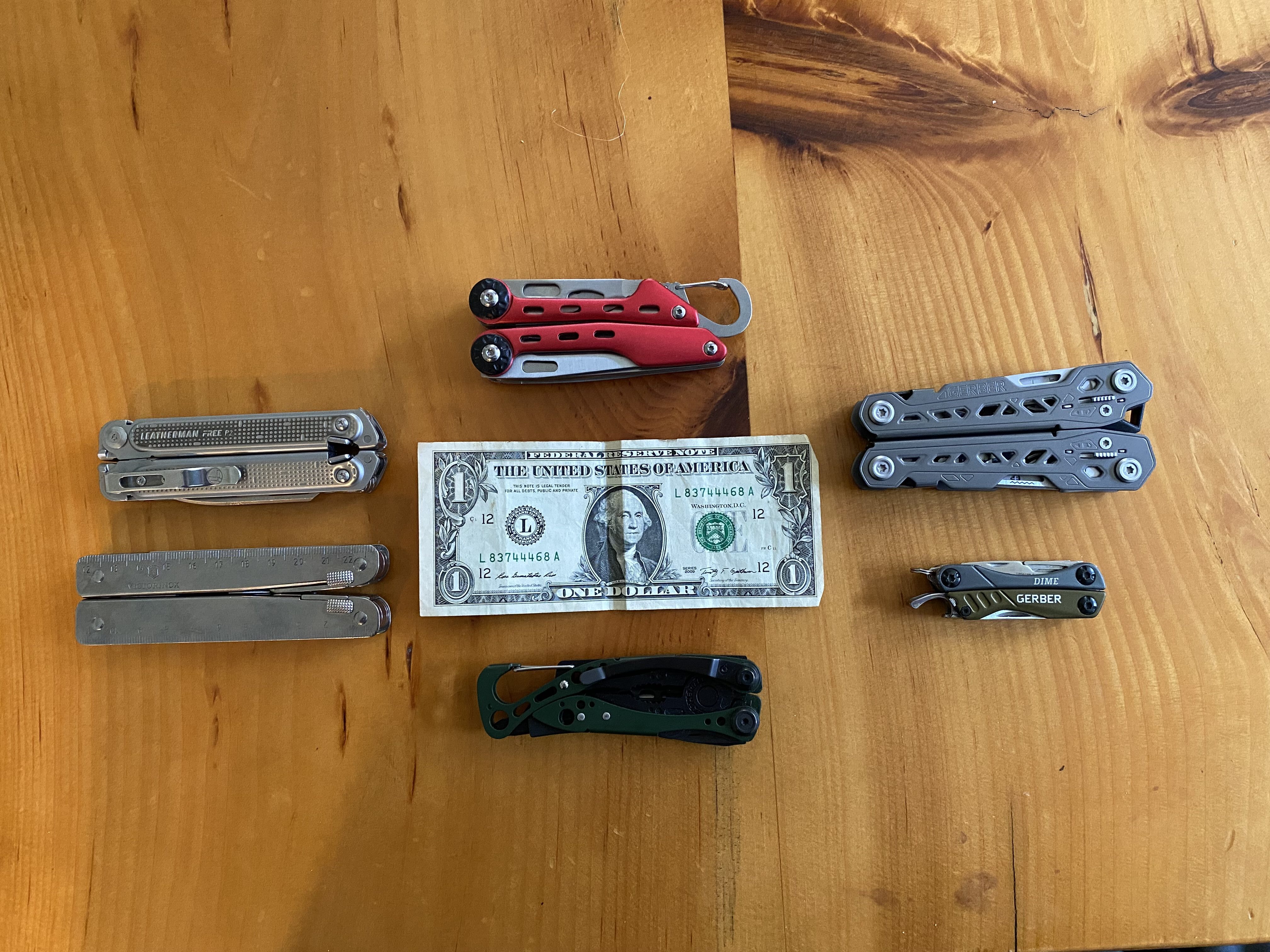
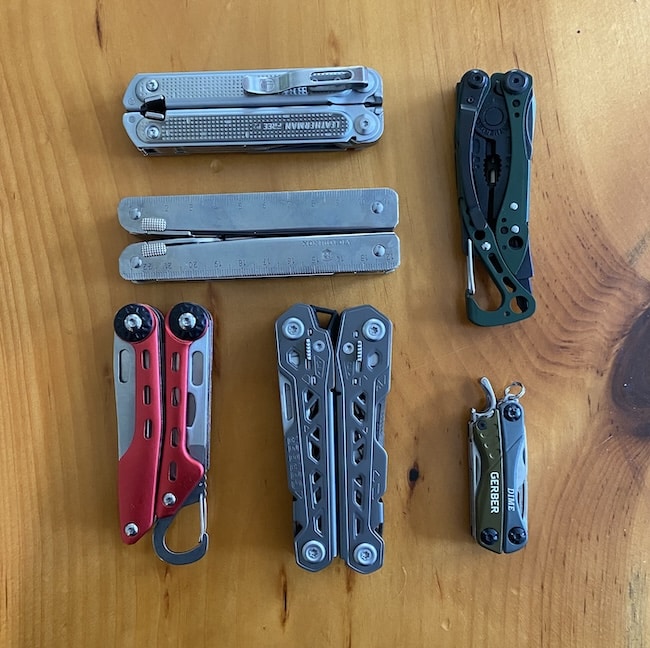
For size comparison. Starting on top and moving clockwise: Amazon Basics, Gerber Truss, Gerber Dime, Leatherman Skeletool, Victorinox, and Leatherman Free P2.
It should be noted at the outset that these tools, with one glaring exception, did a pretty good job with the basics and would be perfectly serviceable for personal use or given as a present (a multitool is a classic gift). Most of my quibbles are fairly minor: I didn’t like the action of folding a tool out or putting it back into place, opening the pliers was a bit more awkward than it had to be, or it just didn’t feel right in the hand. When you’re spending good money on a tool, though, you want it to do exactly what it’s meant to do — and in a comfortable, easy-to-use manner, to boot.
I’m not crowning a single winner here. Instead, here is a honest look at six popular options — and how to choose the right one for your specific needs.
Advertisement
Amazon Basics Multitool ($19)
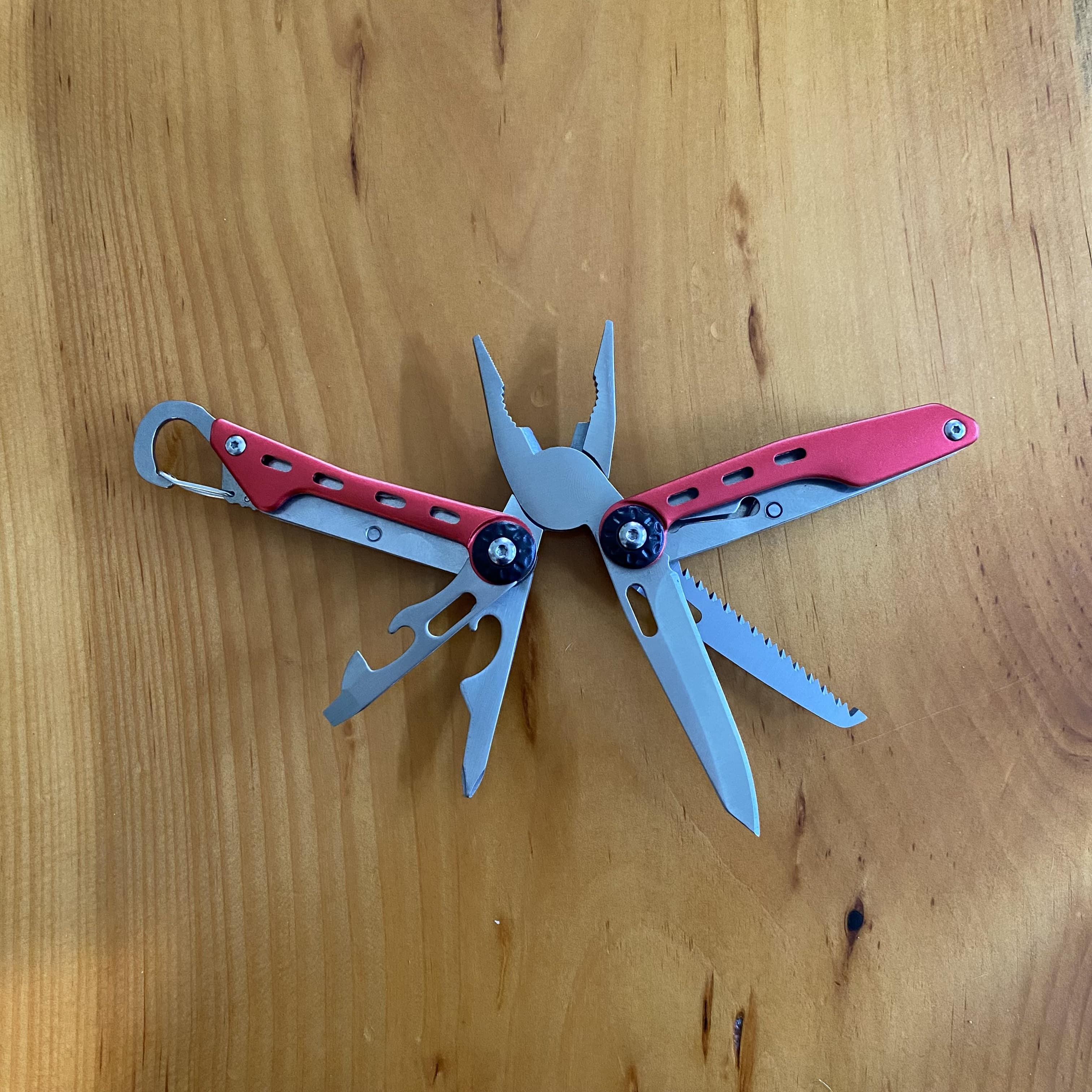
For the simple fact that this tool is sold under the Amazon Basics banner and is dirt cheap, it’s going to show up high on search results and sell a ton of units. Which is a real bummer, because this multitool blows.
Verdict
From the start, this tool just did not feel very solid. Its two main pieces move laterally, giving it a cheap and clunky vibe. The implements do not open or close very easily, and accessing the pliers is a less-than-smooth experience. This review is short and sweet: do not buy the Amazon Basics multitool for yourself or your loved ones.
Victorinox Swiss Tool X ($155)
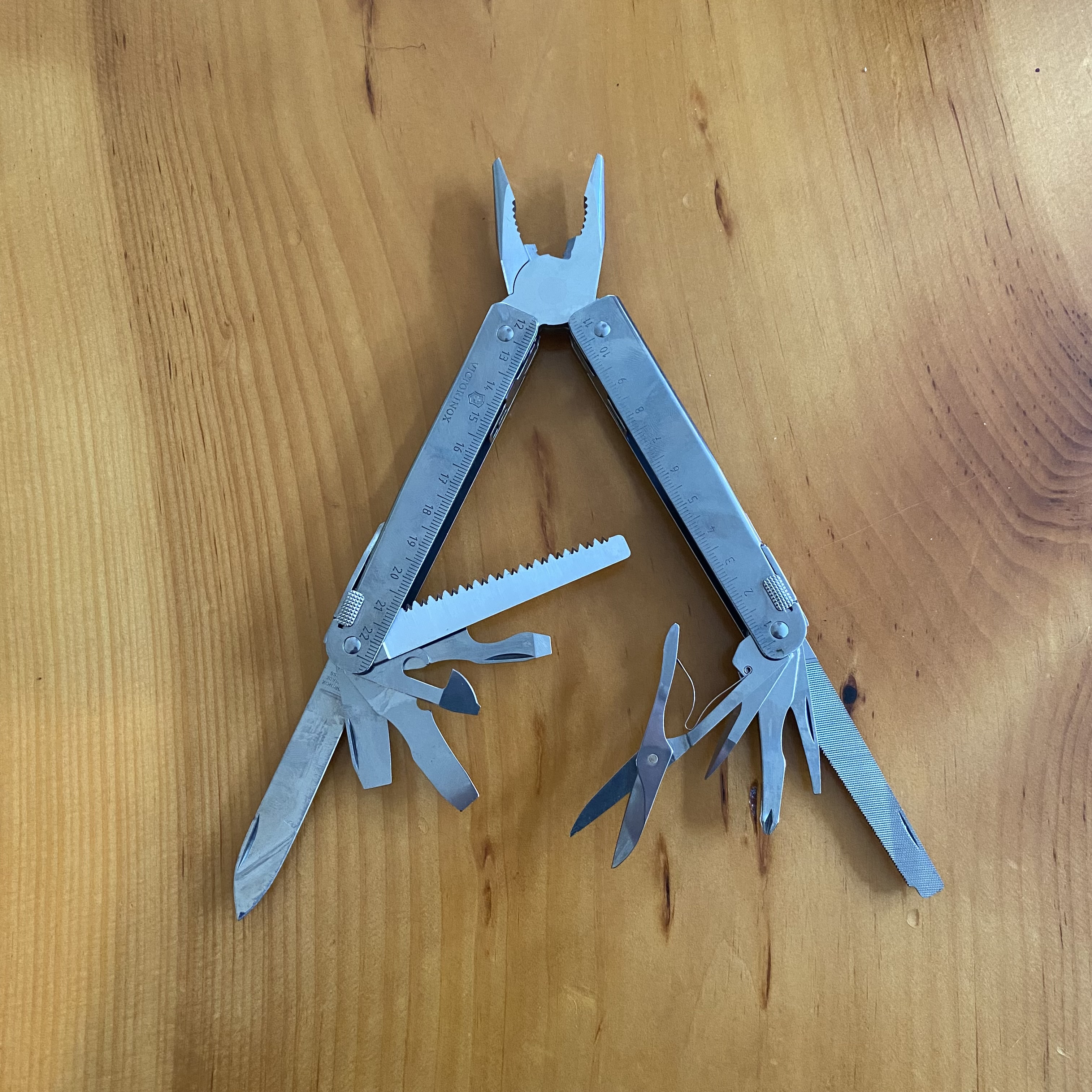
The maker of the original Swiss Army knife has been around for nearly 150 years. They’re best known for their red, pocket-sized tools that are centered around the knife and screwdriver bits, as opposed to today’s tools that are generally built around a hefty set of pliers. While I didn’t test one of the red classics, I did buy one of their modern options that is more like the standard modern multitool.
Verdict
The Victorinox was the longest tool I reviewed and among the top two heaviest. Bulky can be okay, if the benefits outweigh that downside, but that’s not quite the case here. A big part of the problem with this one is that it features a very polished mirror finish, making it slick to hold and use. When it comes to any tool, a good solid grip is critically important, and this multitool is lacking that in a big way.
And while opening and closing the integrated implements is generally smooth, the inner functions are not the easiest to access and required some fingernail fiddling that wasn’t very fun. Those downsides, along with the hefty price tag, mean that the Swiss Tool X is not one of my top choices.
Advertisement
Leatherman Free P2 ($130)
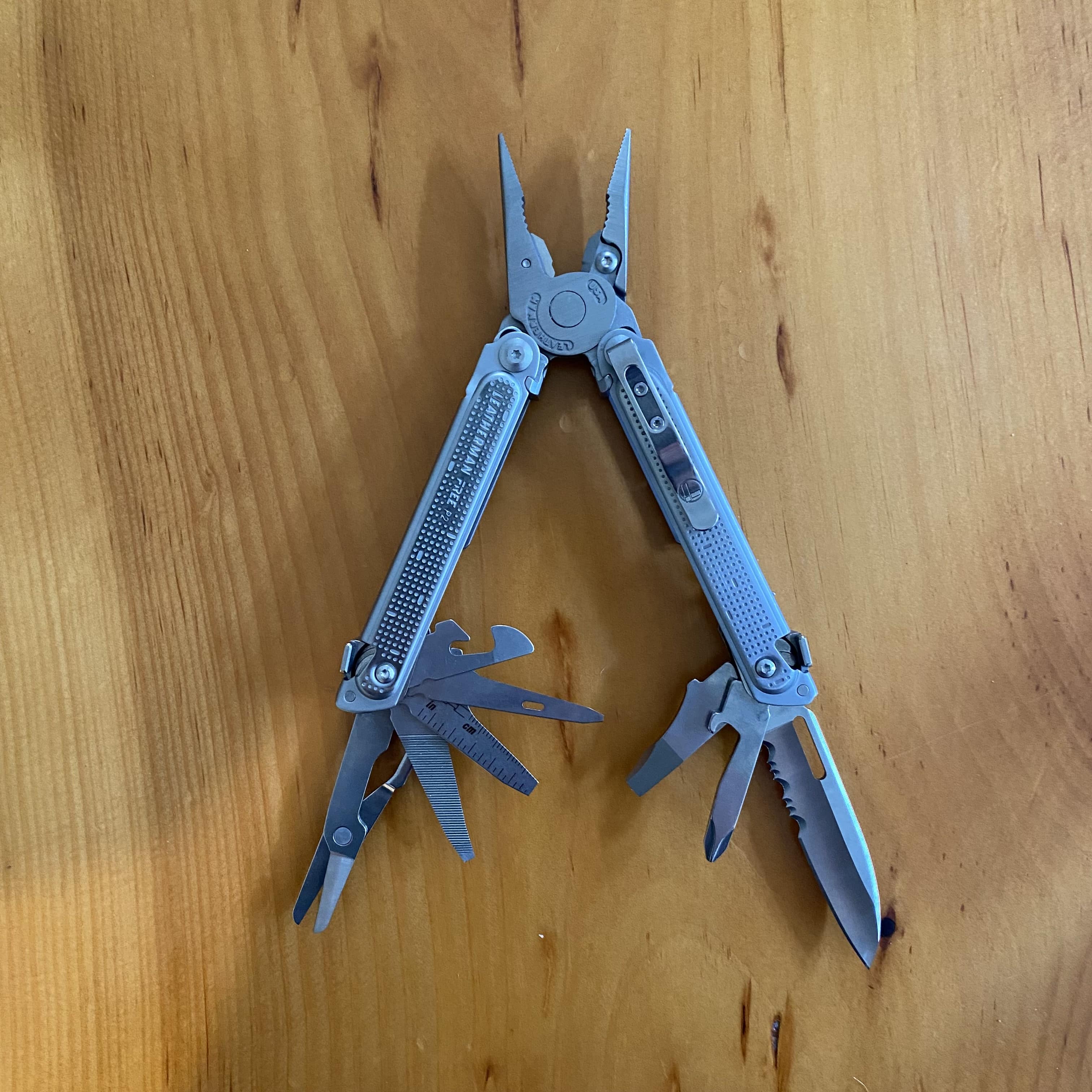
No multitool review would be complete without testing an American-made Leatherman or two. Since the 1980s, Leatherman has been the go-to brand for multitools — and for good reason. They’re generally reliable, durable, and can be passed down from grandfather to father to son. The only real problem is that there are so many Leathermans available. There are a few dozen options to choose from, which is rather paralyzing as a consumer trying to figure out what to buy — from the $250 ARC to $40 pocket-sized options and everything in between.
Ultimately, I went with Leatherman’s “Free” system, which was appealing to try out because it touts one-handed opening and locking of tools, for those times where you just don’t have a second hand available.
Verdict
The reality, for me at least, was that I could never quite figure out how the one-handed operation was supposed to work. It felt forced and awkward, even if technically doable. (Plus, I actually found one-handed use to be easier with the Gerber Truss and the Leatherman Skeletool.)
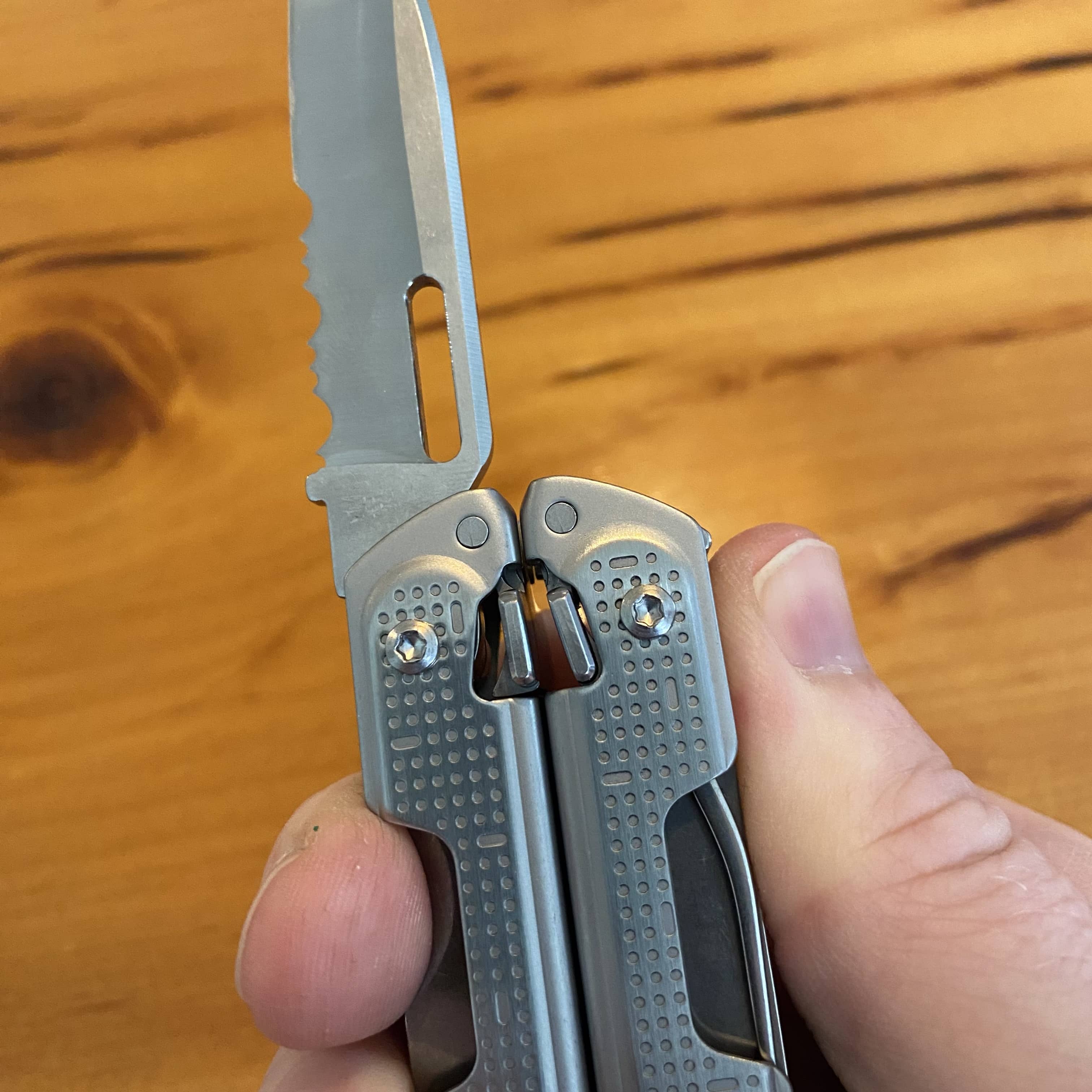
The lever for closing tools was not very intuitive or easy to operate.
Opening and closing the pliers was slick — probably the best and smoothest of the bunch — but the inner tools were fairly hard to access without first opening the outer tools. The notches on the end are supposed to make it easier, but I didn’t find that to be the case in practice.
I also didn’t like the mechanism for unlocking the tools for closing them. The lever was the hardest to use of all the tools I tested. Overall, it’s a fine multitool, it just doesn’t have the smoothest or easiest operation of the bunch.
Leatherman Skeletool CX ($100)
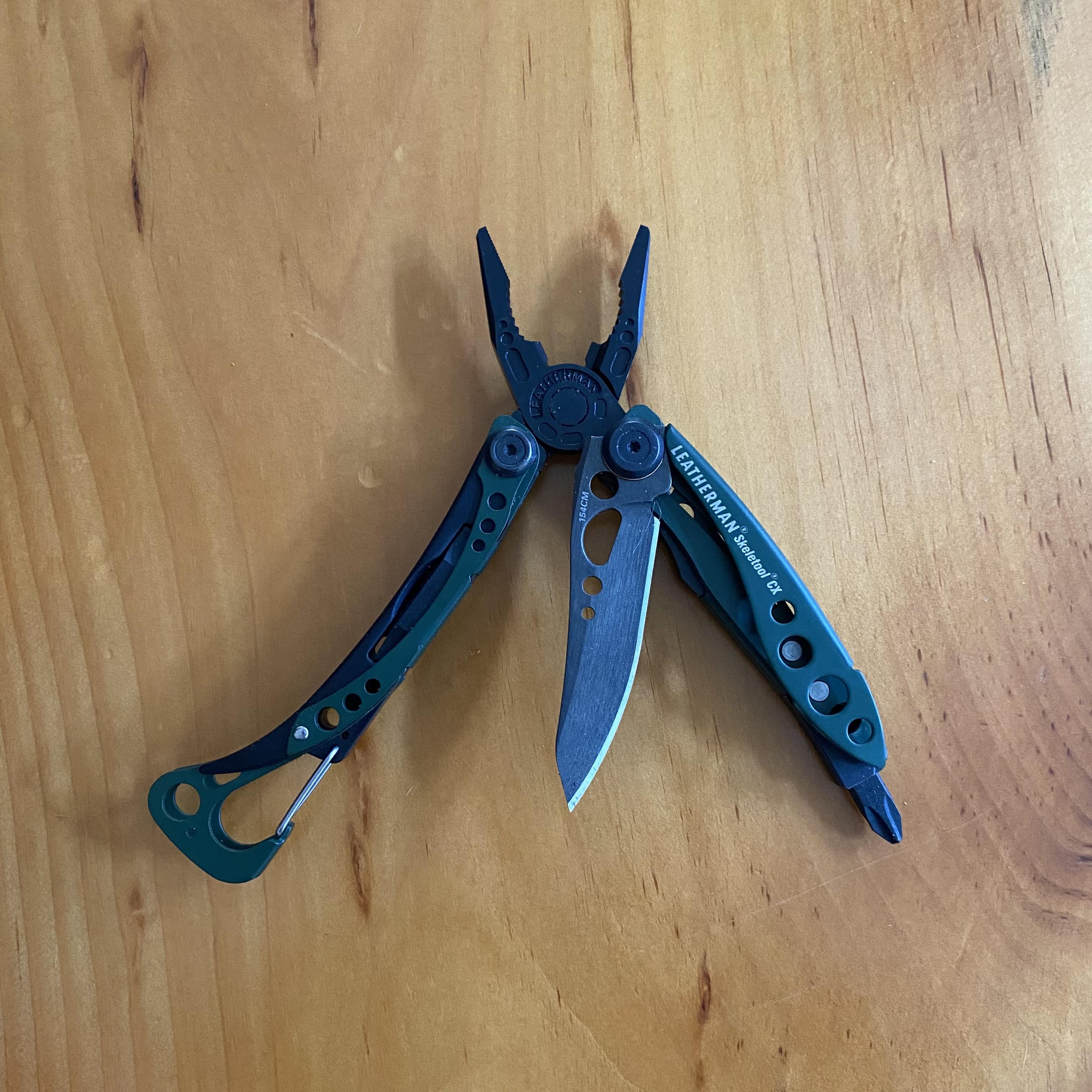
Leatherman’s pared down Skeletool has become very popular in recent years. Whereas many multitools have suffered from feature bloat (do I really need multiple blades? or a can opener?), the Skeletool offers users the few tools they use most: pliers, one quality blade, a couple of screwdriver bits, and a bottle opener. The stripped down tool therefore weighs less and carries a slimmer profile than its dozen-tool (or more) cousins.
Verdict
Advertisement
Somewhat surprisingly, the Skeletool has been the full-size multitool that I’ve reached for the most. I wasn’t sure if it actually had the features I would need, but turns out it’s popular for a reason — about 80% of what I need a multitool for is covered with a blade, pliers, and a screwdriver. Plus, I found one-handed operation of the knife to be the easiest of anything I tested.
Given its weight and profile, I’ve come to think of the Skeletool almost as more of a pocketknife with a couple extra features. It carries a lot easier than the heavier tools listed here, and the clip lets you easily snap it onto a pocket, backpack, keychain, or tent.
Gerber Truss ($55)
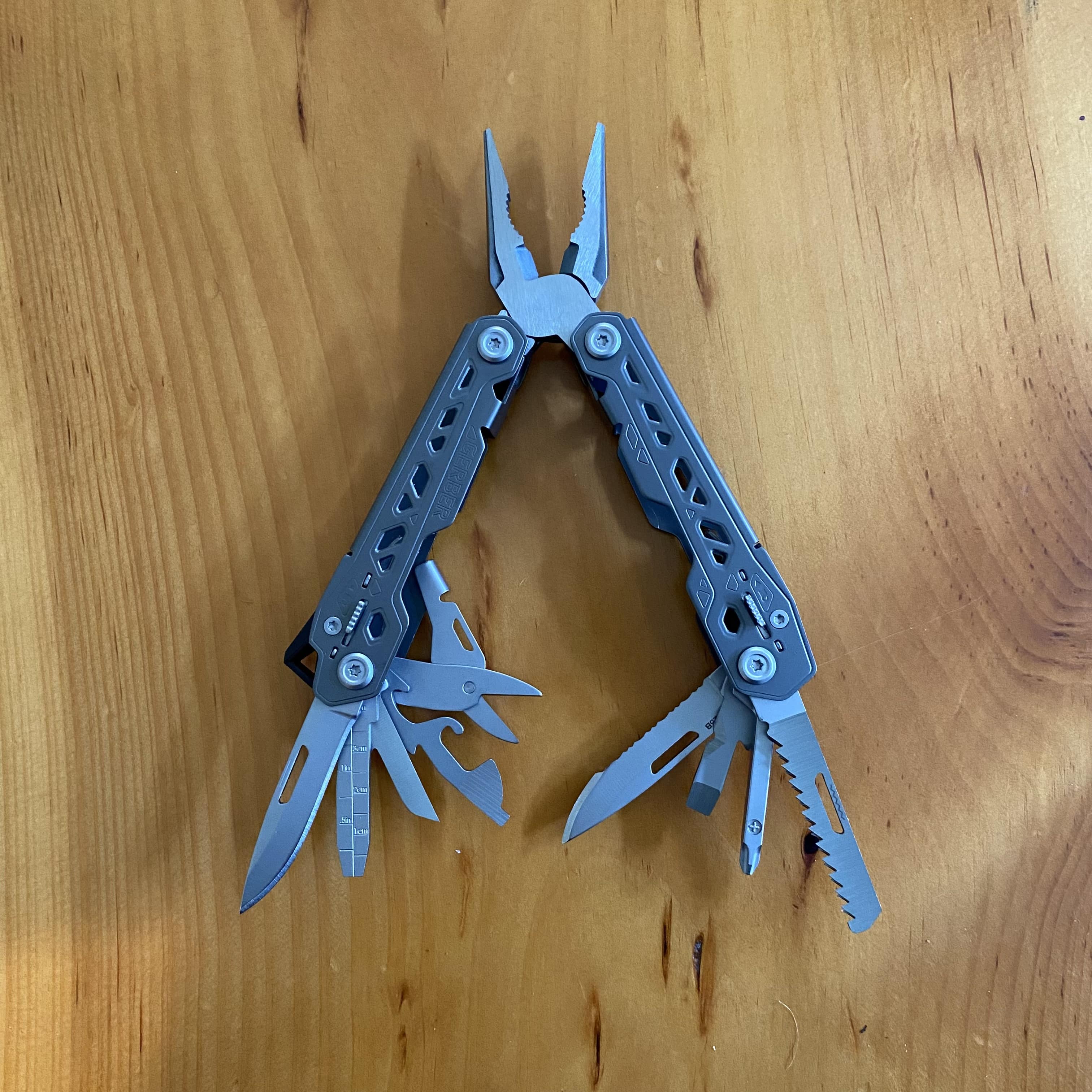
For most of the 2000s, Gerber has been right behind Leatherman as a leading maker of multitools (as well as other heavier-duty outdoor blades, like survival knives and hatchets). Rather than being sleek and shiny, their style is decidedly rugged and tactical. Like Leatherman, Gerber offers plenty of options, but its smaller lineup makes choosing one a little easier. I went with the Truss, which is their middle-of-the-road, standard multitool.
Verdict
Overall, I really like this tool. It just feels sturdy in your hand. The implements are thick and solid, so you know they won’t bust if you put pressure or leverage on them. Opening every tool, including the inner ones, is a breeze — probably the easiest of what I tested. The pliers are spring-loaded once they’re fully in position, which is handy. And the mechanism for closing each locked tool is a simple, easy-to-operate pull-back slide.
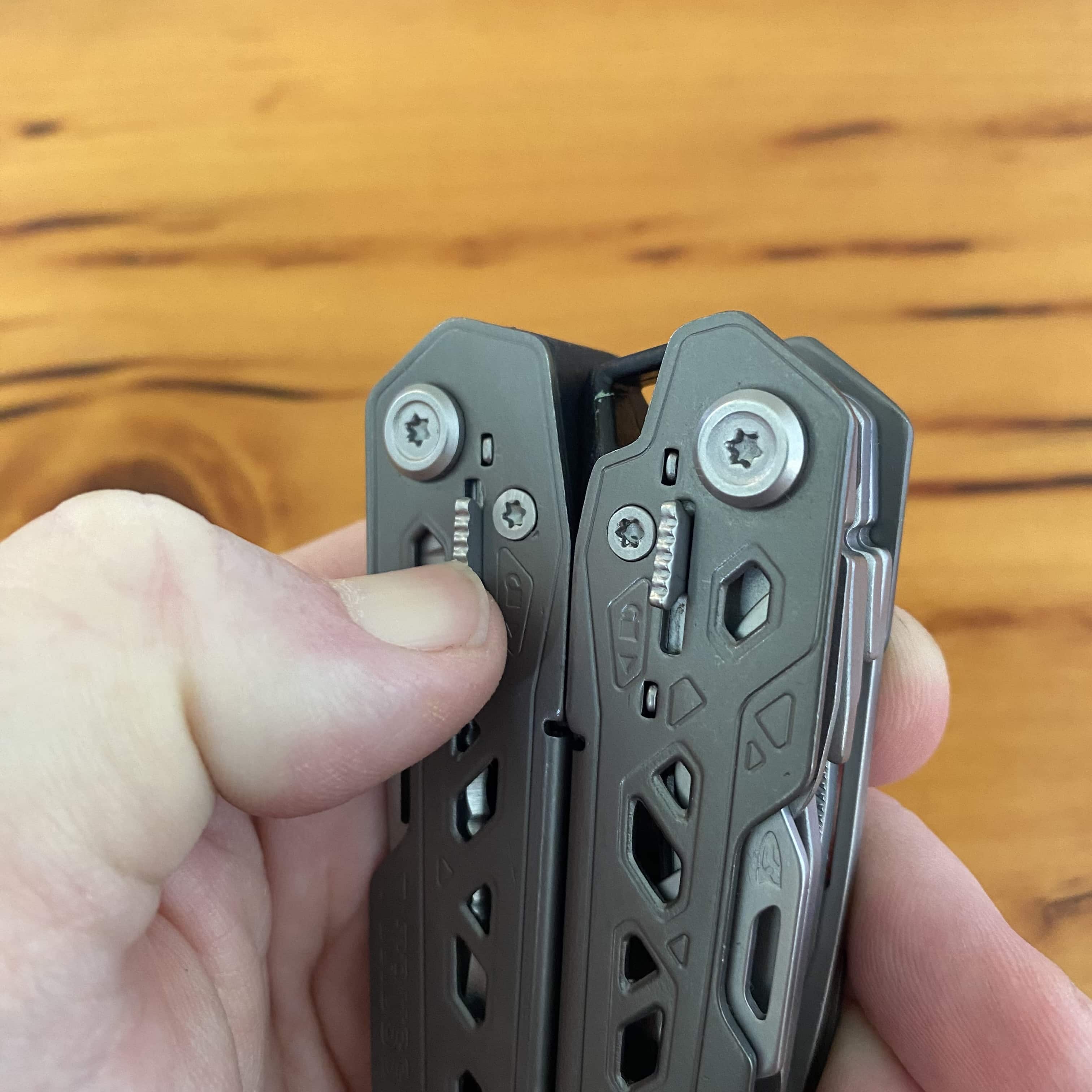
An easy sliding mechanism to close locked-in-place tools.
My only gripe is that it feels a bit bulky in your hand when using the fold-out tools. I wish the profile was a little sleeker, and I’m not entirely sure why one end is wider (which is indeed noticeable while in use). This isn’t a multitool that fits nicely in a pocket. That said, this is a great tool overall — at a great price — for your garage, toolbox, tacklebox, camping kit, etc.
Advertisement
Gerber Dime ($35)
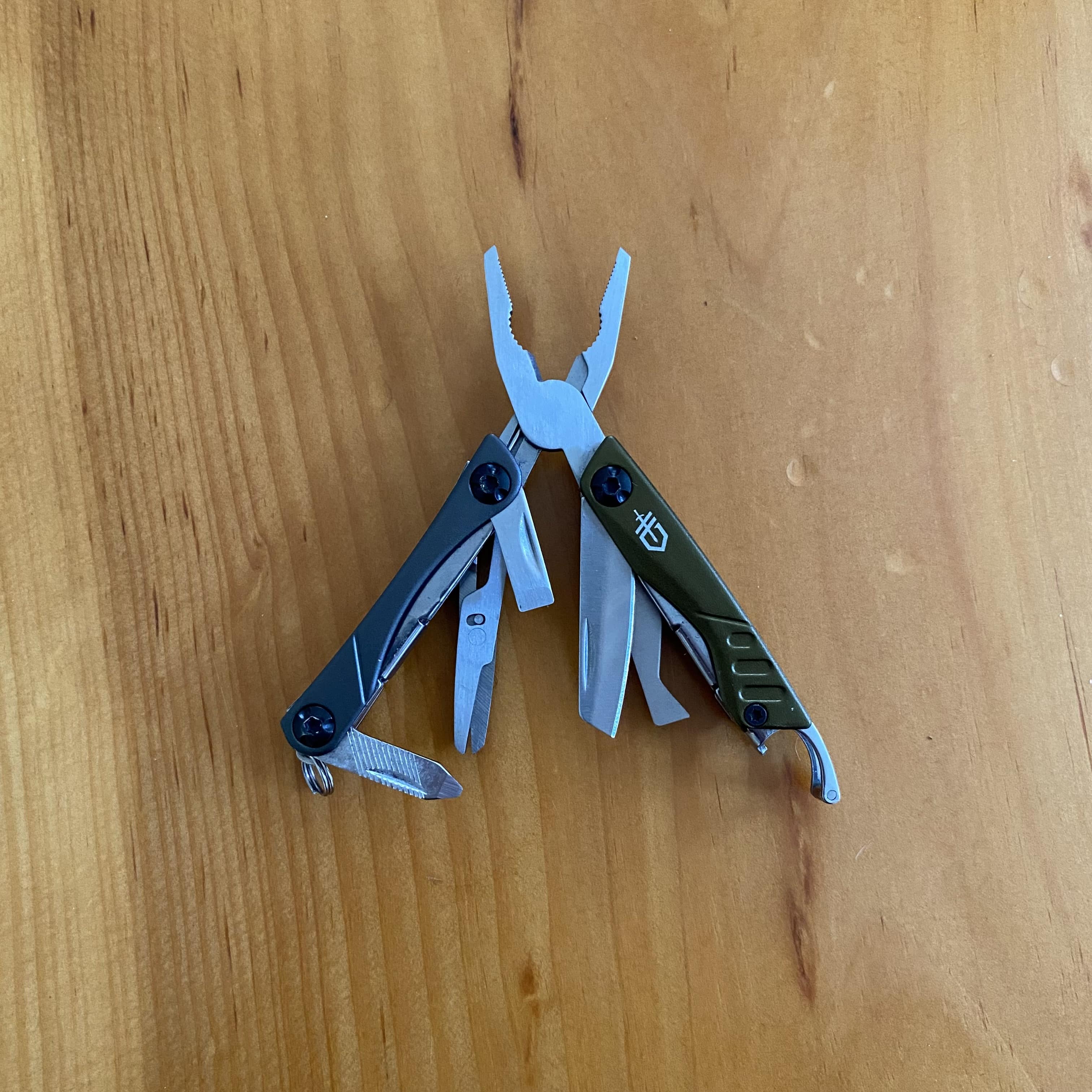
A true mini-multitool option can come in surprisingly handy. But finding one that doesn’t feel flimsy or disposable is not easy. Enter the Gerber Dime. It’s just two inches long and is literally a quarter of the overall size of the Victorinox. Cool.
Verdict
I’m a bit shocked by how solid this tool feels for how small it is. With a pliers, scissors, knife blade, “retail package” blade (literally just for boxes and hard-to-open packaging), a couple screwdriver bits, and even tweezers, it really has everything you’d need in a multitool — just in a smaller size.
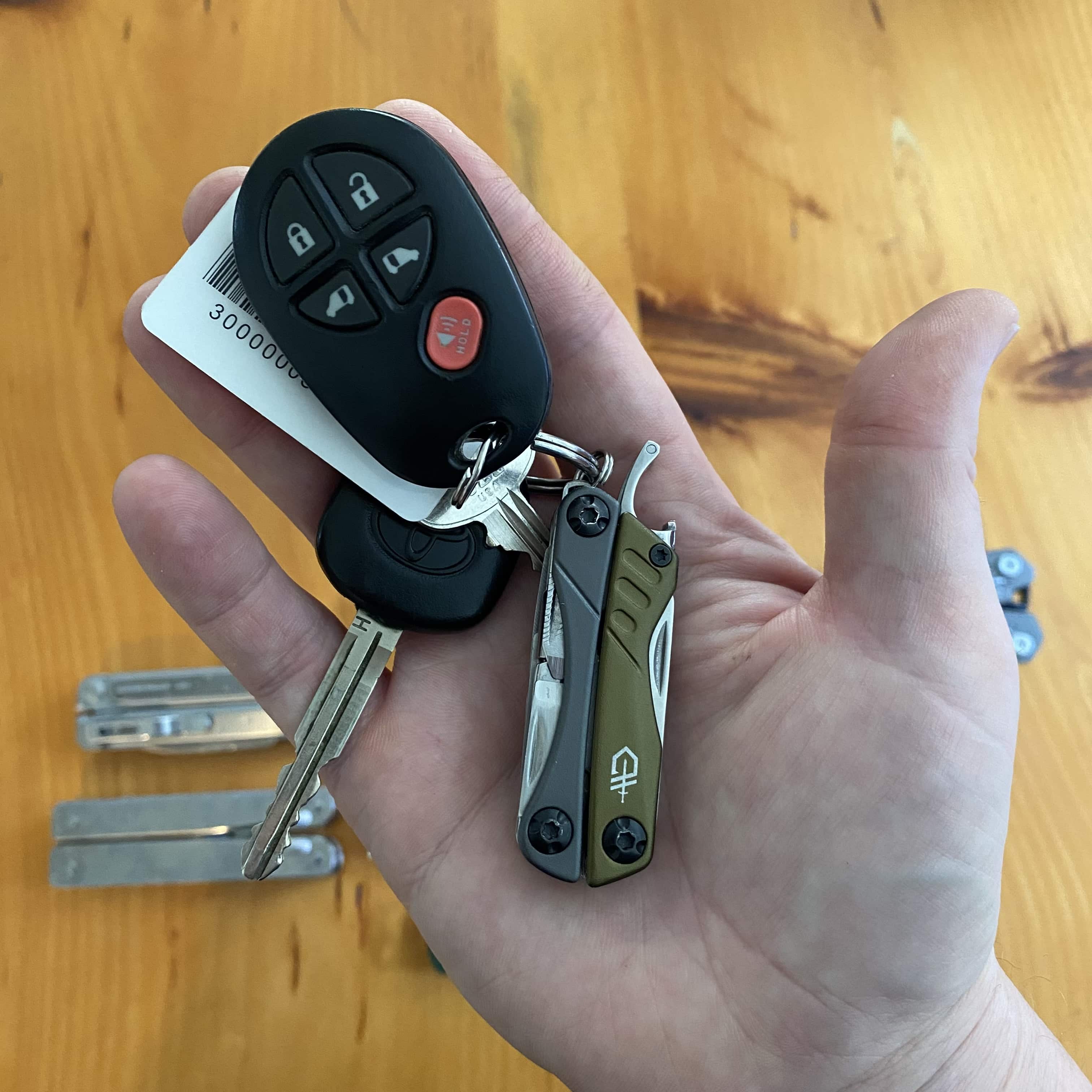
Smaller than my car key and incredibly rugged. Impressive!
Overall, this thing is cute as a button (sorry, I meant rugged as hell), easily fits on any key ring, and has been a lifesaver on multiple occasions in my couple months of testing. It shouldn’t be your only multitool, but I might say it’s the single option on this list that’s a must-have. Of all the multitools I’ve tested, the Dime is what I’ve actually used the most because it’s been easier to have on my person at all times. And that counts for a heck of a lot when it comes to judging the practicality and convenience of a multitool.
Conclusion
To be honest, I’m not the handiest guy. I don’t get super excited about tools in general and my DIY chops are pretty average. Given that context, it’s my opinion that there’s a place in your home and pocket for a few of these multitools. A keychain tool is underratedly clutch, and at just $35, you can’t go wrong with the Gerber Dime. A knife that can fit in your pocket and has a couple extra features, like the Skeletool, is nice to have along on day trips, picnics, and other less intense outings — or as something that lives in your junk drawer for easy tasks around the house. And a more intense multitool, like the Gerber Truss, is absolutely valuable in your toolbox for small jobs or to have along on tool-heavy outings like fishing or camping.