Of all the books in the Bible, Ecclesiastes is arguably the most philosophical. Dark, experiential, existential, and unsparingly honest about the human condition, it wrestles with work, money, ambition, pleasure, time, and death — and it does so in a way that feels uncannily modern. Whether you approach it as sacred scripture or simply as ancient wisdom literature, Ecclesiastes has something to say to anyone who’s ever chased success, gotten what they wanted, and then wondered, Is this really it?
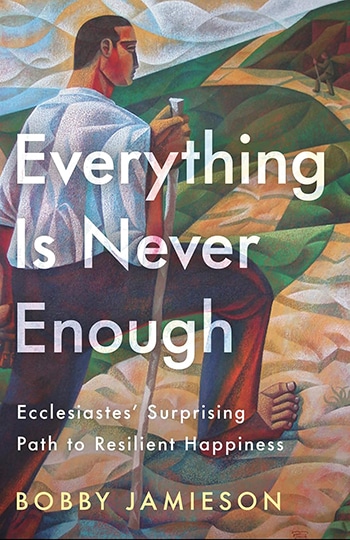
Here to unpack this ancient philosophy is Bobby Jamieson, a pastor and the author of Everything Is Never Enough: Ecclesiastes’ Surprising Path to Resilient Happiness. We discuss why Ecclesiastes resonates so strongly in our age of acceleration and control, why so much of life can feel absurd and unsatisfying, and how the book ultimately shows us how to enjoy — and even embrace — what first appears to be vanity of vanities.
Resources Related to the Podcast
- AoM Podcast #956: Feeling Depressed and Discombobulated? Social Acceleration May Be to Blame
- Dying Breed Article: Resonance as an Antidote to Social Acceleration
- AoM Podcast #1,100: Money and Meaning — What Faith Traditions Teach Us About Personal Finance
- The Uncontrollability of the World by Hartmut Rosa
- Jerry Seinfeld on saving time
Connect with Bobby Jamieson
Thanks to Today’s Sponsor
- Surfshark. Go to https://surfshark.com/
manliness or use code MANLINESS at checkout to get 4 extra months of Surfshark VPN!
Listen to the Podcast! (And don’t forget to leave us a review!)





Listen to the episode on a separate page
Subscribe to the podcast in the media player of your choice
Transcript
Brett McKay:
Brett McKay here and welcome to another edition of the AoM podcast. Of all the books in the Bible. Ecclesiastes is arguably the most philosophical, dark, experiential, existential and unsparingly honest about the human condition. It wrestles with work, money, ambition, pleasure, time and death. And it does so in a way that feels uncannily modern, whether you approach it as sacred scripture or simply as ancient wisdom literature.
Ecclesiastes has something to say to anyone who’s ever chased success, gotten what they wanted, and then wondered, is this really it? Here to unpack this ancient philosophy is Bobby Jamieson a pastor and the author of Everything is Never Enough: Ecclesiastes Surprising Path to Resilient Happiness. We discuss why Ecclesiastes resonate so strongly in our age of acceleration and control, why so much of life can feel absurd and unsatisfying, and how the book ultimately shows us how to enjoy and even embrace what first appears to be vanity of vanities After the show’s over, check at our show notes at aom.is/everythingisneverenough. All right, Bobby Jamieson, welcome to the show.
Bobby Jamieson:
Thanks for having me.
Brett McKay:
So you wrote a book called Everything is Never Enough: Ecclesiastes Surprising Path to Resilient Happiness. Ecclesiastes is a book in the Bible that gets quoted a lot by religious and non-religious people alike. I’m sure people have heard that birds hit song, turn, turn, turn, which riffs off Ecclesiastes. What led you to take a deep dive into this book in the Hebrew Bible?
Bobby Jamieson:
Yeah, so I am a pastor and I preached through it at a church. I used to pastor in Washington DC and it really resonated with me. It really resonated with our congregation. When I got to the end of the preaching series, I just didn’t want to be done with the book. It was like the book had grabbed a hold of me and wouldn’t let me go. It’s a weirdly personal, confrontational, challenging kind of book. It’s pretty dark as we’re going to see together in some of the themes we’ve probably talked about, but I just didn’t want to be done, and for me, it really seemed to resonate with a lot of hopes, dreams, trajectories, we chart for our lives that then wind up not working out and it’s like Ecclesiastes saw it first, got there first, and if you’ve had any experience of frustrated expectations, dreams that didn’t plan out or even frankly that you actually got what you were looking for and then you were like, man, is this really what I wanted or what’s next or is this all there is kind of Ecclesiastes has been to all those places ahead of you.
Brett McKay:
Well, so let’s do some background on Ecclesiastes. Ecclesiastes is part of the Hebrew Bible’s wisdom literature, which includes Proverbs, Ecclesiastes and Job. If anyone has ever read the Hebrew Bible, they may have noticed that these books, particularly these three books, they seem really different from the other books in the Bible, like the books of Moses or the books of the prophets. What makes the wisdom literature different from the rest of the Hebrew Bible?
Bobby Jamieson:
Yeah, one thing is it’s in many ways more experiential. It invites you to kind of wrestle with it personally. You have to put work into making sense of it for yourself because it is kind of speaking about all of life from different perspectives. One way to summarize the relationship between Job and Ecclesiastes, Job is somebody who discovered the vanity of all things by losing it all. The author of Ecclesiastes is somebody who discovered the vanity of all things by getting it all and having it all. And so wisdom literature kind of invites you to really reflect on your life as a whole, and you got to kind of earn it. You got to work for it. Proverbs, the book of Proverbs puts contradictory statements side by side and you got to figure out how to reconcile ’em, and Ecclesiastes actually does something similar. So yeah, not these books in the Bible are probably especially maybe familiar to or appealing to even a lot of people who don’t necessarily believe in God or believe that the Bible is holy scripture because they speak so directly to experience, to things like work, money, sex, power, pleasure, all that kind of stuff.
Brett McKay:
It also seems just more philosophical than the rest of the books in the Bible; existential like you were saying.
Bobby Jamieson:
Yeah, that’s true of wisdom literature in general, and I would say it’s even especially true of Ecclesiastes in particular. A lot of people would say Ecclesiastes is kind of the only maybe pure work of philosophy in the Bible, in the sense that it’s observational. It’s even in a way empirical. The author is kind of testing out these different things by experience, and so there’s really sustained reflection on a lot of life’s biggest questions. Is there meaning how can you find satisfaction, what’s worth doing? What is good? There’s a deep relentless quest for answers in a lot of these realms that frankly resonates with different traditions of philosophy and even philosophy as its practice today.
Brett McKay:
And because it hits all these big issues, work, money, love, success, failure. When you read Ecclesiastes in the 21st century as a modern westerner, you read like, wow, I relate to this. It feels really modern.
Bobby Jamieson:
It does feel really modern. That was certainly part of my experience pastoring a lot of young professionals in DC preaching through the book or even just how it spoke to my own challenges and struggles, but even thinking about a bit more, connecting it to maybe some of the challenges and structures in the modern world, thinking about money, thinking about the economy, thinking about issues of justice. Ecclesiastes has something to say about all of those, and I think part of the way it does that is that the author is speaking from the experience of living a whole bunch of different lives in one lifetime. It’s almost a little bit like Winston Churchill or something where you read a biography of Churchill and you go, how did he live so many different lives before he got to the age of 30, you could do a biography of Churchill that would fill massive volumes from any two years of his life. The author of Ecclesiastes is a little bit like that. There’s this full exploration of the potential, the possibilities of work, money, pleasure, power, and so I think in the modern world is in some ways defined by a lot of options. There’s a lot of freedom, there’s a lot of options. There’s a lot of different paths you can follow, and I think one of the main reasons Ecclesiastes resonates so much is basically he’s like, look, I chased this path all the way to the end. Let me tell you where it got me.
Brett McKay:
So who wrote Ecclesiastes? Do we know that?
Bobby Jamieson:
Well, I don’t think we have a kind of confident or certain knowledge. Historically, lots of Christian and Jewish interpreters have held it to be written by King Solomon, David’s son and to be about his own experiences. I think that’s possible. I’m not convinced that’s wrong, but I’m also not convinced it’s right. The book is technically anonymous. The author just introduces himself as the teacher or the preacher. The Hebrew word for that is like, it’s a title, like a job title, and he just introduced himself as the preacher, the teacher son of David King in Jerusalem. So he could have been any number of other kings of Israel. He’s a little bit hard to place. So I think there’s a little bit of a deliberate mystery, a deliberate, you could even say ambiguity where it partially lines up with Solomon. There’s ways you can map it onto Solomon, but I think in some ways the author is making his experience even more accessible by that degree of anonymity.
Brett McKay:
What’s the overall structure of the book?
Bobby Jamieson:
Yeah, well, Ecclesiastes, some books of the Bible have a pretty clear or transparent literary structure. Ecclesiastes, it’s a little bit harder to discern. Discern, roughly speaking. The first half is more his quest for the good life, his quest for the meaning of life and some periodic reflections and kind of look backs on how it’s all gone. That’s about the first six chapters. Then once you get to chapter seven, especially the end of chapter seven, it’s a little bit more collections of wisdom sayings, kind of like the book of Proverbs grouped around different topics and then kind of a poem about death at the very end to cap things off. So there’s kind of a loose literary structure. As I understand the book though, there’s a little bit of a clearer conceptual structure where a whole lot of the book is his observation, his experience, his just saying what he’s lived, what he’s seen, and frankly, you can agree with that just by experiencing the same things or reflecting yourself.
But then there’s these seven passages in the book where it’s almost like his perspective takes a big step up as if he’s moving from kind of ground floor observation to then going up to a second story where you can see farther. And he talks about life as being a gift. He counsels enjoyment, he counsels rejoicing in your work, rejoicing in your marriage, even the toil of your work taking pleasure in it. And so there’s kind of a tone shift from saying everything is vanity or fleeting or absurd. That’s kind of his dominant message in the first half of the book. But there’s these seven times when he ascends to this higher perspective and calls everything a gift and tells you to get busy enjoying all the stuff that he is just told you is meaningless, fleeting, absurd. I mean, there’s even some perspectives that poke through from an ultimate point of view of he believes that there’s a God who created all things.
He believes that there’s a God who’s in charge of all things even though it doesn’t really look like it a lot of the time, and that God will ultimately hold all people to account and even bring about a whole new world in the end. And so that’s a perspective that only comes through in a few places. So I would say there’s this kind of three story building or view from a three story building type of conceptual structure to Ecclesiastes where he doesn’t always give you signposts, he doesn’t always tell you any switching point of view, but there’s these different voices that emerge from the author throughout the book that I think show us that all of life is absurd on the ground floor. Show us that all of life is a gift on the second floor and show us that all of life has a kind of transcendent or even eternal significance that shines through in just a couple places.
Brett McKay:
Those first two floors where everything’s absurd and then everything’s a gift that’s kind like the imminent frames. Well, this is the life now. And then that third floor is like that’s the transcendent frame.
Bobby Jamieson:
Yeah, that’s right. And there’s a sense in which on the second floor to say that life is a gift does kind of puncture the imminent frame. But on the one hand, it also relates then to just how we live day by day, moment by moment, the kind of stuff he’s still focused on enjoying pleasure, enjoying possessions, enjoying even wealth. He says at one point, drink your wine with a merry heart. God has already approved what you do. So there’s a sense in which it’s a little bit more transcendent perspective to say life is a gift from God. But on the other hand, it very much relates to all the stuff of daily life that we experience moment by moment day by day.
Brett McKay:
Alright, let’s dig into what the preacher has to say to us. The book famously starts off with vanity of vanities, says the preacher vanity of vanities, all is vanity. The Hebrew word that got translated into vanity is hevel, what did the Hebrews mean by hevel?
Bobby Jamieson:
Yeah. Well, it’s one of these words that has kind of a basic or literal meaning, which is breath, breath, wind, vapor. So what are some of the characteristics of breath? It’s here one second, gone. The next, you got to take another breath. If you breathe out on a cold day, you can see a little cloud puff before your face, but then it’s gone. So then as is often the case with a keyword like this, there’s all these metaphorical associations that grow up from that. So hevel as breath, well, it’s also fleeting, it’s here, and then it disappears. It doesn’t last, it doesn’t stay. But Kallet uses this word as kind of his summary statement for everything. So it becomes kind of a term of art. It’s like a one word summary of his whole observation of all of life and some of the situations he applies it to are things where it’s not just something like fleeting that’s here one minute, gone the next, but actually something deeply dissatisfying, something that doesn’t meet your expectations.
Even something that’s deeply wrong, like a case of injustice. If you know somebody’s innocence and they get declared guilty, it’s hard to think of something that’s kind of more wrong in the world than that. And actually Kohe will use the word he to talk about a situation like that. Why? Because it doesn’t fit, it doesn’t match. I would actually say a good kind of modern translation of it is absurd. Even inspired by kind of mid-century existentialist philosophy like Albert Camus, the way he uses the word. I think that’s actually a pretty good fit for what Koal is talking about when he says he, because there’s things that don’t meet our desires. There’s things that don’t meet our expectations. There’s a kind of condition of wrongness or of a misfit between what we want and even what we expect and even what we have a right to demand and then what the world actually pays back.
Brett McKay:
Yeah. I like how you used absurd because I think that’s a better word to describe hevel — that idea that we’re in this world and things don’t go according to how we think they should go, and it’s just like, this is absurd. This is absolutely absurd that this is happening to me.
Bobby Jamieson:
And you often have that experience. It might be slightly comical. I mean, we have a minivan for lugging our kids around and it had to be in the shop for three weeks. It’s a long story. They were trying to fix a door handle. They wound up having to put a whole new door in because there’s not the spare parts to actually just replace the handle on its own, and the thing barely works better than it did before. After three weeks in the shop, we had to have a rental car and all this stuff. I mean, it feels absurd, and that’s a pretty minor instance. That’s a pretty everyday not that big of a deal, even though now the door’s a different color and it looks funny and all this stuff. But then at a much more serious level too, I think to describe even some more of those shocks of life or things that we suffer, there is an absurdity. It doesn’t make sense. Why did this happen? There’s not really an answer. There’s no obvious answer. It’s not written into your life. It doesn’t show up in the mail and say, here’s why this happened. So I think that idea of absurdity actually names kind of an experience particularly of things we suffer that’s hard to get at otherwise,
Brett McKay:
And it’s not even just unexpectedly negative things that can feel absurd like your life’s going great, and then you get a shock medical diagnosis that turns your life upside down. But as you said, getting what you want and then feeling depressed and not satisfied, that can also feel absurd. You feel just like, why not? Why don’t I feel good? I got the thing. I summoned the mountain. Why don’t I feel like I think I should feel?
Bobby Jamieson:
Yeah, absolutely. And that’s maybe the single most relevant insight in the whole book, and it comes from really the biggest extended narrative. Early in the book, he kind of announces his quest for wisdom, and then he talks about this huge project he went on of testing out every conceivable source of enjoyment under the sun, and he gets to the end and he says in chapter two, verse 11, then I considered all that my hands had done and the toil I had expended in doing it and behold, all was vanity and a striving after wind, and there was nothing to be gained under the sun. In some ways, that feels like the ultimate absurdity. When you’ve worked hard, you’ve gotten to the end of it, you’ve attained that summit and it just doesn’t satisfy. It leaves you going, well, why doesn’t this dissatisfied? And oftentimes we don’t really experience a clear answer to that.
Brett McKay:
Everything is never enough.
Bobby Jamieson:
That’s the key lesson of the whole book. Some people experience that after winning a Super Bowl or a major golf tournament. I mean, you hear this again and again, people at the absolute pinnacle, they’re literally the world’s best person at this, their team, their accomplishments, whatever it is. And you often even hear this in an interview right after the fact. Right. Okay, well, what now?
Brett McKay:
Yeah, you also bring the thinking of sociologist Hartmut Rosa into your exploration of Ecclesiastes. For those who aren’t familiar with his work, what’s his big idea?
Bobby Jamieson:
Yeah, he’s got a few really insightful big ideas. One that’s really relevant for my book is that modernity is a project of control. And so he’s got this great slim little book, The Uncontrollability of the World that’s very accessible and really insightful, and he talks about how essentially the modern world is defined by a relentless ambition to control more and more to control all that we can. I’m in a room right now that has been set to 67 degrees, and if it dips below 67 degrees, the heater will kick back on and keep me at exactly the controlled temperature I want. You can think about increasing control over our bodies, over medical conditions, technology, transportation, communication, being able to fly places, artificial lights so you can be working and awake whenever you want. All those kinds of things have created a world in which we live, the world that we experience.
We have a lot higher expectation of being able to control things than probably any society that’s ever lived, any people that’s ever lived, whether it’s more hunter gatherer or agrarian or even more of a hard scrabble. You’ve got this job and you work in an older city and you’re at the mercy of all these different forces. We expect to be able to control a whole lot of stuff, and we’re surprised when we can’t. We’re kind of shocked when we can’t. And yeah, Rosa does a really good job kind of opening up the disconnect that we experience when control runs out. He also has this fascinating insight that I think is really brilliant where actually a lot of the most meaningful experiences in our lives are things you can’t control. Think about falling in love, getting this woman that you’re incredibly into to actually go out on a date with you and how does it go?
Or you’re at the championship game and your team wins by a kind of last minute three pointer, or you’re at the concert that’s your favorite band and they play your favorite song from your favorite album, and it’s just as good as you thought it would be. All those type of peak experiences are things you can’t control. You can’t control the dates, you can’t control the game, you can’t control the concert. And in a way, the more you try to control it, the more the meaning drains out of it. The color drains out of it. And so Rosa also identifies this paradox where the more we try to control, the less we actually kind of enjoy our lives. And his thick concept he’s developed for that kind of enjoyment is what he calls resonance. And resonance is basically any experience in which kind of the invisible wire that connects you to the world is humming.
It could be a really engaging conversation. It could be being deeply engaged in a craft, kind of a flow state of being challenged by the materials you’re working with and applying skill to it, and kind of experiencing those challenges giving way as you figure out how to get this joint to fit into this part or how you get the right tool to work on this part of wood or whatever it might be. Rosa talks about resonance as basically anything in which you light up with a connection to the world. And resonance is only an in the moment reality. It’s not something you can file away and stockpile. It’s not something you could just pull out of the fridge. You might have a great time making this meal or eating those leftovers, but resonance itself is not something you can just do at your beck and call.
It depends upon your own kind of internal condition. It depends upon the conditions of the world out there. And so the tension between control and resonance, I think Rosa is really insightful in showing there’s an inverse relationship. The more you control, the less resonance there is, but we keep trying to control more. One last really helpful kind of paradigm from Rosa is what do you call social acceleration, which is basically if you zoom out and you think about life as a whole, society as a whole, think about the ways we make our living, think about the kind of circumstances of the tools or technology we use on a daily basis. Think about even basics of morality or expected patterns of life. He identifies three phases. In traditional societies, those things are pretty stable. They change a little bit over time, but it’s pretty much like things have gone on the way they always have.
Once you get into the modern world, particularly in Europe and the early modern era, you might have generational change. You might have change that takes place over 30, 40, 50 years, and your kids are grandkids live in a pretty significantly different world than you lived in. But Rosa’s point about our present moment, kind of late modernity is what he calls social acceleration, which is basically all those fundamental conditions, how you make a living, how technology influences your life, even kind of what’s agreed upon morality or ways of being in the world. Those things change quicker and quicker even within the span of a single lifetime, which means all sorts of stuff that you took for granted or a job you were trained in or a tool you used to use becomes obsolete quicker and quicker. And so there’s this sense of the world kind of disappearing from underneath your feet as you’re trying to live it, which I think is a pretty compelling description of a lot of the challenges that we experience in different ways just in the modern world. I don’t know, defined roughly by the last couple of generations.
Brett McKay:
So I want to take that idea of resonance. We’ll table that. I’m going to come back to that because I think the preacher kind of agrees with Rosa there that the antidote for all this he absurdness can be resonance or something like resonance. But these ideas of we feel like in the modern world we want to control everything when it causes frustration and this idea of social acceleration, I think this really goes to what the preacher has to say about why life is absurd. And it sounds like too that modernity, this idea of social acceleration and we can control things, it sounds like it just makes that sense of absurdity of life more acute.
Bobby Jamieson:
I think so. I mean, that’s one of the things that really settled in more deeply for me as I was doing the research of this book, is that I think what Ecclesiastes is describing simply is the human condition. You could live at any time. You could live in any place in the world, and this book would really resonate with you at the same time, because Ecclesiastes is so much about ambition and aspiration, it’s so much about the things that kind of become magnets for our hearts that draw out huge amounts of effort, huge amounts of planning and strategy and the kind of things we sort of build our lives around. I do think Ecclesiastes, while it’s describing the human condition, those kind of things that Rosa is identifying as hallmarks of modernity are actually intensifications, kind of deepenings or they’re making even more vivid a lot of the exact things that Ecclesiastes identifies. So I do think that’s another way of getting at why Ecclesiastes feels like such a modern book, partly because Ecclesiastes is not just analyzing individual experience, but there’s a whole lot of insightful commentary and judgments about how the world as a whole works. So even though he’s in ancient Israel, I think he’s diagnosing problems that would sort of flower and blossom in the modern world.
Brett McKay:
I mean, this idea of controlling how intense it is in the modern world, just look at our health. We have all this technology, these tools to look at our, what’s going on inside of our body. We can measure our blood. We have all these supplements, we can measure our heart rate variability, and then we end up getting some sort of debilitating disease. You’re like, how could this happen? I’m doing all the things. I’m tracking everything, what’s going on? So I think the frustration is just more intense compared to you go back to 2000 years ago, 3000 years ago, if you got a cold, there’s a chance you might die. It’s not great. And it’s sort of heavy. It’s absurd, but it was sort of a given. That’s a possibility. Now these days when something happens that should not happen, got the technology to prevent it from happening. So you just feel even more frustrated.
Bobby Jamieson:
Yeah, that’s a great way to put it. It’s our modern world with the greater degree of control, greater degree of technological sovereignty over our basic bodily conditions. It makes it even harder for us to be reconciled to the realities of accident, injury, illness, ultimately death. If you’re in any kind of pre-modern society, you are just so much more surrounded by death. It’s so much more of a fact of life. It’s a part of the daily fabric of life that’s sad. I’m not saying it’s a good thing, but it also reconciles you to that reality. Whereas we can sort of put death behind this kind of sealed off door. People mostly tend to die in hospitals. We tend to keep it out of you or you’re not around. If a loved one is dying, typically they’re not in their own bedroom in your own home, you’re not the one sitting by them. And so yeah, I think it also makes it easier to persist in the illusion that somehow we’ll be around forever or even if we don’t consciously think that you can just sort of more effectively keep death at bay as a thought, the kind of illusion of your own. It’s just not part of your daily experience. And Ecclesiastes has a lot to say about death.
Brett McKay:
Yeah, we’ll talk about that. And then this idea of social acceleration, I think everyone’s experienced that feeling of they feel like they have to work harder and harder, run faster and faster, but they’re just kind of stand in place and you’re like, what’s going on? I’m doing all this work and I’m not making any progress. This is absurd. This is absolutely absurd. And I have that experience with social acceleration of my own kids. I have a son who’s 15 and he’s trying to figure out what he’s going to do with his future, and he is like, dad, what should I do for work? AI is going to take all of our jobs maybe. And I’m like, man, I don’t know.
Bobby Jamieson:
Honestly, that’s the example that was coming to mind. I’ve got so many friends who work in tech sectors and it just looks like AI is coming to gobble up their jobs. I’m just curious, did you have any advice for your son in the moment?
Brett McKay:
No. I’m like, I don’t know, man. Because when I was trying to figure out my career trajectory, I was able to look at my parents. They did the same thing. It was like, well, you go to college and then you apply for a job. Then you work your way up your career and you’re kind of in the same career for most of your life. My dad was a game warden his entire career for 35 plus years. Me, it’s been a little bit different because the economy’s changed. I’ve had adapt with my career with my kids. I’m like, I don’t know what advice to give you because what worked for me and my parents might not work for you. And it’s tough. That’s an example of social acceleration. You’re like, this is absurd. It should work. It worked before. It should work now, why doesn’t it work?
Bobby Jamieson:
I agree. I think that’s a good example. And even though this wasn’t even really on the radar, I mean, I kind of finished writing the book in 2023. It came out in 2025. I do think AI is the 800 pound gorilla of social acceleration right now, of just, yeah, there could be a career you sort of trained for years in and have put in 10 years of work in and an AI computer coding thing can come over and do in 10 minutes what it used to take you a month to do. Yeah, I think we’re in the early stages of seeing some pretty profound disruptions due to that. And I’m not sure there’s a lot of people out there with great answers.
Brett McKay:
Okay. So Ecclesiastes really speaks to this modern phenomenon of social acceleration where you are trying to do more and more, but we don’t feel any more satisfied. So let’s actually dig into what Ecclesiastes has to say about our relationship to time and feelings of progress and permanence. Let’s read some verses from the book. Some of the most famous verses are in chapter one verses four through nine. Could you read that and then let’s talk about it?
Bobby Jamieson:
Sure. A generation goes and a generation comes, but the earth remains forever. The sun rises and the sun goes down and hastens to the place where it rises. The wind blows to the south and goes around to the north, around and around goes the wind. And on its circuits, the wind returns, all streams run to the sea, but the sea is not full to the place where the streams flow there, they flow Again, all things are full of weariness. A man cannot utter it. The eye is not satisfied with seeing nor the ear filled with hearing. What has been is what will be and what has been done is what will be done, and there’s nothing new under the sun.
Brett McKay:
How do you think these verses flesh out what the preacher means by hevel?
Bobby Jamieson:
Yeah, I mean, I think one of the key points is that we try to live our lives as if there can just be this linear series of quests. I want this, I plan for it, I strive for it, I attain it, and it will make me happy. But this is kind of a poem of reflecting on nature’s cycles. A generation goes and a generation comes. Everybody who’s alive today is going to die. They’re going to be replaced by their kind of successors in the next generation. The wind blows around from the south, but then when the weather system blows itself out and things return to normal, it’s going to come back around from the other direction. So it is all these images of repeating of something that you had kind of on one setting, but then it gets flipped to the other setting. And so what happens is that there’s finally no gain.
It’s not like the whole system moves forward. The whole system just kind of returns to its original setting. And Ecclesiastes is observing these different patterns in nature to basically preach to humanity. The message that’s going to happen to you, your plans, your hopes, your dreams, your aspirations, they’re all going to get reset. Whatever mark you make on the earth, those footprints are going to get filled in time’s going to wear ’em down, the sand is going to blow over ’em, water’s going to wash ’em away. And so we like to think there’s this linear progression toward a goal towards satisfaction, but there isn’t. What’s happened is what’s going to happen again, and it’s going to wipe out your goals, your gains, your satisfaction, and in some ways the key to understanding why are we wired like this? And again, the idea of the absurd, there’s a misfit.
Why is there a misfit between our hearts and the world? It’s there in verse eight. The eye is not satisfied with seeing nor the ear filled with hearing. We always want more. We always want something more. We always want something better. Our senses are hungry for stimulation, for fulfillment, for something good to come to them. And I think Ecclesiastes would say that’s kind of a window into our deeper condition that there’s something we’re hungry for, there’s something we’re striving for. But the point is there’s this misfit, the world’s not built like that, but our hearts are,
Brett McKay:
Yeah, Kierkegaard said, we’re a combination of the finite and the infinite, and that the way those elements contrast can jar with each other. And that gives us a feeling of anxiety. And then I also think we feel that contrast between the cyclical nature of the world and the fact that we’re very oriented to clock time. I mean, we live by the clock, like, okay, I got to be here at this time. This thing’s got to start at this time. And if it doesn’t start at this time, then things have gone wrong.
Bobby Jamieson:
And clock time obviously enables all kinds of stuff to happen. Time only got standardized in terms of everybody being on the same hour, minute, et cetera, ready, set, go. I think as a kind of international Congress meant to facilitate train travel, it has to be this incredible precision and everybody’s got to be synced up if you’re going to have trains moving at dozens of miles an hour down a track to get to a certain city at a certain time, et cetera. So there are things that it enables this kind of regime of the clock, but it also creates a constant pressure. It creates a kind of constant sort of external accountability, and it can tempt us. Rosa is really insightful on this. It can tempt us to think that we actually have more control over our time. Time is a resource that you can sort of save, spend, invest, reclaim, recoup, not waste time is this kind of commodity that we can do all these different things with.
And in some ways that’s kind of metaphorically valid, but it also tempts you to think, oh, I’m in charge of my time. Time is my thing. I get to spend my way. Whereas actually we’re much more subject to time cycles. We’re much more sort of stuck in time. It only goes in one direction. If you really want to be in charge of time, try to make it run backwards. Try to get a do over for that mistake you just made or try to hit pause when your kid is just having some incredibly sweet, fun, cute thing. You just want to savor. Well, it’s going to end. You wish you could pause it, but you can’t. So I think clock time tempts you. Again, it’s that as you have control to think you have more control over time than you actually do.
Brett McKay:
Yeah. You quote this Jerry Seinfeld bit, we talked about saving times like, oh, I’m saving time. He’s like, where does that time go that I saved? Does it go to the end? He’s like, no, you’re dead. You don’t need to build up that. Save time. You’re going to die. It’s a very Ecclesiastes message there.
Bobby Jamieson:
Totally. And Seinfeld as the kind of prototype observational comic, he resonates so much with Ecclesiastes. I think Kohat is kind of like a standup comic in the way that he squints at the world, looks at it from a certain angle, draws kind of a caricature that then makes you go, oh wow, that actually is my life.
Brett McKay:
So work and making money make up a lot of human life. And you talked about that the preacher talks a lot about work and money. What did he say about work and why did he think it was he or absurd?
Bobby Jamieson:
Yeah. One of the most revealing statements he makes is in chapter four, verses seven and eight, again, I saw vanity under the sun. One person who has no other either son or brother, yet there is no end to all his toil and his eyes are never satisfied with riches so that he never asks for whom am I toiling and depriving myself of pleasure. This also is vanity and an unhappy business. He’s basically diagnosing the workaholic 2,500 years or 3,000 years before somebody coined that term as a psychologist to describe a typical modern struggle. So yeah, he says, that’s motivated by envy. You want to have more than the person next to you. But I think it’s also our hearts are kind of these bottomless desire factories that work is a way not just to sort of earn your basic necessities, but if you can get more money and if more work can get you more money, and if there’s always more stuff that your money can get you, then you never really have an incentive to quit working.
And I think in some ways, even more subtle than money can be the promise of status. We don’t often talk about status or admit it, but status is basically the legitimacy that some institution or group or person confers on you as being worthwhile having standing. And in our society, the only universal currency of statuses work, what you do in your work is the most definitive aspect of where you stand before other people. And so Ecclesiastes diagnoses envy as the big motive that would keep you running on that hamster wheel, that treadmill of always working. And I think envy in some ways, not just of money or of possessions, but frankly even more so of status is a huge motivator.
Brett McKay:
And then this idea of money, like the preacher, he makes a lot of money and he is like, it’s absurd. I didn’t feel good after making all the money. He even talked about all this money I made. It’s going to go to someone after I’m dead and they’re going to waste it away. They’re going to spend it and this is all going to go away because I’m going to have this spin thrift son or grandson. And it was all absurd. All that work I did was for nothing.
Bobby Jamieson:
Yeah, there’s all kinds of reasons. Ecclesiastes finds money dissatisfying, like you said. One is you got to give it all away and who knows what they’re going to do with it. Another is just, you can’t take it with you personally. You leave this life naked as you came into it. Another kind of famous line from Ecclesiastes that gets reused all the time. Another reason is that the more money you have, it frankly brings more problems. There’s people who want to mooch off you. There’s cares that keep you up at night. There’s more things you got to pay for now that you have this money in this property. And of course, the kind of most basic one, the deepest problem is that you can always want more money. The problem is ultimately your love of money that if you start being motivated by money, it becomes your ultimate good.
And so Ecclesiastes in a couple of places warns about being sort of driven or controlled by the love of money. And so I think that’s hugely relevant. I mean, in our society more than ever, money can get you virtually anything and you can sort of monetize anything. I mean, I think it’s great, Brett, that you have this podcast and all other stuff associated with Art of Manliness where you get to build a living doing this stuff that’s helpful for other people. But there’s also kind of a flip side to the sort of ethic of entrepreneurship. You can always have a side hustle. You can always turn this into a gig. You can always be at the back of your mind thinking, is it okay for me to just be enjoying or having a good time or relaxing when, oh, maybe there’s a way to monetize this. You know what I mean? So there’s, in our society more than ever, there’s infinitely more ways you could be kind of enslaving yourself more to money.
Brett McKay:
That’s something I, throughout my career have had to be aware of and sort of do calculus in my head. Am I taking this too far? We monetize, we have advertisements, we’ve sold some things, but there’s other ways I could monetize that I’m, I could become this walking sandwich board on Instagram pitching products all the time, using myself as a brand to hawk products. And I’m like, no, that doesn’t feel good. I’m not going to do that.
Bobby Jamieson:
Yeah, that’s over the line.
Brett McKay:
So the preacher, he says, okay, money and work – it’s not going to make you happy. So he says, well, instead of doing that, I’m going to pursue wisdom. So he tries to get really wise. How did that work out for the preacher?
Bobby Jamieson:
Yeah, his ultimate problem with wisdom, well, there’s a couple of them. One is that basically you see this in chapter two, verse 16 of the wise, as of the fool, there’s no enduring remembrance seeing that in the days to come, all will have been long forgotten. And then he says how the wise dies, just like the fool. And so if you’re looking for wisdom to give you control, if you’re looking for knowledge as a source of kind of mastery over life, sovereignty over the world, if I can get the right answers, if I can get the right philosophy, if I can get the right outlook, this will give me kind of the crowbar to pry open my desired goods I want to get from the world. He says, it’s not going to happen. There’s no control, there’s no guarantees. There’s no sort of this worldly knowledge that’ll give you power over death or freedom from death. So in a way, he really puts and wisdom in the sense of what you can accumulate humanly speaking, what you can learn, what you can discover. He really puts wisdom to the ultimate test and finds it wanting.
Brett McKay:
And then also I think too, the more wisdom or knowledge you gain, it gives you again, that false sense of control. And then things don’t work the way you think they should work. You’re like, oh, I’m really smart. I’ve studied the books and it should go like this and it doesn’t. Like I’m actually more unhappy now because I had this idea of how it should have worked based on my study and my knowledge, and it’s not working like that, and now I’m actually more unhappy. You know what I’m saying?
Bobby Jamieson:
Absolutely. It’s this funny thing where Ecclesiastes is a wisdom book, is a quest for wisdom. But frankly, okay, part of wisdom. And even an ancient philosopher like Socrates, right? What does he know? Well, he knows that he doesn’t know. And there’s a sense in which Khel is kind of similar. Part of wisdom is learning the limits of wisdom, not just the limits of your own wisdom, but the limits of what wisdom can do for you in this world. And frankly, the wisdom of learning. Sometimes our kind of quest for wisdom is really motivated by a quest for control. It’s motivated by trying to have this position of being in charge, being dominant, being sovereign over my circumstances, that actually there’s no wisdom that’s going to do that for you. You’re just as subject to death. You’re just as subject to accident cancer. You name it. As someone who’s never read a single page of a single book.
Brett McKay:
Alright, so the preacher, he tries to find happiness in work, in money, in wisdom, but he finds that they’re all vanity that they don’t ultimately satisfy. He also tries general pleasure like wine, food, laughter, but he doesn’t find lasting meaning there either. You mentioned earlier that he also talks about death a lot. What did Koheleth say about death?
Bobby Jamieson:
Yeah, boy, he said a lot about death. Oh, I mean, one thing he says about death is basically you don’t know when it’s coming and it happens at an evil time, which is dark, but is also bracing and can help you really appreciate the sort of limited and fragile gift that life is. Chapter nine, verse 12 is a good passage on that. Yeah. One thing he says about death is you can’t bring anything with you through it. That’s chapter five, verse 15, man, he says so much about death. I mean, one thing he says about death is that death is the end. Like you were pointing out, you could amass this fortune. This is basically at the end of chapter two. You could amass this fortune, but then you got to give it over to somebody and you have no further say about what they do with it.
So death is the hard and total limit of every pursuit, every project, every pleasure, all the things that we give our hearts to that we think is the stuff that makes life worth living. Death is just an absolute end to all of it. And especially death doesn’t discriminate. He would agree to that extent with, what is it, Aaron Burr’s song in Hamilton. So death doesn’t discriminate, meaning you cannot guarantee that you’ll have a long life or a peaceful death by how you live in this world. And Ecclesiastes Kheled experiences that as a kind of insult, like what? Death chops us all down to size, and it doesn’t do so according to any particular kind of merit or rhyme or reason.
Brett McKay:
Alright. So yeah, death makes things absurd. Basically
Bobby Jamieson:
Death. Death is the ultimate absurdity.
Brett McKay:
Okay, so he spends the first part of Ecclesiastes saying, you can work, you can make a lot of money, you can get really smart, become really powerful, indulge in lots of pleasures, but you’re still going to die. And it’s all just chasing after the wind. It’s he. And that’s kind of depressing. But then he seems to totally change course. Can you read verses seven through 10 in chapter nine?
Bobby Jamieson:
Sure. Go eat your bread with joy and drink your wine with a merry heart. For God has already approved what you do. Let your garments always be always white. Let not oil be lacking on your head. Enjoy life with the wife whom you love, all the days of your vain life that he has given you under the sun, because that is your portion in life and in your toil at which you toil under the sun. Whatever your hand finds to do, do it with your might for. There is no work or thought or knowledge or wisdom and shield which you are going.
Brett McKay:
So it seems like he’s saying, do the things that earlier he said won’t bring you happiness. What’s going on there? How can these things that he said were he actually bring us lasting happiness? What’s the shift?
Bobby Jamieson:
Yeah, what is the switch? I think the fundamental one is he is seeing all these things as gifts of God, and then he means that literally God is the creator. God is giving life. God is the one providing this to you. A lot of people will speak about life as a gift or some peak moment as a gift. And I think there’s a real insight there. I think actually Ecclesiastes would say, yeah, trace that insight all the way down. There’s a real reality there that it’s not from you. It’s not ultimately even from this world, it’s from God. So recognizing that life is a gift means I didn’t ultimately create this. I didn’t ultimately deserve this. My work, my skill may have contributed, may have helped to kind of bring this about. But there’s so many things beyond me and apart from me that had to take place.
If I’m a farmer, I know this intimately because it depends upon soil and sunlight and the weather and rain and all sorts of factors that are just clear beyond my control. And I think Ecclesiastes would say, yeah, actually every good thing in your life is like that. So recognizing the limits of your influence, recognizing the limits of your control, even frankly, realistically recognizing the limits of the good thing itself. It is going to end in death. It isn’t going to last forever. You’re not going to have total control over it and be able to make it perfect. When you recognize that there’s kind of a shift in your stance, your attitude, your grip on the thing, you’re not trying to grip it so tight that you kind of choke it. You’re receiving it with open hands. And so I do think Ecclesiastes commends to us, you could say an ethic of gift, an ethic of gratitude, an ethic of recognizing that life is something much more fundamentally that you receive rather than something that you sort of control or conquer. And so once you stop trying to fill your heart to the brim as if this one thing is going to kind of fully and finally satisfy you, you’re free. You’re free to experience all of these things as small good things, small good gifts. So I do think there’s a freedom that comes from trading control for thankful receiving. That’s maybe my kind of summary way of trying to get at what’s happening in these seven passages where Ecclesiastes tells us to get busy enjoying all these things.
Brett McKay:
What does that gift stance look like towards work, for example? What does that look like for you?
Bobby Jamieson:
That’s a good question. I think it looks like learning to treat whatever work I’m getting to engage in even moment by moment, hour by hour, day by day, to try to be thankful for it, to try to give myself to it fully, to try to be alert to the opportunities of maybe ways it might challenge me or help me grow. And to try to recognize and be thankful for if this work in any way benefits somebody else. And I kind of get any glimpse of that, to be thankful for that and to not make my stance toward my work depend upon some farther off payoff that may or may not happen. And the payoff could even be some hoped for kind of fruit of the work itself. If I persevere in this for X number of years and I get it to this level and it develops in this way, well you literally dunno what’s going to happen.
You literally have no idea what’s going to happen tomorrow. And so I think that we can often, of course, we we’re planning creatures, we’re hoping creatures, you have to have some hope for the future to do any work at all. But I think often we can sort of load up our sense of value or worth or expectations really on the kind of compounding future interest that we hope is going to happen. I don’t just mean financially, I mean in terms of the work, its growth, its influence, its development, whatever it is. So I think for me, trying to learn to be present in the moment to whatever challenges there are, whatever opportunities there are, even difficulties in snags and snares as an opportunity to grow in some way. Personally, one kind of one word summary for it would be trying to have an ethic of craft as much as I can.
I’m influenced here by Matthew Crawford, his book Shop Class as Soulcraft or the sociologist Richard Sennett has a wonderful book on craftsmanship, where craft any job that you can both start and finish any job at all that you can do the whole of yourself and have some responsibility for the finished product. There can be an element of craftsmanship. You can control the process, you can control the tools you’re working with. You can respond to difficulties and challenges as a way to actually grow in your skills. So just for me very personally, I write a lot. I preach and teach a lot to try to apply kind of an ethic of craftsmanship to anything at all that I can. When you do that, you actually find that, yeah, the difficulties you run into are ways to get better at working with whatever the materials you are that you’ve been given with.
Brett McKay:
So focus on the process, not the outcome.
Bobby Jamieson:
Exactly. Try to invest as much as you can and learn to enjoy the process, even the more frustrating parts of it. Learn how to become absorbed in process and care less about outcome.
Brett McKay:
Well, what does that gift stance look like towards wealth? Because the preacher says, yeah, enjoy your wealth, enjoy your money. But a lot of scripture can seem kind of down on money or gives a lot of warnings about money. So what does a gift stance towards money and wealth look like?
Bobby Jamieson:
Yeah, I do think Ecclesiastes allows you to enjoy the good things of this life, including things that could come with wealth or possessions with a clear conscience with a true heart. Most of the things the Bible says about money are against love of money against excess, against being taken captive by wealth. But there’s even passages in the New Testament where the Apostle Paul talks about God giving us all things richly to enjoy, and that really resonates with Ecclesiastes. So I think there are ways to wisely, responsibly enjoy good things in this world. I think there’s also ways to kind of set disciplines limits boundaries. Can you use those things in a way that’s generous and really freely letting others partake of them? Well, you set limits to your own maybe standards of consumption or keeping up with the Joneses or not letting your sense of aspirational lifestyle expand to fill your whole paycheck or go beyond it. So I do think there’s practical and spiritual disciplines you can put in place to frankly guardians the dangers of wealth. At the same time, Ecclesiastes says, yeah, enjoy it.
Brett McKay:
And he says, you can enjoy other pleasures of this world too. Even though he said before that pleasures can be, he says that there is a way you can truly enjoy them.
Bobby Jamieson:
Yeah, yeah, that’s right. So in chapter six, nine, he says, better is the sight of the eyes than the wandering of the appetite. This also is vanity and a striving after win, which basically says any good thing in front of you from a meal to a conversation to time with your spouse to whatever it is, any good thing in front of you can be the source of enjoyment, but you have to kind of discipline your mind and heart to actually be present to actually, as it were, consume the meal that’s in front of you. There is this thing in front of you, if only you’ll look at it, it’s right before you. But we so often do you kind of look away from the thing that’s right in front of you and your appetite wanders off into all these directions. So yeah, the modern world, your appetite can wander off infinitely indefinitely. You can get whatever you want. There’s actually a discipline of enjoyment that can kind of serve as a bridge from his more dark sayings to the actual ones about enjoyment. Enjoyment actually takes discipline. You somehow have to tie your appetite to this thing that’s right there in front of you, rather than being like, oh, what if it was this? Or, oh, this could be better. Or, oh, this happened last time, or I wish I was here.
Brett McKay:
And I think this all ties in nicely with Rosa, this idea of taking a gift stance towards life. You can’t control gifts, and if you stop grasping for control, it counterintuitively makes the thing more enjoyable.
Bobby Jamieson:
Yeah, a hundred percent. Rosa even talks about resonance having the character of a gift, and that’s one way to understand the experience of resonance. So I think Rose is really insightful and I think there’s something about even whatever parts of your work life or your various responsibilities might seem to have the most element of toil. If you’ve got little kids, it might be cleaning up their messes, taking care of their bodily needs. There’s aspects of taking care of little kids that are a grind. It’s donkey work, but how can you learn to enjoy even that, both with your kids and the time you get to spend with them, and frankly, enjoy that donkey work for the sake of your kids. It’s a dirty job, but somebody’s got to do it. And the fact that you’re getting to do this and having to do this because of these gifts of human beings that are in your life, even that it could allow for a little bit of resonance, a little bit of enjoyment to come through in the toil that might come with say, the care of young children.
Brett McKay:
Yeah, I do that a lot. Something my kids do, it’s really annoying, but I’ve had to reframe it in my mind is that they’ll get printer paper out of the printer and then they leave it open. And so when I print something it doesn’t work, and I’m like, ah. And I want to yell at them, close the printer drawer. But then I think I have kids. This wouldn’t happen if I didn’t have kids. They come with frustrations, but I’m so glad I have kids.
Bobby Jamieson:
They’re making creations, man. For me, it’s like when they leave that stack, there’s like three pages they’ve drawn on, but then they leave like 45 spread out over the couch. Right.
Brett McKay:
You have kids. This wouldn’t happen if I didn’t have kids, so enjoy it. I mean, how has Ecclesiastes helped you remember that life is for a living? Cause I think that’s the message that the preacher ends with. It’s like this life is for living. It’s not for scheming and gain and all that stuff. It’s just for living.
Bobby Jamieson:
Yeah. I think in some ways that kind of stuff, we’ve been circling around for the last few minutes, like learning to be present for life’s present goods, both that that’s a gift to be enjoyed, and frankly that it takes a certain discipline. Like you’re at the pool with your kid in the summer, it’s three o’clock on a Saturday. Just be there. That is the only place you can be, and boy is it a great place to be. So whether it’s 3:00 PM on a Saturday in the summer, whether it’s having a bonfire in the fall and just roasting a hot dog in your backyard, whatever it might be, that’s the only moment you have. That’s what Martin Luther was commenting on something in chapter five where he basically said, this is the key statement of the whole book. That the present moment is the only moment you have.
It’s the only one that belongs to you, and there really is a choice of receiving it as a gift, enjoying it. And that takes a kind of self-limiting, it takes shrinking yourself down to fit yourself in. Here’s where I am as a Christian. I believe, here’s where God has put me. Here’s the moment he has for me right now. Maybe for a lot of people, they get to a certain age, maybe 35, 40, or maybe if they’re raising a family, their kids get to a certain age. Some of these lessons start to kind of dawn on you. But I think that Ecclesiastes, that learning how to be present in the presence, and that’s the only way to enjoy it. I think it’s maybe been the biggest sort of deepening of that for me personally in all the years I’ve spent wrestling with the book.
Brett McKay:
Well, Bobby, this has been a great conversation. Where could people go to learn more about the book and your work?
Bobby Jamieson:
Sure. Yeah. I’m on Twitter, Bobby Jamieson, the book has a little website with Penguin Random House. Those would be two ways to connect.
Brett McKay:
Fantastic. Well, Bobby Jamieson, thanks for your time. It’s been a pleasure.
Bobby Jamieson:
Thank you so much.
Brett McKay:
My guest day was Bobby Jamieson. He’s the author of the book, Everything Is Never Enough. It’s available on amazon.com. Check out our show notes at aom.is/EverythingisNeverEnough, where you can find links to resources to delve deeper into this topic.
Well, that wraps up another edition of the AoM podcast. Please consider sharing the show with a friend or family member you think will get something out of it. Word of mouth is the primary way we grow. As always, thank you for the continuous support.
Until next time, this is Brett McKay reminding you to not only listen to the podcast, but to put what you’ve heard into action.