Editor’s note: This is a guest post from Michael Reid.
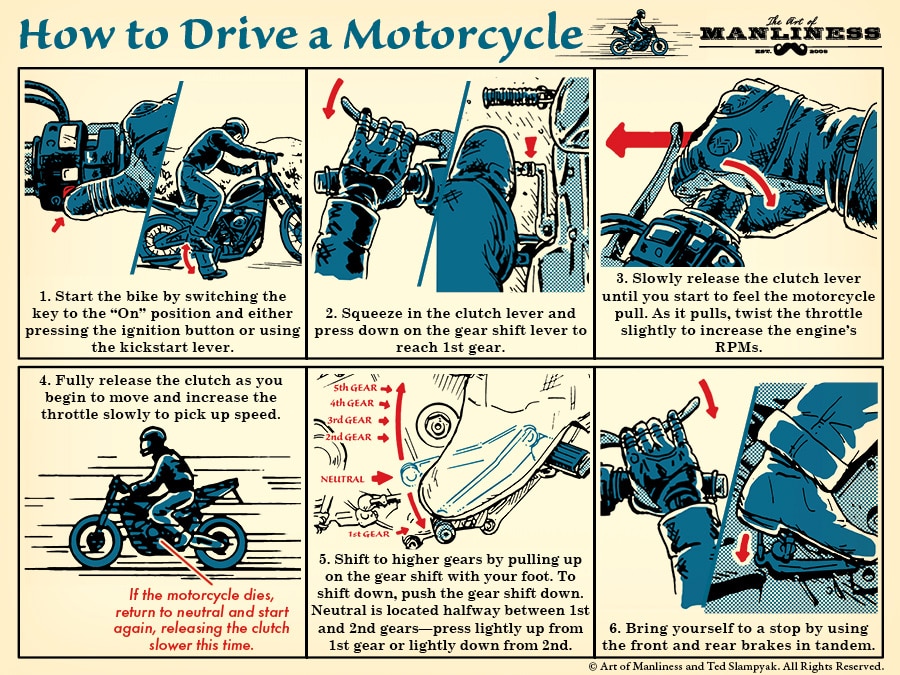
So you’ve already read up on how to buy your first motorcycle. What about learning to ride it?
If you’re like most men, you may be thinking, “How hard can it be? I’ve had that two-wheeled thing down since, what, age 6?” But a motorcycle does not suffer fools. Most motorcycles will go from zero to 60 faster than you can read this sentence. There are no seatbelts or airbags on motorcycles. If cars are more and more about being protected in a cocoon, motorcycles are about being out there in the wind. With a motorcycle, you wear your protection. Screw up in a car and you might bend some sheet metal; screw up on a bike and you might die. Riding a motorcycle will always include an element of danger; there’s no way around that. But there are ways to minimize your risk and put the odds more in your favor.
Get some training. The Motorcycle Safety Foundation has training programs all over the country. Find out where by going to www.msf-usa.org. Many of these programs are official parts of state programs. Some, like those in Ohio for example, even provide the bike for beginning students. They’ve trained close to 6 million students since 1974. They’ll teach you the techniques of throttle, clutch and brake control and more. And they don’t stop there. As you get better, you can also take their Experienced and Advanced courses.
Ride like you’re invisible and everybody else is drunk. Car drivers, at least the ones who aren’t texting, fighting with their spouse on the phone, applying make-up or messing with their iPods, are looking for moving objects the size of cars and trucks. A motorcycle is a much smaller thing and might not even register with a driver. And since so many cars are wired to have their lights on all the time, even the bike’s headlight doesn’t make it stand out in traffic. Never assume that the car driver sees you. Always assume that the car driver will do something dumb. Be ready for it. Plan accordingly.
Look as far down the road as possible. This is a corollary to the previous paragraph. The best riders don’t want to be surprised, so they anticipate. They see a truck on an entrance ramp and move left long before the truck merges. They see cars waiting at an intersection, so they slow down and put the first two fingers of their right hand on the front brake lever so they can reduce reaction time if they have to get on the brakes. They ride a little faster than average traffic to stay out of blind spots. In short, they anticipate the dumb things a driver might do and position themselves to avoid the consequences if the driver does, indeed, do that dumb thing. The best riders are the smoothest riders, constantly moving their machines to the least risky place.
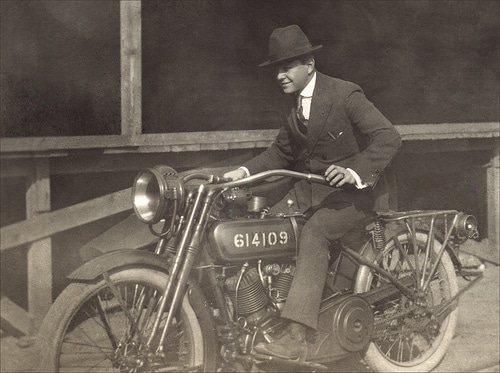
Head protection: A fedora doesn't count.
Wear a helmet. A helmet won’t protect your head if you hit a tree at 60 mph. Nothing will. A helmet is designed to protect your head in a fall from ride height (4 or 5 feet) to the ground and the ensuing scrapage. You’ve seen riders whose only head protection is a bandana. These people aren’t cool; they’re stupid. Years ago, Bell Helmets had an advertising campaign that said, “If you have a $10 head, buy a $10 helmet.” What does it say about the value of your head if you don’t even wear one?
Always wear your gear. Your skin is your body’s largest organ. Guess what happens to your skin if you fall off your bike. Experienced riders call it road rash. So protect your body’s largest organ with a jacket, pants, and gloves every time you ride. There are jackets on the market that pass air almost as well as a t-shirt, yet protect well in a crash. Jeans aren’t the best in a crash, but they protect better than shorts. Shoes that lace up will stay on your feet; loafers or flip-flops won’t.
Practice, Practice, Practice. Given a good surface, a motorcycle will stop faster than any car. But it won’t if you’re timid about using the brakes. Go find an empty parking lot and practice a series of stops from 25 or so, squeezing the brakes a little harder each time you stop until you get used to maximum braking. Some motorcycles have ABS, most don’t, so practice is valuable when it comes to stopping as quickly as possible. Get used to the fact that the front brake contributes far more to a fast stop than the rear brake.
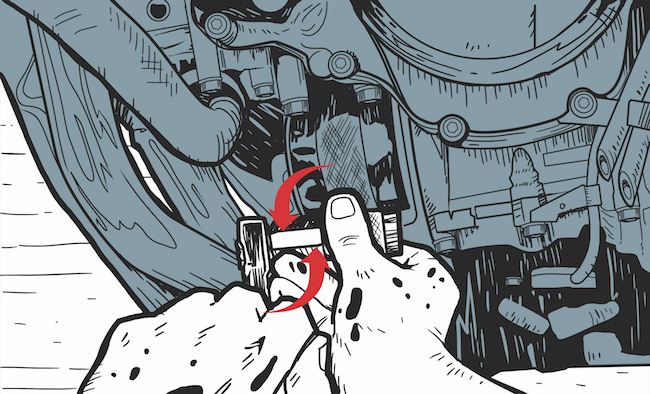
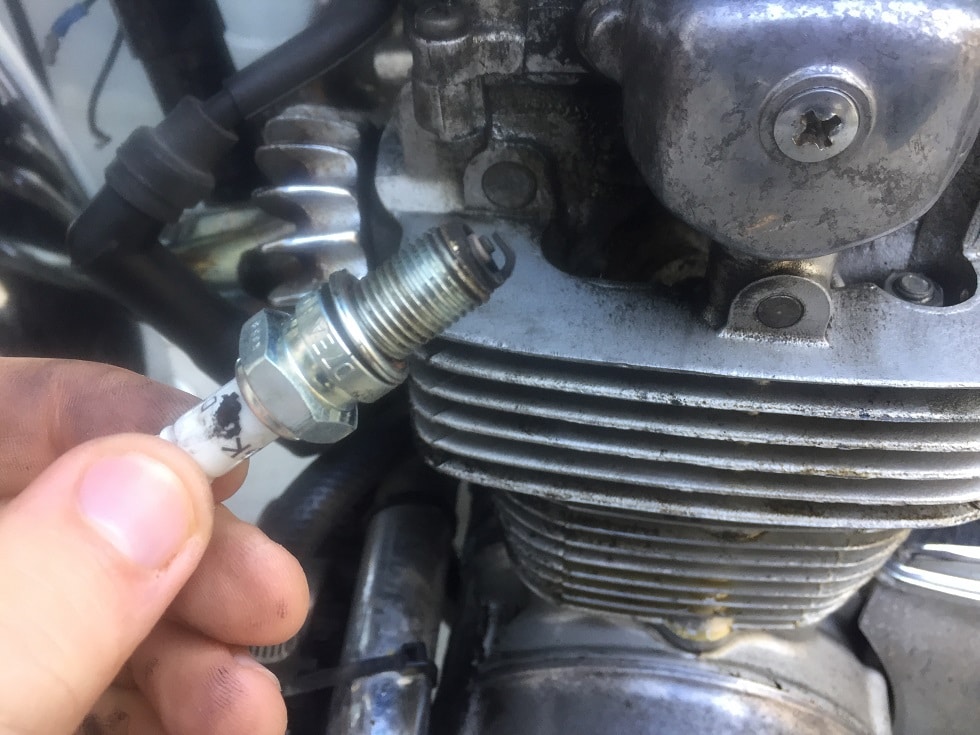
Learn to maintain your machine. We’re not talking about rebuilding the engine–we’re talking about the really simple stuff. Make sure your tires are properly inflated and have enough tread. Check your oil. Make sure your lights aren’t burned out. Ask your dealer’s service department to teach you how to adjust your chain. Here’s why all of this is important: If your tires are underinflated, or even overinflated, your bike won’t handle properly. If your lights are burned out, it’s harder for cars to see you. If your chain isn’t adjusted properly, well, chains are expensive and you don’t want to replace one if you don’t have to.
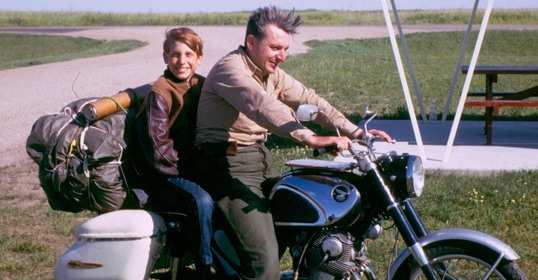
Don’t scare your girlfriend. Don’t ride with your significant other on the back until you’re thoroughly comfortable riding by yourself. Adding a passenger drastically changes the riding characteristics of the bike. Do some short distances at lower speeds with a passenger to get used to how the bike handles. And don’t give in to the temptation to show your passenger how quick your bike is. Scaring the crap out of your passenger is not manly, just dumb.
Riding a motorcycle will never be as safe as driving a car. But, as Helen Keller once wrote:
“Security is mostly a superstition. It does not exist in nature, nor do the children of men as a whole experience it. Avoiding danger is no safer in the long run than outright exposure. Life is either a daring adventure, or nothing.”
Get out there and ride.
Are you a veteran rider? What other tips do you have for guys who are learning to ride their first motorcycle?

{ 115 comments… read them below or add one }
← Previous Comments
Lot’s of good comments here.
1. ALWAYS know how to check the bike over, do it when you buy it and do it before you ride. There’s nothing worse than having some tiny issue that could have been fixed cheaply, but it causes an accident because you didn’t look.
2. The Motorcycle Safety Foundation course is awesome. Gets you out of doing a road test and covers some very important aspects of riding safety. There is much more of a focus on technique in the advanced rider course though. If you have the time and inclination I highly recommend taking that as well.
3. Practice makes perfect! Get out and ride! For the record… riding in the rain isn’t that big of a deal. Better to know what to do, than to just be a fair weather rider and panic when you get caught in a storm
I love the idea of riding a motorbike. Sadly, I also love living and with there being a 35x chance of death it’s not for me. Sorry to bring the tone down guys!
Can anyone here convince me that it is worth the risk?
Sorry, George–there’s no reason to convince you. If you’re not comfortable with the risk, then you’re better off not wasting your time not thinking about it. If you’re curious, take an MSF course and see how it feels.
The disparaging comments about riders who choose not to wear helmets are amusing. Here’s some info from a “stupid” rider:
1) Motorcycles accidents AND fatalities actually increase in states that have enacted helmet laws, in the immediate years following enactment of the new statutes (they later taper off to previous levels). Do the research yourselves.
2) Full/large/bulky helmet have their drawbacks as well in that neck injury chances are significatly increased.
3) There’s no such thing as a “DOT Approved” helmet. Call the Dept. of Transportation and ask them to provide you a list of all helmets they have approved – see what they tell you. The DOT does not approve anything. The NHTSA has created guidelines, which manufacturers can follow (or not) and determine, ON THEIR OWN, whether it is “DOT Approved”. I wonder how many people have blindly accepted that little “DOT Approved” sticker as a safety blanket.
If choosing to ride without a helmet makes one stupid, then so should driving a car, crossing the street, smoking, laying out in the sun, walking in the rain, eating anything fried, eating anything processed, eating meat, flying in an airplane….
“They who can give up essential liberty to obtain a little temporary safety, deserve neither liberty nor safety.” – Benjamin Franklin, 1775
Good point, especially on the helmet – they don’t protect from a lot. At highway speeds, there is very little protection at all, though it’s very unlikely you’d ever fall on a straight highway. A good test I read about is a thought exercise to evaluate your gear. Suit up like you’re riding. Now imagine a psychopath with a belt sander attacking you anywhere and everywhere. If that sounds bad, you’re not wearing enough gear. Also, blue jeans last about 1m skidding on pavement. Flesh isn’t so tough. Riding pants aren’t magic, but they do put more between you and the road. Surprisingly, 1.2-1.4mm leather is still better than space-age fabrics for this.
Where you look is where you go (WYLIWYG) – the best advice I can give someone in a vehicle. See that pothole? Good – now look at the path past it, so you don’t ram right over it while “spotting” it.
You never “have to lay it down.” If you lay it down, you crashed. If you don’t, you may not even crash at all. If you’re trying to avoid flying over a car, try to imagine flying under/into one. All laying your bike down does is take you off it and into whatever you happen to hit.
If you do fall at speed – skid. Apparently the best formation to get into is sliding on your back, feet first, with your hands behind your head – you take a low profile, have your arms tucked in, and have something between your head and whatever you’ll hit. Don’t dig your feet in or try to slow down – sliding will make you hot, but flipping will break bones. Personally, for crashing, I’m most afraid of wrapping around a pole or something because my nice comprehensive armor doesn’t guard against THAT. My bones wouldn’t shatter from the impact, but they’d still break if two parts of me picked opposite sides of a post to streak past.
If you come into a corner too hot, but still have your wits about you… use the road between you and the outside (IF there is no oncoming traffic waiting to flatten you) to straighten your bike up – yes, you’ll run a tangent to the curve and be aiming straight at your doom – then brake HARD, and lean back into the corner, give it some gas and escape. I’ve pulled this off a few times, and never failed it… I credit Tourist Trophy for the PS2 for that – it showed me how much you can’t get away with on a motorbike. Also, riding a bicycle in the winter is a good training exercise since if you brake while leaned, you go down. If you brake too hard while straight, you may go down. If you pedal too hard while leaned, you may go down, etc.
Finally, it’s good to think that you can stop faster than cars when you’re ahead of them. It’s not always the case though – in sportbike vs sports car showdowns, you’ll often see the bike take the straights, and the car take the corners. You have a fraction of the weight, but also a fraction as much rubber on the road. Personally, I can slam my car to a halt so fast, I’d be thrown off my bike if it could manage that. It can’t – I’ve skidded to a halt many times as a beginner. (It’s also notable that I have summer-only performance tires and Brembo Gran Turismo brakes on my car… but I’m just saying it’s not a given that a bike will stop faster! I haven’t upgraded anything on either… Actually that’s not quite true – I replaced my bike’s Bridgestone Exedras with a set of sport-touring BT-45s, but haven’t tested their limits yet.)
I know that riding a bike is a risk, but besides clothing as armour, is there anything else I should invest in when being safe.
And also, are there automatic bikes or are all the fastest and better bikes all manual, I’m not complaining, just asking a question to see what I should buy if I decide that a bike is what I’m looking for
Big ups for promoting the MSF course. They do a pretty good job on the basics.
I’d add a few things. For the look ahead part I would also say to be careful about target fixation. Try to see with fill range of peripheral vision and avoid focusing on a specific point.
There’s one essential thing they don’t teach that may save your life. A bike is not a car so don’t rely too much on your brakes. Gear selection and engine breaking is much more effective if you’re performance riding. Breaking is good as a backup of you find yourself dragging to the outside of a turn but if learn how to choose a good line going into a turn you shouldn’t have to break at all once you start to lean.
For helmets, DOT only guarantees safety based on certifying the design. If you want one that has been physically crash tested to spec, get one with a Snell cert.
Maintenance is half the fun of owning a bike (and a good excuse for some ‘man time’ in the garage). If you don’t have the minerals to get your hands dirty from time to time, you probably shouldn’t own a bike.
The first thing I’d suggest is, buy a service manual and a torque wrench. Your life depends on you not screwing up so it’s worth the $10 investment. I use a PDF on my phone.
If you have a Harley, there isn’t much room for adjustment and your bike will probably include some sort of service plan. Oil, tires and battery maintenance are probably your major concerns.
For something more barebones like a sportbike, expect to do a lot more. Chains need to be regularly cleaned and coated with either spray wax or special lubricants. Oil changes are easy but high performance bikes usually share motor oil with the clutch so do some research to buy the right stuff. Learn how to detach/attach both tires as well as adjust the chain tension. You should also learn to properly adjust the suspension. At the least your bike suspension should be adjusted to your height/weight, and may need to be adjusted differently if you plan to carry passengers. Batteries are expensive, if you don’t know what a ‘battery tender’ is, go find out now, it’ll save you in the long run.
And, ignore anything that guy Chris said. He’s clearly an idiot. I have encountered multiple performance riders who have made it through 2-3 crashes and usually their leathers/helmet save them from severe injury. Ironically, it’s usually contact with guard rails that does the most injury (including decapitation and severed limbs).
”There are no seatbelts or airbags on motorcycles.”
FYI, if I recall correctly the Honda Goldwing has airbags,but that’s more of a two wheeled sofa then a motorcycle.
To all the fellows here advocating not wearing a helmet: Ever been in a crash wihtout one? Or without your gear? Then shut up already.
Now that that’s done, and we have about 10% of you left, I’ll have to make one thing clear: yes, riding around without a helmet at low speeds(think 20-30mph) is fun. Not fun when you hit the pavement/a cager, but still. And yes, you’re probably from America or somewhere you don’t have to wear safety gear, so go right ahead and don’t.
Let me just reming you that with all the speed and everything involved in MotoGP, the superfast turns, the crazy lean angles, the only guy to have died in the last years was the guy who lost his helmet.
You need a complete suit to protect yourself, either wear it all the time, or be well prepared for the consequences it’ll have for you and your loved ones.
Avoid riding with others until you’re comfortable riding by yourself. If someone ahead of you in a pack makes a quick lane change and you follow without looking first, you might end up a hood ornament. You’ll also be protecting your fellow rider as new riders can be unsteady, inexperienced, and not capable of maneuvering effectively in a pack.
Great article. Although I must say, a little sexist. Chick rider here :P
Then again, I suppose I AM on artofMANlieness.com :P
Helmets are ALWAYS a good idea. I was in a nasty little crash a few years ago when some 16 year old kid in a pickup decided to pull a U-turn right in front of me at 40mph. I was wearing a half helmet at the time due to cold weather, but I usually rode bare. Long story short; I took the side mirror off with my face and was rendered unconscious with a minor concussion. So helmets; yes.
Just bear in mind one thing: every cager out there is a stark, raving lunatic who will try to kill you. If you cannot handle the risk then don’t ride.
Not wearing a helmet? Cruising around town, sure. It is fun and relaxing. You also have less vision problems and can turn your head easier. Course, you could get a half-helmet and glasses and that would give you roughly the same freedom, but for highway travel? Forget about it. It’s not even about safety for me. I can’t count the number of rocks, dirt, mud, bird crap and bugs that have slammed into my face at 70mph, or *would* have, if I hadn’t been wearing a full face shield.
I don’t necessarily wear a helmet to save my life, I know they can only do so much. But I always wear a full-face in case I actually DO survive. I would like to keep my jaw, it goes a long way toward my quality of life.
At the very least, I would encourage all riders to wear some form of eye protection. Taking a bug to the eye, even at slow speeds, can greatly diminish your vision which has obvious safety implications.
← Previous Comments