Many who are reading this are old enough to remember a time when they wrote long letters to loved ones.
Many more can remember that when email was first introduced, people often composed multi-paragraph missives to their friends, discussing ideas and offering in-depth updates on their lives.
Today, not only do few people write lengthy emails anymore, but they frequently struggle to answer the short ones they receive. Even following through on typing out a 30-second reply to a text message is perpetually put off.
This decline in answering messages might be traced to our steadily shrinking attention spans. In a time when we’re used to flicking through nugget-sized pieces of content and entertainment, sitting down to accomplish any task can feel onerous and tedious.
We also might think that we’re stymied in responding to communications because the digital age has made it possible for us to receive such an overwhelming amount of them. But we’re not as unique in this as we think.
It’s easy to underestimate just how inundated people of the letter-writing age were with correspondence; the amount of mail they received and needed to reply to was sometimes voluminous. Thomas Jefferson described his schedule as dominated by answering letters; devoting hours to it each day, he called it the burden of his life and once remarked that correspondence alone was enough to occupy him full-time. The journalist H.L. Mencken, who responded to every letter he received, penned over 100,000 of them during his lifetime.
Of course, even if we’re not more beset with correspondence than previous generations, it may feel that way since, unlike our predecessors, who only got mail, at most, a few times a day, we receive communications during every waking hour (and sometimes when we sleep). Add that feeling of inundation to our shorter attention spans, and that likely does explain part of the reason many people struggle to stay on top of their messages and get back to people.
But there’s another factor at play as well.
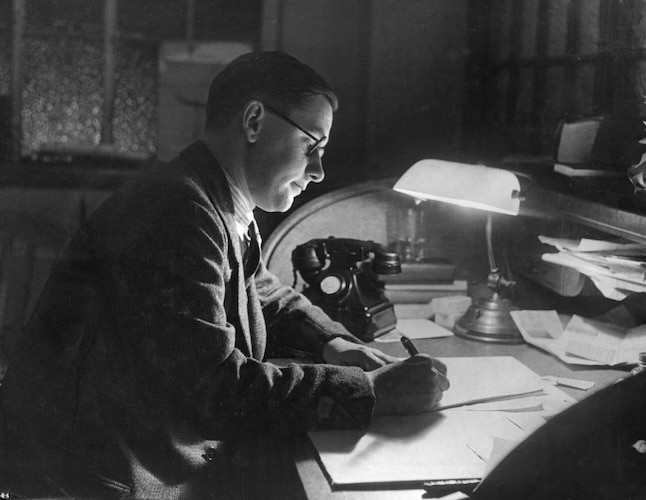
We moderns tend to think of responding to emails and texts as ancillary — something to tackle on an ad hoc basis; something to get to in the cracks of time, between primary tasks, when the mood strikes. But in the past, answering correspondence was seen as a fundamental social obligation — a task that was enshrined as a set part of one’s daily routine. People accepted that it was a basic part of life and would take up a significant chunk of their time. They didn’t treat it as an occasional chore, but a fixed block in their schedule.
For example, Charles Darwin answered every missive he received, even from cranks; leaving a letter unanswered weighed on his mind. To stay on top of the piles of mail he received, Darwin engaged in “letters time” at two intervals during his day. After a tightly managed 90-minute work session first thing in the morning, he would come into the drawing room at 9:30 a.m. and open and read the morning’s post with his family until about 10:30 a.m. Darwin would read his own mail, and his wife would read the family’s letters out loud. After lunch, he would sit in a large chair by the fireplace, with a board across his lap that functioned as a desk, and respond to the letters for an hour or two.
Many eminent figures, who often received satchel loads of mail, placed letter-answering at the end of their daily routines. Seeing it as a necessary but less mentally taxing task, men like Albert Einstein, Carl Jung, Richard Strauss, Igor Stravinsky, and W.B. Yeats, among others, replied to their mail in the afternoon, after their more creative and cognitively-demanding work had been completed.
Some really made it the capstone of their day. Both Jefferson and John Adams not only engaged in letter-writing sessions in the morning, but in the evening as well. The diarist Samuel Pepys wound down for bed by penning letters at 12:00 a.m. Louis Armstrong would answer his mail late at night after his shows, while dining on takeout Chinese (his second favorite food after red beans and rice).
Whenever they did it, answering their mail was something that many men used to set aside dedicated time for each day. We ought to consider doing likewise — reviving what might be called the “correspondence hour”: a recurring time in your daily routine in which you respond to all texts and emails (that truly need a response — not every one does).
Because in our current age, we can receive messages at any time, day or night, this creates the feeling that they should be answered in a similarly rolling and sporadic fashion. But, except for emails and texts that are more urgent in nature, it’s possible to consolidate your responding into a single block of time.
The field-tested practice of answering communications at the end of your day, once your more important work is finished, can be a wise one. But schedule your own correspondence hour for whatever time works for you.
Such batching will free up mental bandwidth. Constantly pivoting from one task, to popping off a message, to returning to the task, frazzles your brain. It will also likely increase your effectiveness in replying to all your messages, so your correspondents won’t be left hanging and can get on with their work and plans.
Even though Jefferson sometimes felt consumed by answering letters — he responded even to those of ordinary citizens, whether from schoolboys seeking advice or farmers looking for guidance — he saw the act as a civic duty, almost a republican obligation. While staying on top of one’s messages may not quite rise to that level for the non-presidents among us, it’s still a worthy social civility. It’s a way to become a class act — and instituting a correspondence hour can get you there.