You want to get more things done in life. So you become an early riser, buy a planner, and download a to-do list app. You maintain inbox zero by answering email the minute it lands in your inbox. You stay busy from the second your feet hit the floor until you rest your weary head on your pillow at night.
But somehow the pile of stuff you need to do keeps growing, and you’re not making any real progress on your projects and goals.
What’s going on?
Well, chances are you’ve got a bottleneck somewhere in your system.
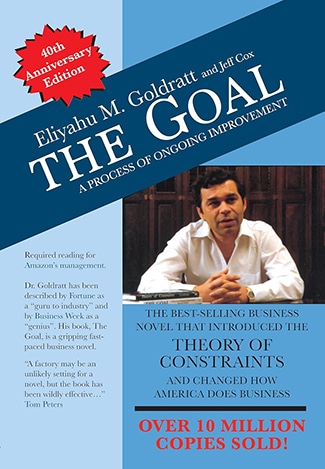
About a decade ago, I read a weird book called The Goal by a physicist named Eliyahu Goldratt that explores this problem. It’s a weird book because it’s a business book written as a novel about a plant manager racing to save a failing factory before corporate shuts it down.
I hadn’t thought much about The Goal until it recently came up in my conversation with David Epstein about Inside the Box. The book argues that constraints are inevitable and can either serve you or hold you back, depending on how you manage them.
Epstein talks about The Goal because Goldratt’s main idea centers on an ill-managed constraint. Goldratt argues that any project or task in life is really just a system consisting of a chain of steps, and that chain can only move as fast as its slowest link. There’s always one step that’s slower than the others, causing work to pile up behind it. Goldratt called that step the bottleneck.
You can optimize every other part of the system, but unless you address the bottleneck, things won’t speed up and output won’t increase. The bottleneck sets the pace for everything else.
Goldratt illustrates this dynamic through the example of a Boy Scout hike.
Your Bottleneck in Life Is a Hiking Scout Named Herbie
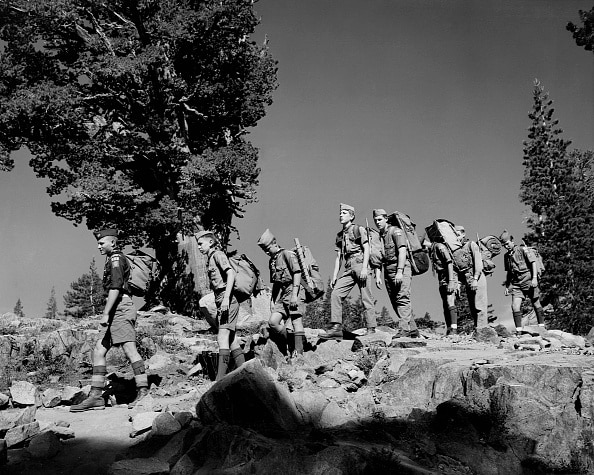
Picture a Scout troop walking single file down a narrow trail. The goal is to get the whole troop to camp as fast as possible, together.
Problem is, the kids don’t all walk at the same speed. There’s one slow kid somewhere in the middle of the line (Goldratt calls him Herbie), and even if the kid up front double-times it, the line as a whole can only move as fast as Herbie. The kid in front, who’s hauling it, disappears down the trail while a big gap opens up in front of Herbie. Behind him, the rest of the troop bunches up and starts stepping on each other’s heels. The kid up front has to stop and wait multiple times on the hike so Herbie and the boys behind him can catch up. Speeding up the front of the line doesn’t help and just makes the problem worse.
The only way to get the troop to camp faster together is to deal with Herbie.
The boys redistribute items from Herbie’s pack to the other scouts, which allows Herbie to walk a little faster. But he’s still slower than the other boys, so they also move him to the front, organizing the entire line around him. The rest of the troop falls in behind Herbie, eliminating the gaps and bunching that plagued the hike.
While having Herbie up front slows down the faster hikers, it keeps everyone synchronized, ensuring that the troop stays together and moves effectively as a single, steady unit.
Every system in your life runs like that hike. Your home improvement projects, your work schedule, your finances, and your fitness. Each one consists of a chain of steps, and the whole chain moves only as fast as its slowest link. Speed up any step that isn’t the slow one, and you don’t get anywhere. Instead, you just pile up a bigger mess. So instead of doing more, you need to go hunting for your Herbie and find a way to deal with it.
This is what Goldratt called “The Theory of Constraints” and you can sum it up this way:
- Identify the bottleneck.
- Improve it where possible.
- Organize the rest of the system around it.
- Stop wasting effort optimizing things that aren’t the constraint.
Now let’s take a look at how finding and addressing bottlenecks in different areas of your life can help you enhance your effectiveness.
Addressing Bottlenecks in Your Fitness
You bought a program from some shredded dude on Instagram. You’re doing the work, but not seeing any progress. What’s going on? Well, you’re sleeping five and a half hours a night. Your body does most of its repair and muscle-building while you’re unconscious to the world, so if you’re shorting yourself there, it won’t matter how dialed-in your program is. Sleep is your bottleneck. Fix the sleep, and your workouts will start paying off.
Here’s another example. You want to incorporate the shoulder press in your routine so you can develop those man antlers. But if your shoulders are too stiff to get a bar overhead in a straight line, no amount of pressing volume is going to fix your press. You can add sets for a year and stay stuck. Tight shoulders are your bottleneck. To overcome it, spend fifteen minutes before your workout doing mobility work to loosen those shoulders up.
Addressing Bottlenecks in Your Finances
You want to get ahead financially. So you spend all Saturday comparing index funds over a 0.03% difference in fees. You’ve optimized your portfolio, but you’re still not growing that net worth as fast as you’d like.
What’s the bottleneck?
Well, you’re carrying a credit card balance at 24% interest. That 24% is costing you more every month than any fund will ever make you. There’s no investment on the planet that reliably beats a guaranteed 24% return by paying off the balance completely. That credit card balance is your financial bottleneck. So before you optimize your portfolio, throw everything you’ve got at the constraint. Pay off the card. Then go find the next bottleneck, which for a lot of people is the fact that they’ve got no cash cushion at all, so the first surprise expense sends them right back to the card. You can fix that bottleneck by starting an emergency fund.
Addressing Bottlenecks in Your Home
You’re trying to manage your home like an Aristotelian householder, but you notice that there are some pile-ups occurring that are really mucking things up. Take the kitchen. By dinner, the sink is full and dishes are sprawled all over your counter. You don’t have any space to prepare the meal.
Where’s the Herbie, here?
Ah, the dishwasher is still loaded with clean dishes from yesterday that nobody put away, so there’s nowhere to put the dirty ones. The full dishwasher is the bottleneck. Set up a system so that your kids empty it first thing every morning. Now you’ve got a place to put the dirty dishes, and a clean working space to get dinner on the table.
Let’s take a look at the morning scramble to school and work. If everybody’s fed and dressed, but you’re standing at the door for ten minutes every single day because nobody can find their shoes, the shoes are the bottleneck. Establish a system so that shoes are kept in a certain place each night so they can always be found. Bottleneck solved.
Is there a home project you and the Mrs. want to do but keep putting off again and again? There’s probably a Herbie causing the recurrent postponement. Maybe you’re finally going to finish the basement. You’ve researched flooring options, picked paint colors, priced out furniture, and bookmarked a dozen YouTube tutorials. But before any of that can happen, an electrician needs to come move an outlet. Until that appointment gets made, the entire project is stuck. Scheduling that electrician is the bottleneck. Stop comparing paint swatches and make the call.
Releasing the Bottleneck
The trick to finding the Herbies in your life is to look for areas where things are backing up. Ask yourself, “What’s the one thing that, if fixed, would make everything else faster or easier?”
Once you spot a bottleneck, address it quickly, and you’ll start to see progress pick up.
Solving one bottleneck doesn’t end the job, though. Fix the slowest link, and whatever was second-slowest becomes your new bottleneck. That’s the final step in Goldratt’s Theory of Constraints: go find the next bottleneck and work on that one.
You’ll probably get a lot more done dealing with that one slow link than you ever did trying to speed up everything else.
To learn more about how you can use constraints to your advantage, listen to our podcast with David Epstein: