Several years ago, I picked up a field jacket inspired by field jackets from the 20th century. I needed something for those weeks in the fall and spring when it’s too warm for a proper winter coat but too cold for just a sweatshirt, and it seemed like a solid option.
The field jacket has since become the jacket I reach for more than anything else in my closet. I throw it on with jeans and a t-shirt when I’m out running errands. I’ve worn it over an Oxford cloth button-down and chinos. I’ve worn it on road trips, to the grocery store, and to kids’ basketball games. It’s the perfect travel jacket for when I fly, with plenty of pockets for stashing stuff. The field jacket works with almost everything in my closet and fits nearly every social situation I find myself in.
That mixture of handsomeness and utility isn’t an accident, but a product of where the field jacket came from: the military. A lot of male style staples were born during times of war, originating from pieces that were tailored to be both functional and sharp-looking at the same time. And the field jacket’s path from the battlefields of World War II to your closet is one of the more interesting stories in menswear.
Below, we talk about that evolution, and how you can wear the field jacket with style today.
A Jacket Born From Failure
The U.S. military spent the better part of three years at the beginning of WWII trying to get the field jacket right.
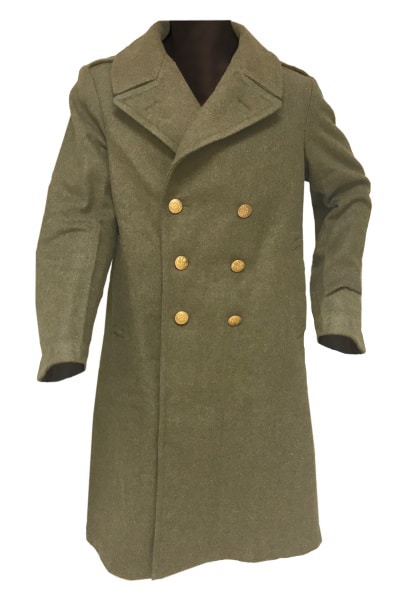
At the start of the 1940s, American soldiers were issued the M-1939 Service Coat, a long, heavy wool garment that was about as practical for modern combat as a bathrobe. When soldiers exerted themselves, they’d sweat through the wool. Then when they stopped to rest, all that trapped moisture would cool rapidly against their bodies. It was a recipe for hypothermia, and it weighed a ton even when dry.
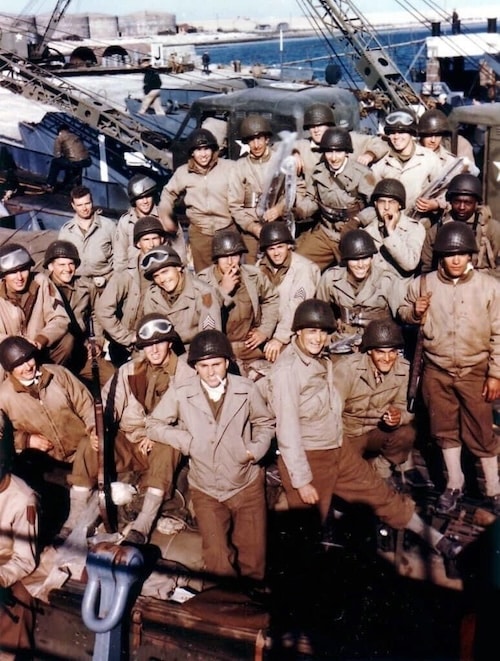
The military’s first fix was the M-1941, sometimes called the Parsons Jacket after Major General James K. Parsons. It was modeled after a civilian windbreaker, made from lightweight cotton poplin with a wool flannel lining. It was better for mobility, but the light olive drab color was highly visible in the field, the fabric couldn’t handle sustained wind and rain, and the short, waist-length cut didn’t allow for pockets with sufficient storage.
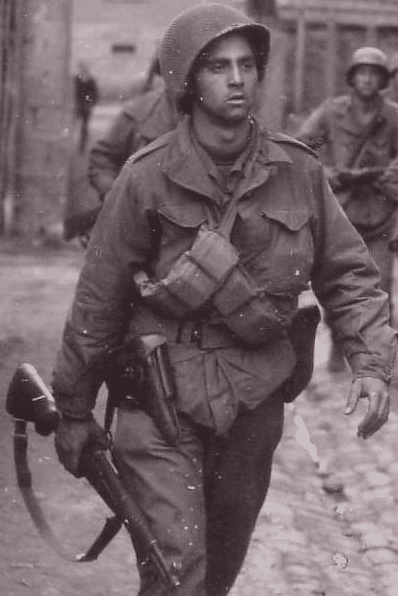
It wasn’t until 1943 that the military nailed it. The M-1943 moved to a longer, hip-length cut in a darker olive drab cotton sateen, tightly woven for wind and water resistance. It introduced the iconic four-pocket layout: two large bellows pockets at the hips, two pleated pockets at the chest. And it was designed as the centerpiece of a layering system where you could wear it over an insulating mid-layer (including the famous “Ike Jacket” championed by Eisenhower himself) and adapt to conditions ranging from mild French autumns to the brutal winters of the Ardennes.
The M-65: The Design Peaks
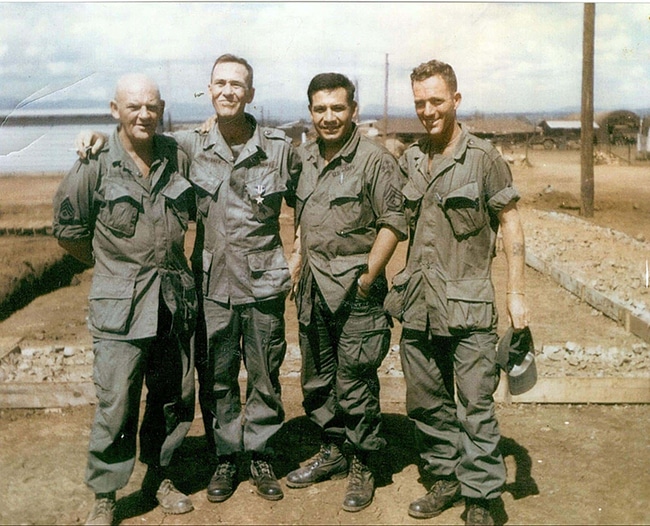
The M-1943’s DNA carried through the M-1951, which added a zipper closure and bi-swing pleats at the back for better shoulder mobility, and then reached its final form in 1965 with the M-65, produced by contractors including Alpha Industries.
The M-65 is the field jacket most people picture when they think “military field jacket.” It replaced the M-1951’s pointed collar with a stand-up collar that concealed a stowaway hood accessible via a heavy-duty zipper, giving soldiers in Vietnam immediate protection from monsoon rains. The fabric was a 50/50 cotton-nylon sateen blend that offered serious wind and water resistance. Velcro fasteners replaced buttons at the cuffs and collar for a more secure seal.
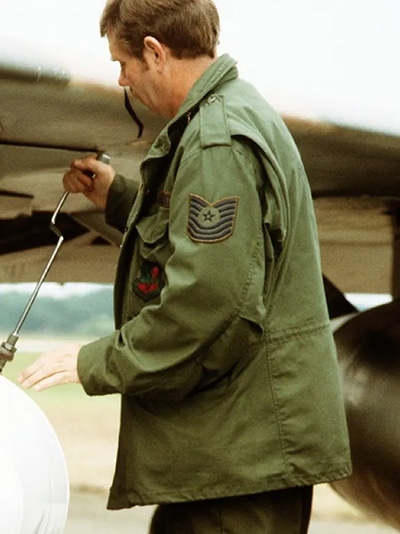
The M-65 was deliberately cut oversized and boxy to accommodate a removable quilted nylon liner for cold weather. This is important to know if you’re buying one, because an authentic M-65 or a faithful reproduction is going to feel huge unless you size down one or even two sizes from your normal jacket size. It remained in service for decades before newer cold weather clothing systems began to replace it in the late 1980s.
How the Field Jacket Became a Civilian Staple
After World War II and Korea, enormous quantities of surplus military gear flooded the civilian market. If you needed a tough, affordable jacket, you could pick up an M-1943 or M-1951 for next to nothing. Working-class guys wore them because they were cheap and built to last.
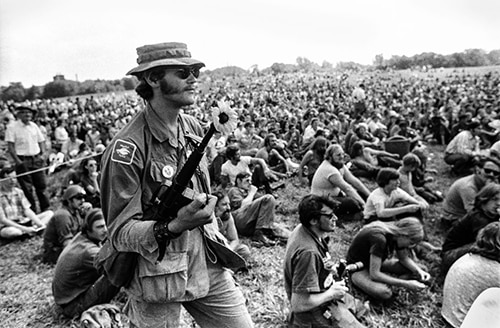
During Vietnam, the field jacket started to become a symbol of rebellion. Veterans rotating home throughout the late ’60s and early ’70s were still wearing their issued M-65s. When some of those vets joined the anti-war movement, the jacket became a symbol of dissent. War protestors who didn’t even serve in the military started to wear the M-65 as part of their unofficial uniform. After the war, surplus M-65s hit the racks at Army surplus stores and because it had the aura of cool rebellion, civilians started wearing them. For example, the M-65 became a style staple in the punk scene in the 70s and 80s.
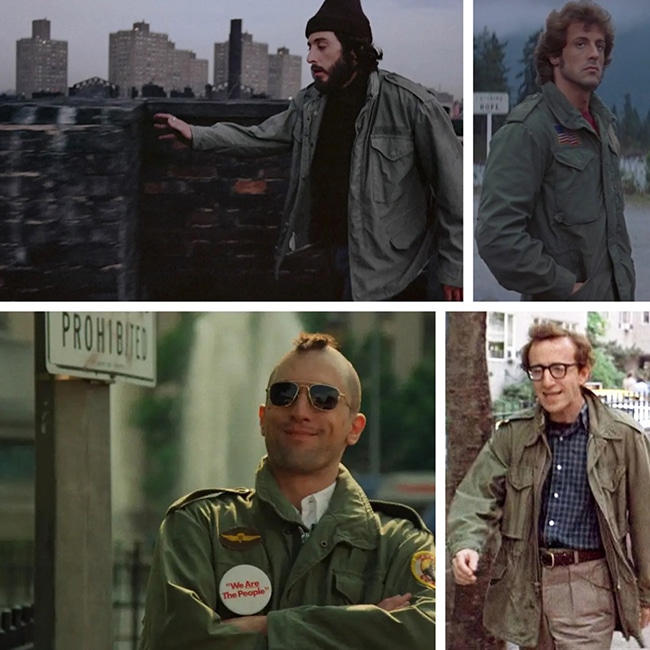
Hollywood cemented the field jacket as a menswear go-to for the rebel. Pacino wore an M-65 in Serpico as part of his character’s refusal to dress or act like a conventional cop. Robert De Niro’s Travis Bickle wore one as a kind of urban combat uniform in Taxi Driver. Woody Allen wore one in Annie Hall, which helped make the jacket something a (neurotic) urban intellectual could wear. Stallone’s outsider John Rambo wears a battered M-65 in First Blood. By the early ’80s, the field jacket was the jacket for guys who didn’t fit neatly into one box.
Why the Field Jacket Looks Good
So why does the field jacket look good with so many different outfits? The hip-length cut hits at the right spot on most men’s frames. If your jacket has an internal drawstring, and you use it to cinch the waist (and you should, because an uncinched field jacket on a slim guy looks like a poncho), you get a tapered silhouette that mimics the V-shape of a tailored blazer. Even without a drawstring, the jacket hits a sweet spot between structured and casual. The four-pocket layout gives the jacket visual weight and complexity without making it busy. Your eye has something to land on. Those pockets are incredibly handy to boot.
The military heritage gives the jacket an automatic dose of manly ruggedness. And the rebel cool symbolism that the field jacket acquired in the 1970s is still there. When you see a guy wearing one, you often think, “That dude looks cool.” You’ll feel like a cool dude wearing one.
Where to Find a Good Field Jacket
If you want a genuine military-issue jacket, you’ll want to check Army surplus stores and online sellers. The problem you’ll run into with vintage field jackets is that there aren’t many of them on the market these days. And when you do find one, they’ll mostly be for smaller guys. When I search for vintage M-65s on eBay, I can find a lot of smalls and mediums, but not many larges and extra larges.
Alpha Industries, one of the original manufacturers of the M-65, still makes the jacket. You can buy one from their site. It will set you back $225. One of the downsides of it (I think) is that it looks a little too new. It doesn’t have that lived-in look that you think of when you think of field jackets.
If you’re going for a more rugged-looking field jacket, look for reproductions. For example, Bronson MFG offers several, including the M-43, M-51, and M-65. They all look vintage, even though they’re not, and at around $100-$150, they’re reasonably priced. On the other end of things, if you’ve got $800 burning a hole in your pocket, Japan’s The Real McCoy’s has a sharp M-65 replica.
Many menswear companies offer field jackets that are inspired by the OGs. These aren’t exact reproductions. They’re channeling the look and feel of a field jacket, but giving it some modern updates; one of the nice things about these non-replica field jackets is that they often include some tailoring so that they don’t look so boxy. Filson offers an “inspired by” field jacket that looks sharp.
My field jacket, which I got from Flint and Tinder, fits this category. It has the look of a vintage field jacket, but with a bit of tailoring so that it fits less poncho-like. They discontinued it, but hopefully it’ll return. Hey, Huckberry! Bring it back!
Just google “field jacket” and you’ll find plenty of options for your personal budget and style preferences.
How to Wear a Field Jacket
As I mentioned above, the field jacket is a pretty dang versatile piece of clothing. You can dress it up or down. You’ll usually find me wearing my field jacket with a t-shirt (tucked in, of course), jeans, and sneakers.
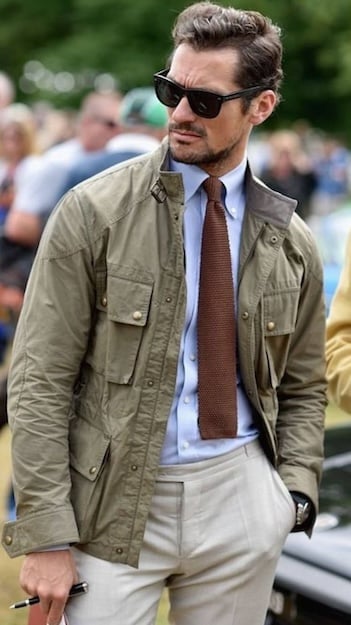
If you want to dress it up a bit, wear khakis, an OCBD (and tie, if you want), and a pair of loafers or chukkas.
It really is hard to mess up a field jacket, but here are some guidelines for you:
Match it with textures that complement the cotton sateen. Cotton, corduroy, denim. These all share that tactile, lived-in quality. Smooth, shiny fabrics are going to feel off.
Use the drawstring. If you’ve got an OG field jacket or a replica, you’ll want to cinch it with drawstrings. An uncinched one looks like a tent.
Keep the hood stowed away. If your jacket comes with a stowaway hood, keep it zipped inside the collar where it belongs unless it’s raining. It’s a genuinely useful feature, but it rarely looks good worn casually.
If you don’t yet own a field jacket, it’s worth picking one up. From the foxholes of war to the trenches of modern life, it’s a useful and handsome workhorse that’s earned its place in a man’s wardrobe.