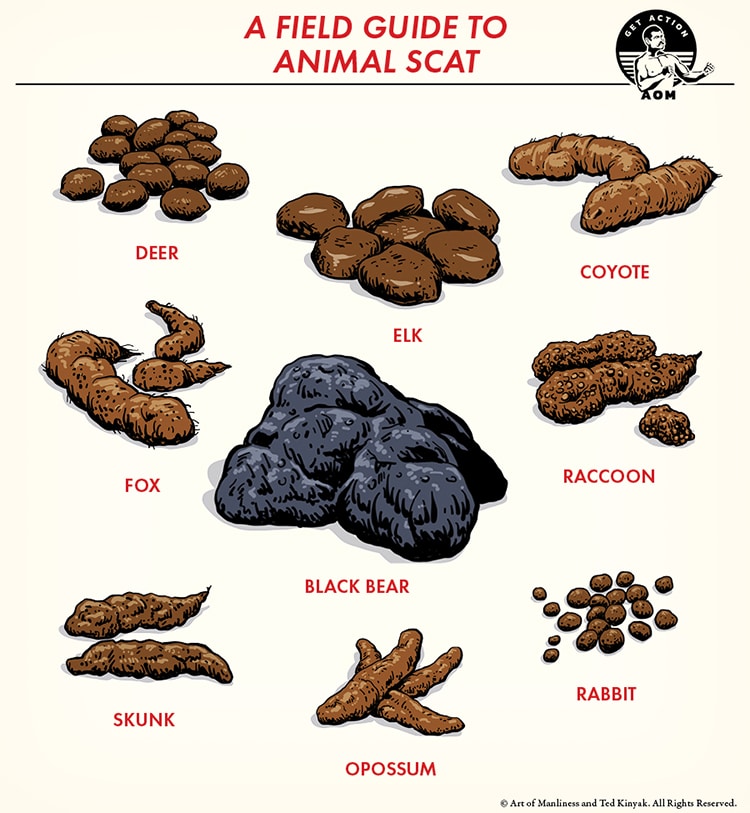
Identifying animal scat is one of those outdoor skills that sounds simple until you actually try it. You spot a pile on the trail or in your yard and think, “Aha, I can solve this mystery!” But then you realize that several animals leave behind droppings that look basically the same. This illustrated guide to the most common and notable scat found in the U.S. is meant to give you a solid starting point and to help you narrow the field rather than declare a definitive verdict.
Many types of scat differ mostly by size. Elk, deer, and even rabbit pellets can look strikingly similar at first glance; scale is often the biggest clue. Others blur together because related animals will produce nearly identical scat. Fox and coyote turds, for example, frequently overlap in overall appearance, and telling them apart often comes down to context: where you found it and what else you’re seeing nearby. In those cases, an identification is often an educated guess rather than a certainty — and really, narrowing it down to a couple possibilities is often good enough!
Complicating things further, scat is highly variable depending on an animal’s diet, hydration level, and overall health. A berry-heavy meal, a run-in with a tasty bag of garbage, or a period of illness can radically change texture, color, and consistency. Plus, the same animal may leave very different calling cards at different times of year.
So think of this guide as simply one tool among many. Pair what you see here with tracks, habitat, location, and common sense. Scat identification is part observation, part experience, and part informed guesswork.