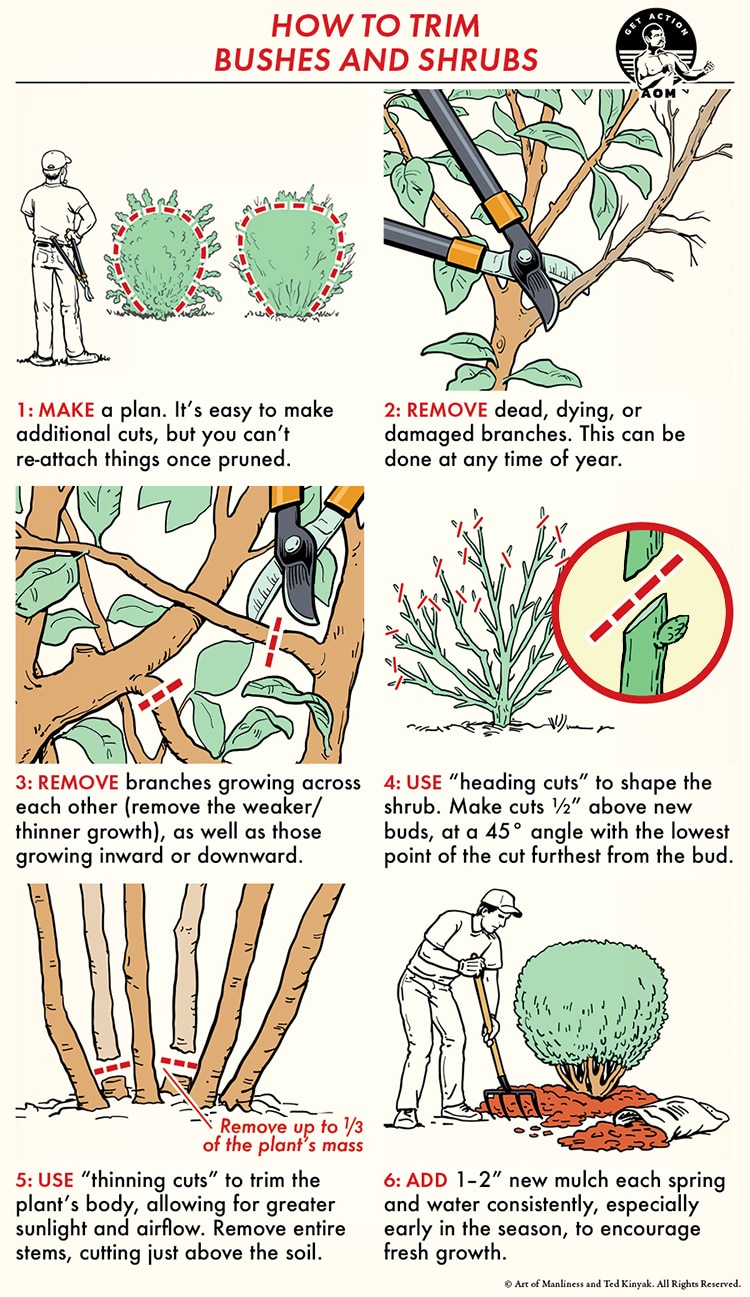
Left to their own devices, shrubs will usually grow okay on their own — but they won’t always grow how you want them to. Over time, they become unruly and congested, with tangled branches that block sunlight and limit airflow, leading to damaged, unhealthy plants that kill the landscaping aesthetic you’re aiming for. Done properly, trimming your bushes at least annually helps manage their growth and structure, keeping them healthy, balanced, and visually appealing. By removing dead or diseased stems and selectively shaping the plant, you encourage stronger development and a longer lifetime.
Spring-flowering shrubs like lilac and forsythia should be pruned right after they bloom, so you don’t accidentally cut off next year’s flower buds. Summer-flowering shrubs, on the other hand, are best pruned in late winter or early spring before new growth takes off. Dead or damaged wood can be removed anytime you notice it — in fact, the sooner the better.
Too many property-owners hack away at a plant until it looks tidy. But proper trimming is about making thoughtful cuts to guide future growth. With a simple plan and a few fundamental techniques, you can transform a wild, overgrown shrub into a healthier, more vigorous plant.