
Over the weekend, much of the United States was hit with a huge winter storm that affected over 200 million people. Some of those folks lost power on account of the ice and snow.
A lot of people don’t think about their power until it goes out, at which time, of course, it’s too late. Even if you don’t live in an area that gets hit with snow and ice, other natural and manmade disasters can strike anywhere, and when you lose power in the modern world, a lot gets disrupted. You lose heat or AC. Your fridge warms up, causing food to spoil. Your Wi-Fi fails. Your phone battery dies. In some homes, you lose water pressure because pumps need electricity.
That’s why it’s worth having a backup power plan — so you can stay safe and maintain basic functions when the grid goes down.
But building a backup power plan can get expensive.
That’s why Creek Stewart and Joe Bassett, self-reliance experts and the authors of Emergency Communication 101, advise thinking about your backup power plan in tiers.
Below, we’ll walk through a progressively scalable approach so you can choose the level of backup power that fits your budget and be ready when the grid goes down.
Tier 1: Small Device Power Support
Goal: Keep phones, radios, flashlights, and other small devices running for 1–2 days
Cost: ~$200+
This is the lowest-hanging fruit, and the place everyone should start. It will keep your phone charged for days, so you can stay informed and communicate with the outside world while utility workers restore power. You’ll also ensure you have illumination available for dark nights.
Batteries
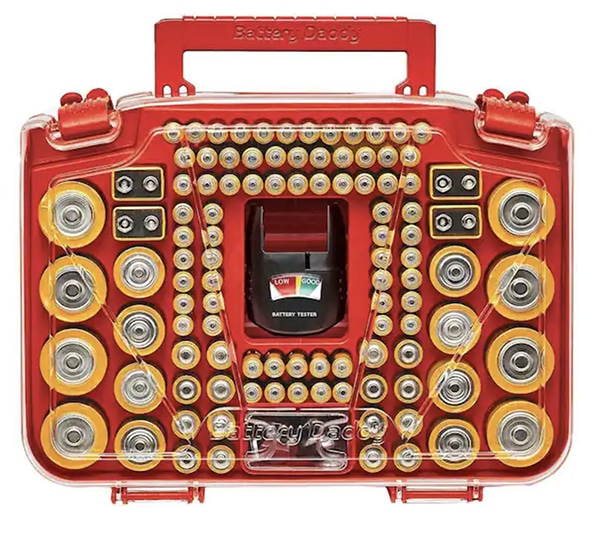
Many emergency radios, flashlights, and small devices still run on AA or AAA batteries, so it’s important to have plenty of batteries on hand so you can continue to use those things when the power goes out.
To keep things organized (and to avoid rummaging through junk drawers in the dark), get a Battery Daddy — a case that stores batteries of various sizes. My mom got me one of these a few years ago for Christmas, and it’s been very handy for home battery organization. I never have to rummage for batteries anymore.
Portable Power Banks
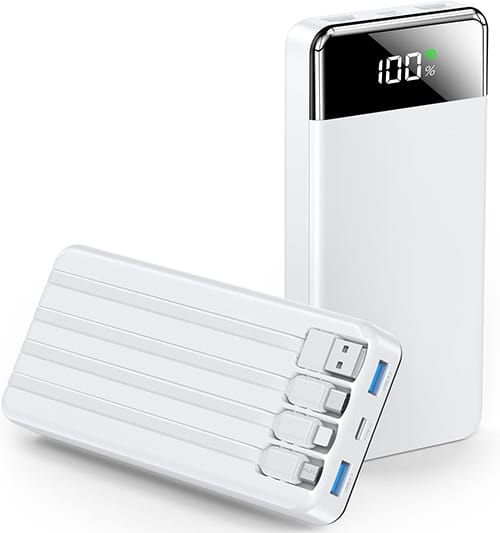
Every household should have at least one solid power bank. These can charge a smartphone and other handheld devices multiple times and are perfect for short outages or evacuation kits. Power banks aren’t just useful during blackouts — they’re also great for travel and backpacking.
Good options:
- SABANI 35,000mAh Portable Charger. My go-to power bank. It packs a massive 35,000mAh battery — enough juice to charge your phone multiple times — yet it’s about the size of an iPhone. It’s got four built-in cables (Lightning, USB-C, USB-A, and Micro) plus three extra ports, so you can charge up to six devices at once without digging through a tangled mess of cords.
- Anker 747 Power Bank. With a 24,000 mAh battery, it can charge phones, tablets, and even laptops multiple times, making it ideal for keeping your devices running during a grid-down scenario.
Small Portable Solar Panel
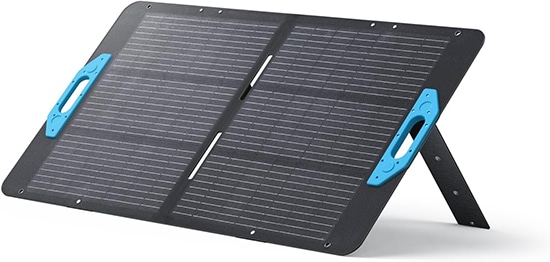
A power bank might last you a day or two before it runs out of charge. How do you recharge it (and your devices) when the power is still out beyond that timeframe? Answer: a lightweight folding solar panel.
Solid option:
- Anker Solar Panel (100W). This foldable, lightweight solar panel can generate up to 100 watts of energy, allowing you to recharge your power banks and devices when the electricity is down for more than a few days.
Tier 2: Larger Device Power Support
Goal: Power laptops, radios, and other larger devices for several days
Cost: ~$1,000+
With Tier 2, you’re moving beyond keeping your phone charged during a blackout and looking to power bigger items like laptops, fridges, and even medical devices.
18-Volt Tool Batteries
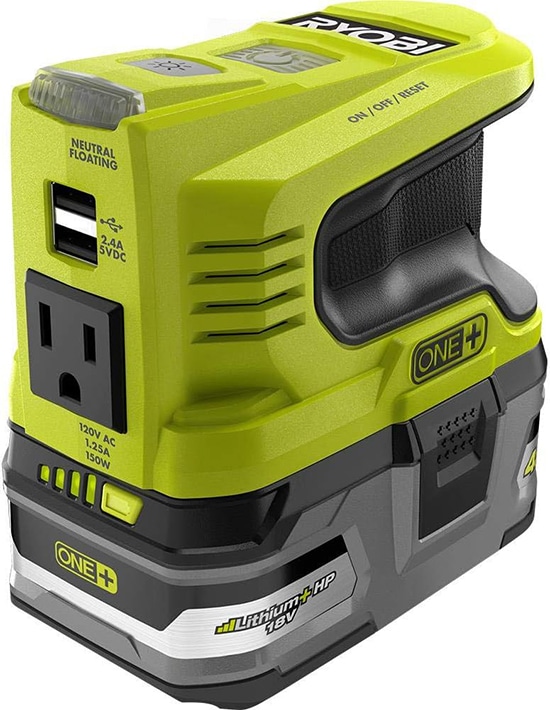
If you already own power tools, you already own a potential source of emergency power; you just may not realize it.
Most major tool brands offer inverter adapters that you can purchase and snap onto the 18V batteries that come out of your tools, turning them into USB or AC power sources.
Examples:
With the right adapter, you can charge phones, radios, and laptops using gear you already own.
Small Portable Power Stations
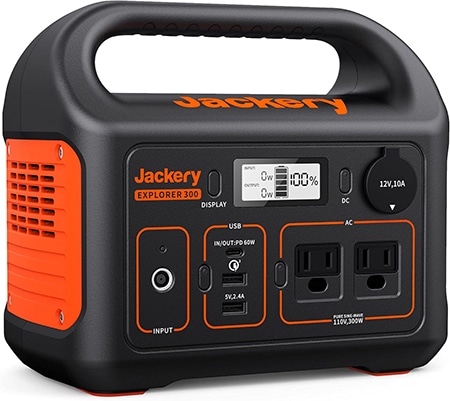
Portable power stations are probably the easiest way to up your backup power game. They’re basically large, rechargeable batteries with built-in inverters and outlets. A small power station won’t run a refrigerator or a microwave, but you can power LED lamps to light your home during the night and medical devices like a CPAP machine.
Good entry-level option for a power station: Jackery Explorer 300.
It can charge smartphones and laptops multiple times, keep a Wi-Fi router and modem running for several hours, and power LED lights all evening. It’ll also run medical devices like a CPAP machine through the night.
You can recharge the Jackery Explorer in multiple ways: by plugging it into a wall outlet when the grid is up, charging it from a car’s 12-volt outlet, or pairing it with a folding solar panel to recharge during daylight hours. That flexibility is what makes them so useful in multi-day outages.
Small Inverter Gas Generators
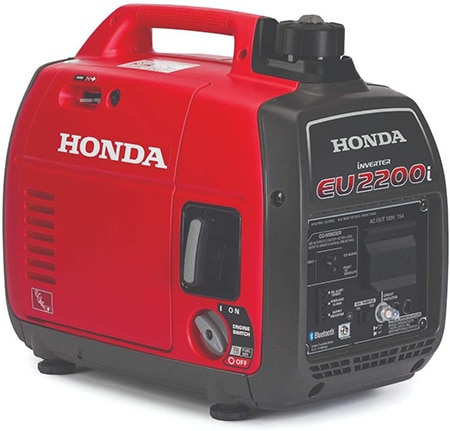
If you’re looking to keep your fridge running during a power outage, but aren’t ready to pay for a huge portable generator, a small inverter gas generator is hard to beat. With one of these, you can not only keep your devices charged, but you can also power many of the conveniences in your home that depend on electricity.
Good entry option: Honda EU2200i
This generator is small and portable, but it can power a lot.
With a small generator like the Honda EU2200i, you can realistically do things like:
- Run a refrigerator or freezer to keep food from spoiling
- Power a microwave or coffee maker in short bursts
- Keep a gas furnace blower running in winter or fans going in summer
- Charge laptops, phones, radios, and power stations all at once
- Run Wi-Fi and internet equipment, so your house stays connected
- Power medical devices like CPAP machines without worrying about battery drain
- Recharge tool batteries and use basic power tools for repairs
The key thing to remember with a generator this small is that you can’t run everything at the same time. So you can’t run the fridge, the furnace fan, and the microwave all at once on a small generator. You can plug in the fridge for a few hours and then unplug it to use your microwave for a few minutes. Think of using a small generator in sequences, not all at once.
One rule for gas generators: only run them outdoors. Because it runs on gasoline, it emits carbon monoxide while in use. Run the generator outside and use extension cords specifically designed for generator use to connect it to your devices inside.
The tradeoff with a generator like this is fuel. To use it during an outage, you need gasoline on hand. That means storing fuel in advance and rotating it every few months to prevent it from going bad. Make sure to read our article on how to store fuel safely.
Vehicle Power Inverters
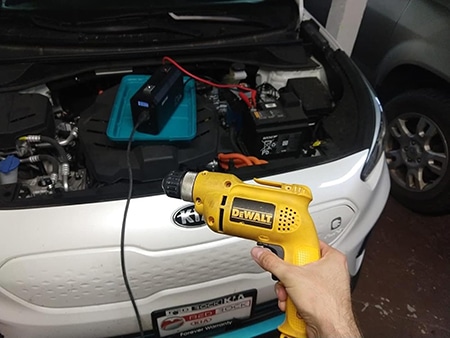
This is one of the most overlooked backup power options, even though most people already own the most expensive part of the setup: a car.
With a quality inverter clamped directly to a car battery, your vehicle can function as a makeshift generator.
Example: BESTEK 1000W Pure Sine Wave Inverter
For under $150, you can run a refrigerator intermittently to keep it cool, charge laptops and phones, or top off a small portable power station by simply idling your car. It’s not particularly efficient and probably shouldn’t be your first option in a power outage, but in a prolonged outage, it’s a perfectly serviceable Plan B for larger devices.
Tier 3: Circuit-Level Power for Large Appliances
Goal: Run lights, refrigerator, furnace, and key appliances
Cost: ~$800–$5,000
With Tier 3, we’re aiming to bring as much normalcy to your home as possible, even when the power is out. The focus shifts from powering individual devices to powering circuits in your home. By tying a generator or large power station to your breaker panel via a transfer switch, the lights will turn on when you flip the switch, the furnace will kick on when the thermostat tells it to, and the fridge will keep running in the background. With Tier 3, you won’t be able to power your entire house during a power outage, but you’ll be able to power parts of it.
Transfer Switch (Critical)
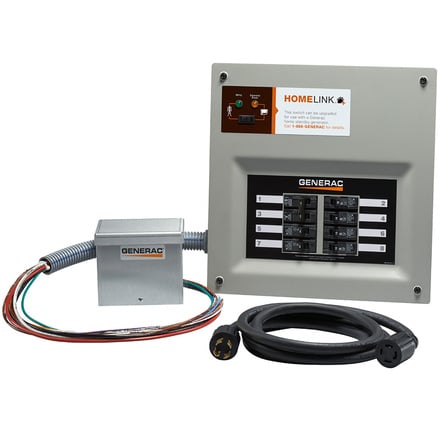
If you want to power household circuits safely using a larger, portable generator, you need a transfer switch. A transfer switch allows you to connect a generator or other power source directly to selected circuits in your breaker panel — such as those powering your refrigerator, furnace blower, lights, or outlets — without risking backfeeding electricity into the grid.
Trusted brands:
You’ll want to hire an electrician to install the transfer switch. This is not the place for YouTube DIYism.
Large Portable Generators
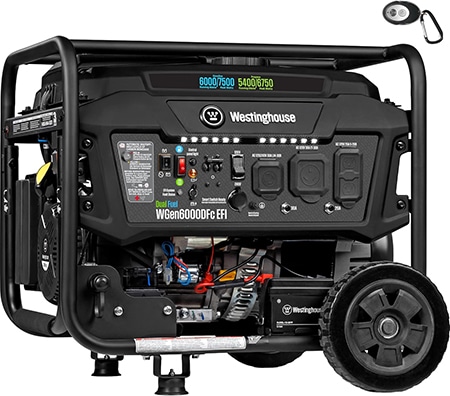
For most homes, a generator in the 5,000–8,000-watt range is enough to run essentials without constant juggling.
Solid options:
With a generator in this class and a transfer switch, you can potentially run the following at the same time:
- One or two refrigerators/freezers
- A gas furnace blower
- Lights throughout the house
- Wi-Fi, outlets, and device charging
- Occasional use of microwaves
Large portable generators run on fuel. Some of them run on gasoline, others on propane, and others can connect to your home’s natural gas line. If you’re going with a gasoline-powered one, make sure you’ve got enough gas stored to keep it running during an outage.
Large Power Stations
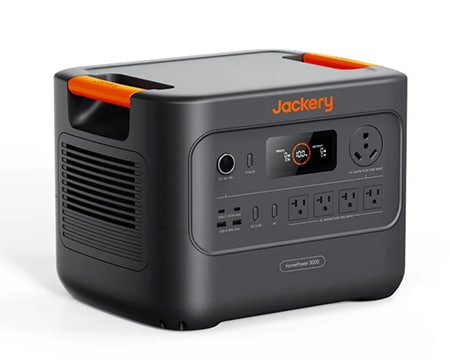
If you want quiet, indoor, safe power without fuel or engines, large power stations — essentially oversized rechargeable batteries — have come a long way. They’re basically scaled-up versions of the small power stations in Tier 2. Large power stations can be tied into a home’s breaker panel via a transfer switch to power selected circuits, though runtime and load are more limited than with fuel-based generators.
Strong option: Jackery Explorer 3000 Pro
With 3,000 watts of output, a unit like this can run refrigerators, lights, Wi-Fi, and other household essentials. It’s expensive, but it’s plug-and-play, silent, and maintenance-free. You can pair it with some solar panels to keep it charged during extended blackouts.
EV Vehicle-to-Load (V2L)
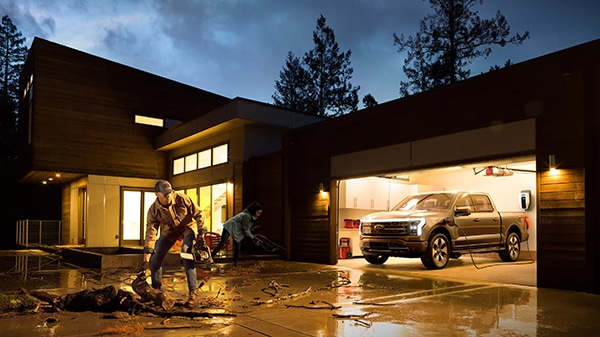
If you’ve got an electric vehicle, you can use it as a power station for your home during a blackout.
Examples:
Many V2L-capable EVs have battery packs in the 60–100 kWh range. To put that in perspective, that’s 20–40 times the capacity of a typical portable power station. With the right setup, that kind of stored energy can keep essential household circuits running for days.
Depending on the vehicle and configuration, you can use an EV to power items like refrigerators, lights, Wi-Fi equipment, and outlets — either by plugging directly into the vehicle’s built-in outlets or by integrating the car into a home power system with additional hardware (Ford has hardware that allows you to do this with the F-150 Lightning; Hyundai does not).
The main limitation is that once the battery is drained, you need to recharge it — either from the grid when power returns or from a charging station if one is available. Still, if you already own a V2L-capable EV, it’s a powerful backup power option.
Tier 4: Whole-House Automatic Power
Goal: Seamless, automatic backup for long outages
Cost: $10,000+
This is the “Didn’t even notice the outage” tier.
With Tier 4, when the power goes down, you don’t roll out extension cords, fire up an engine, or think about what can run and what can’t. Your home is equipped with a permanently installed system — either a standby generator or a whole-home battery — that automatically takes over. The lights stay on. The fridge stays cool. The HVAC keeps doing its thing. If you weren’t paying attention, you might not even realize anything happened.
This tier is about permanent resilience.
Tier 4 isn’t for everyone. It’s expensive, and could be overkill if you live somewhere with steady weather and a low chance of outages. But if you live in an area with unreliable power, extreme weather, or medical or work requirements that demand uninterrupted electricity, I couldn’t recommend this option more. Outages become a non-issue, the peace of mind is significant, and the overall ROI is huge.
Standby Generators
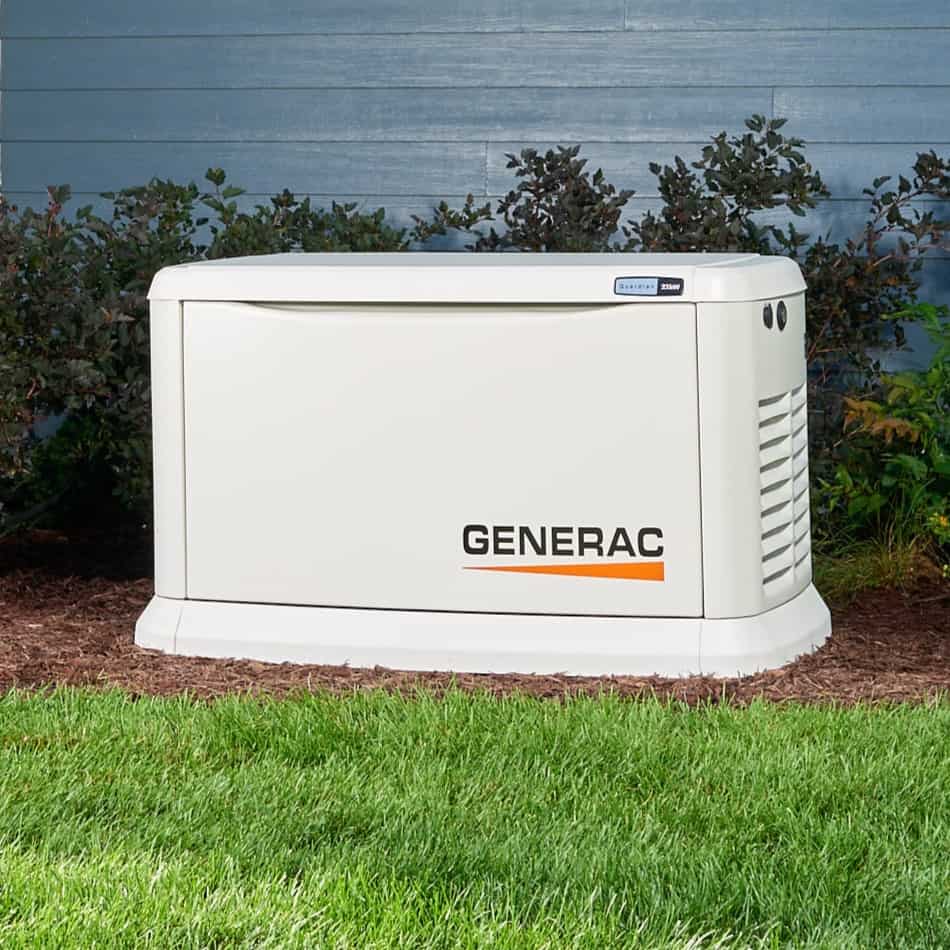
Standby generators are permanently installed outside your home and wired directly into your electrical system. When the grid goes down, they automatically start up — usually within seconds — and take over.
Industry standard: Generac Guardian Series
We have a Generac for our home. The previous owner had it installed, and it came with the house. I didn’t think much about it when we first bought our home, but after an extended power outage in Tulsa shortly after we moved in, it’s become one of my favorite things about the house. When the power goes out in the neighborhood, our lives go on as normal.
These units typically run on natural gas or propane (ours runs on natural gas), which means no scrambling for fuel during an outage. As long as fuel continues to flow, a Generac can power your entire home indefinitely: lights, HVAC, appliances, ovens, laundry, the whole deal.
The main downsides with a standby generator are that they’re loud (it’s basically a large engine that runs while the power is out) and expensive — look to spend at least $10K.
They also require regular maintenance, like replacing the battery, fuel filter, and spark plugs. If you don’t keep up on maintenance, you might find yourself with a generator that doesn’t kick on when the power goes out. That happened to me once. Nothing more frustrating than having a source of power that you can’t use because you didn’t check if the battery to kickstart the engine needed to be replaced. My kingdom for a working generator!
But you may find the cost, upkeep, and noise very worth it; you don’t have to worry about power at all during an outage and can stay completely safe and comfortable.
Whole-Home Battery Systems
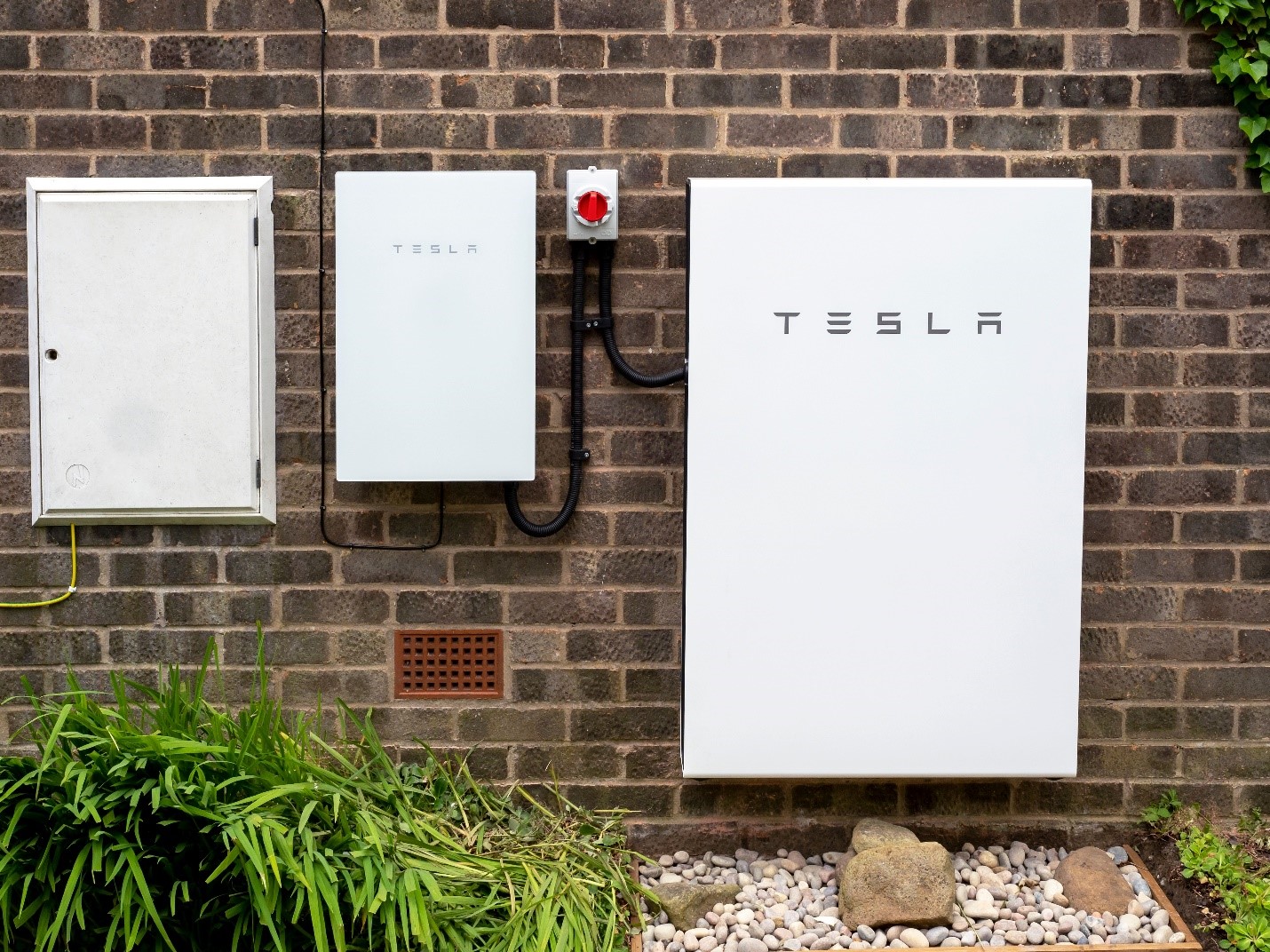
A newer option for whole-home power backup is a whole-home battery system. They take a different approach from a standby generator. Instead of making electricity with an engine, they store it in large batteries and deploy it instantly when the grid goes down.
Examples:
These systems switch over silently and almost instantaneously. Unlike gas-powered generators, there’s no noise. Paired with rooftop solar, whole-home batteries can provide renewable backup power with very little ongoing maintenance. Whole-home battery systems are expensive. A single Tesla Powerwall starts at around $9k, and most homes will need more than one.
To be prepared for a grid-down scenario, start with the backup power tier that fits your current budget and needs, and work up to a level that you can afford that will give you the most safety and peace of mind.