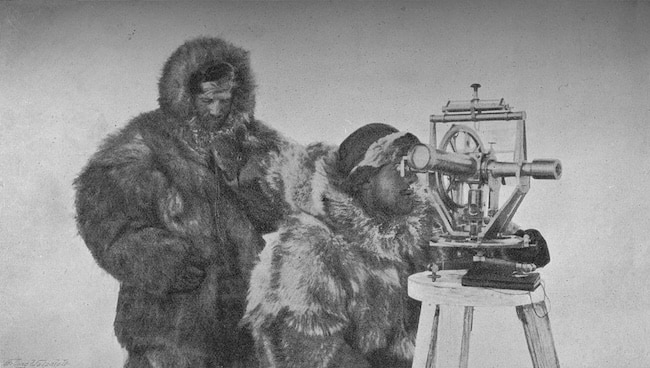
Polar exploration stories have a way of both terrifying and inspiring the soul. The combination of physical discomfort and psychological strain strips life, and leadership, down to its utter essentials: resilience, skill, competence, and determination.
What’s especially striking about these stories is that most of them emerged from a relatively short, concentrated period, from the late 19th century through the early decades of the 20th, when large portions of the Arctic and Antarctic remained unmapped and poorly understood. In that brief golden age of polar exploration, men ventured to the ends of the earth, relying on human muscle and crude equipment, with little margin for error and no real assurance of success.
Ice-locked ships, months of total darkness, failed hypotheses, stubborn leaders, and men pushed far beyond what they thought possible — polar exploration books offer some of the most gripping narratives in the adventure genre, while also serving as indelible case studies in leadership, resilience, and the limits of human endurance. If you’re looking for page-turners that are both bracing and deeply instructive, look no further. Below I highlight the eight best polar exploration books.
Icebound: Shipwrecked at the Edge of the World by Andrea Pitzer
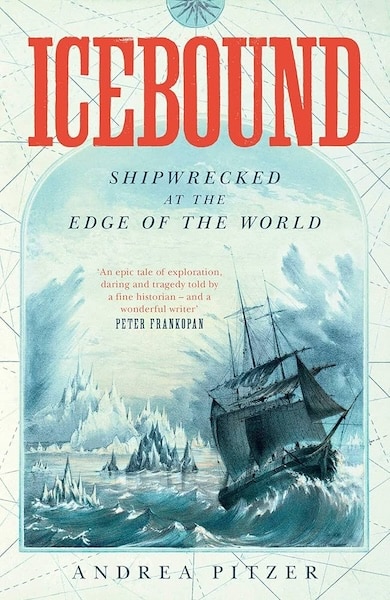
Andrea Pitzer’s Icebound tells the story of William Barents, a 16th-century Dutch explorer whose Arctic expeditions laid the groundwork for all the journeys that followed. At the time, polar travel was motivated by economics (finding a faster trade route to Asia) and clouded by wildly incorrect theories, including the idea that a warm, open sea might exist near the North Pole. Barents’ third expedition ended with his crew trapped in the ice and forced to overwinter in a driftwood hut while fending off polar bears, scurvy, and starvation. What makes Icebound especially compelling isn’t just the suffering, but the shift it represents: Barents was celebrated not for conquest or profit, but for his endurance and leadership. This book is both a riveting survival tale and a polar adventure origin story.
In the Kingdom of Ice by Hampton Sides
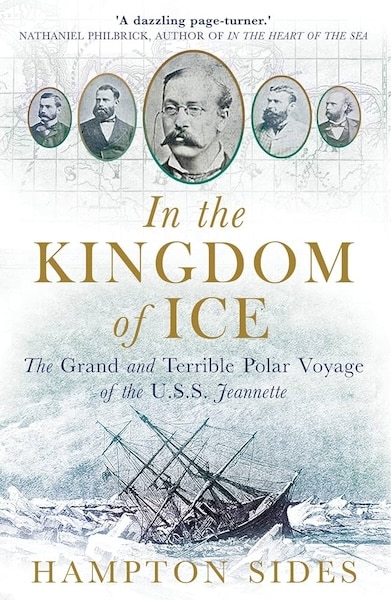
Hampton Sides’ In the Kingdom of Ice recounts the doomed 1879 USS Jeannette expedition, which attempted to reach the North Pole via that theorized warm sea channel. Trapped in the ice for nearly two years before the ship was crushed, the crew was forced into an epic, thousand-mile trek across the Arctic via both land and sea. Sides excels at combining cinematic storytelling with meticulous research, bringing to life not only the expedition’s leader, George Washington De Long, but also the men who followed him and those at home who were waiting on his return. The result is a powerful reminder that courage and determination are not always enough, especially when leadership is guided more by theory and pride than by reality. It’s a gripping, tragic tale that underscores how unforgiving the polar world can be.
Alone on the Ice by David Roberts
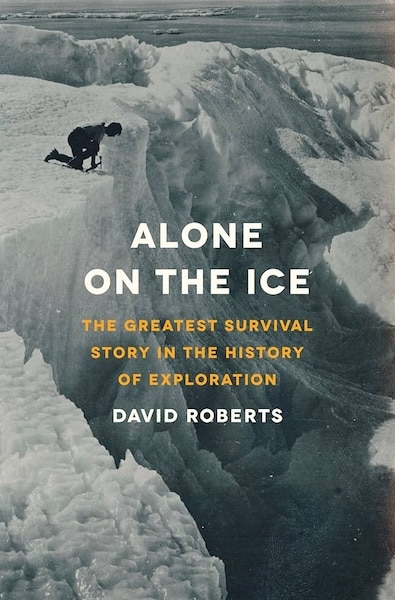
Douglas Mawson’s Antarctic expedition should have been remembered as a triumph of scientific exploration. Instead, it became one of the most harrowing solo survival stories ever recorded. In Alone on the Ice, David Roberts recounts how Mawson lost both of his companions during a sledging journey — one who perished instantly into a hidden crevasse (with most of their supplies) and one who slowly succumbed to madness.
What followed was a nearly unimaginable solo trek across Antarctica, as Mawson battled starvation, frostbite, and harrowing ice fields. His survival defies belief. Roberts’ account captures the sheer brutality of the environment and the extraordinary resilience required to survive it, making this one of the most intense and unforgettable polar narratives ever written.
Madhouse at the End of the Earth by Julian Sancton
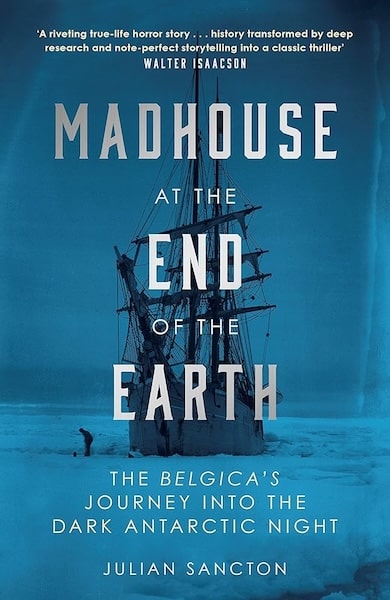
Trapped in ice, the Belgica expedition of 1897 unexpectedly became the first to spend an entire winter in Antarctica, and Julian Sancton’s Madhouse at the End of the Earth makes clear just how unprepared its crew was for that ordeal. Plunged into months of grinding cold and total darkness, the men suffered severe physical and psychological deterioration. Among the crew were two figures who would become legendary for very different reasons: Roald Amundsen, who thrived amidst the hardship and would go on to conquer both poles, and Frederick Cook, a brilliant man whose later claims of polar conquest would make him a deeply controversial figure. With the expedition’s commander, Adrien de Gerlache, paralyzed by illness and indecision, Amundsen and Cook stepped into the breach and pushed their crewmates to near-impossible feats of endurance. Part survival narrative, part leadership cautionary tale, Madhouse shows how quickly morale and sanity can collapse, and how essential decisive leadership becomes when retreat isn’t an option.
Realm of Ice and Sky by Buddy Levy
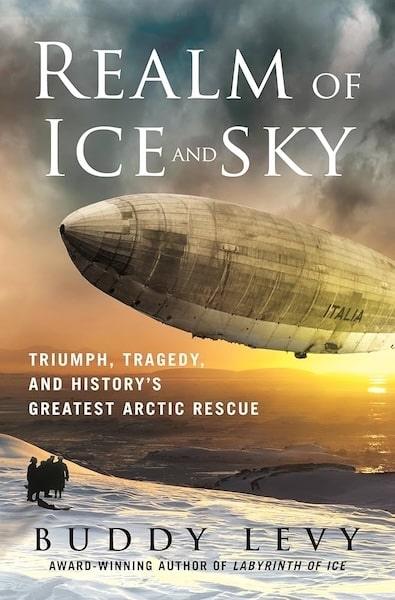
Most polar exploration books focus on ships and sledges, but Buddy Levy’s Realm of Ice and Sky captures a brief, daring period when explorers took to the air in their attempts to conquer the North Pole. In the early 20th century, shifting sea ice made surface travel dangerously slow and unreliable, prompting figures like Walter Wellman, Roald Amundsen, and Umberto Nobile to experiment with airplanes and dirigibles instead.
Levy weaves together these semi-connected journeys into a cohesive narrative, chronicling both the promise and peril of aerial exploration in the Arctic. Amundsen, in particular, looms large — his austere competence and Nordic stoicism make him one of the most compelling figures in exploration history. Distinct from most polar narratives yet firmly rooted in the same themes of risk, ingenuity, and endurance, Realm of Ice and Sky shows how even technological advances couldn’t eliminate the dangers of pushing into the world’s most unforgiving environments. It’s worth noting that all of Buddy Levy’s polar histories make for excellent, captivating reads.
Alone by Richard E. Byrd
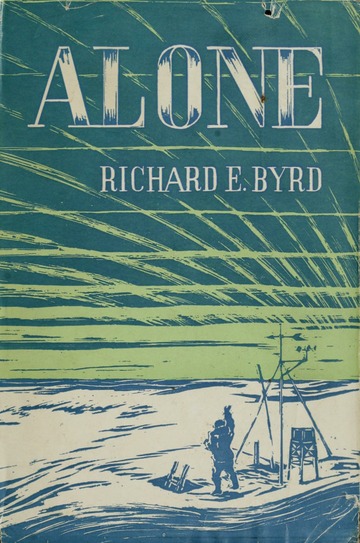
Unlike most polar tales that center on the exploration of physical space and involve a multi-man crew, Alone chronicles the exploration of one man’s psyche and soul. In 1934, Admiral Richard Byrd voluntarily spent five months alone at a weather station in Antarctica, becoming the first man in history to experience the polar night in complete solitude. Alone is his riveting account of that experiment — a psychological and physical trial by cold, isolation, and eventually, carbon-monoxide-induced madness.
What makes Alone stand out isn’t just the hardships Byrd endured, but his reflective, often poetic writing. He contemplates the strange beauty of the aurora, the rhythms of solitude, and the battle between discipline and despair. Alone is less a tale of action than of endurance in stillness, and it offers a singular contribution to the polar canon: a portrait of man not just versus nature, but versus himself.
The Worst Journey in the World by Apsley Cherry-Garrard
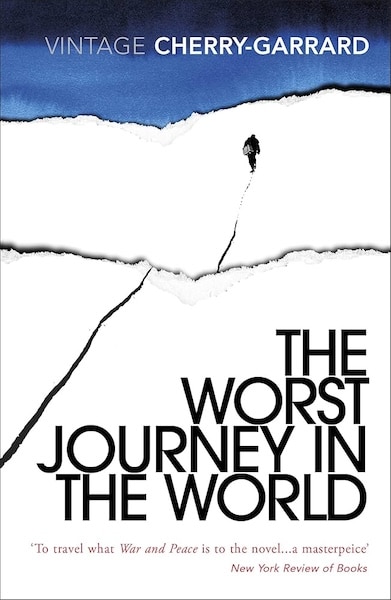
Often cited as one of the most harrowing exploration books ever written, The Worst Journey in the World is Apsley Cherry-Garrard’s firsthand account of Robert Falcon Scott’s ill-fated Terra Nova expedition to Antarctica from 1910 to 1913. Cherry-Garrard was part of a smaller team given a nerve-racking task: a midwinter journey to retrieve emperor penguin eggs (in the name of science), undertaken in total darkness, with temperatures plunging far below zero and winds so fierce they made travel barely possible.
The title of this book is no exaggeration — their years on the ice tested the limits of human endurance more than perhaps any other polar trek. Unlike the triumphant survival narrative of the next book on this list, The Worst Journey in the World is marked not just by suffering, but by miscalculation and regret. Unchecked ambition and flawed leadership can exact a cost no matter the environment, but its consequences are magnified tenfold in a place like Antarctica. Written years later with painful clarity, it’s less a celebration of heroism than a meditation on failure, responsibility, and that thin line between bravery and folly. Cherry-Garrard’s book is an essential entry in the polar canon.
Endurance: Shackleton’s Incredible Voyage by Alfred Lansing
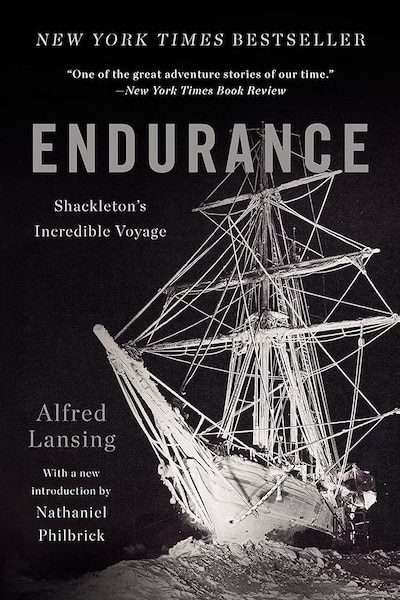
If there is a single book that defines the polar exploration genre, it’s Alfred Lansing’s Endurance. Ernest Shackleton’s 1914 Antarctic expedition went catastrophically wrong almost from the start; when his ship became trapped and eventually crushed by ice, its 28-man crew was left stranded at the bottom of the world. What followed was a two-year ordeal of drifting ice floes, open-boat voyages through some of the roughest seas on earth, and an almost unbelievable rescue mission. Most incredible, every man survived.
Lansing tells the story with a restrained, journalistic style that lets the facts speak for themselves, making the courage and sheer resolve of the men — especially Shackleton — all the more striking. More than a survival story, Endurance is a masterclass in leadership under pressure and the gold standard against which all other polar books are measured.
If you read only one book about exploration at the ends of the earth, make it this one.
For more polar-related content, check out these Art of Manliness articles and podcast episodes:
- Podcast #872: Leadership Lessons From a Disastrous Arctic Expedition
- What the Race to the South Pole Can Teach You About How to Achieve Your Goals
- Alone: Lessons on Solitude From an Antarctic Explorer
- What They Left and What They Kept: What an Antarctic Expedition Can Teach You About What’s Truly Valuable
- Podcast #966: Chasing Shackleton — Re-creating the World’s Greatest Journey of Survival
Keep up with all of my book reviews and reading lists by subscribing to my newsletter at readmorebooks.co.