Custom suits and imported silk ties look great, but they’re not a lot of use to young men in their late teens and early 20s.
Even if you could afford that kind of a wardrobe (most can’t), there’s no place to wear it – it’s far too formal for socializing with 20-somethings, and very few men are walking out of college and straight into high-powered financial or legal offices.
So much of the advice on how to dress well as a man isn’t all that useful for high school and college students, or even for post-grad students and working 20-somethings. A good suit is useful to own, but not something you’re going to be wearing when you go out with friends.
So what to wear instead?
The trick is diversifying – taking the same casual level of dress that most young men wear, and adding new looks to it to stay sharp without looking stuffy.
The Varied Wardrobe: A Young Man’s Friend
It’s safe to assume that most young men have a couple pairs of jeans, some T-shirts, a sweatshirt or two, and maybe a few button-down shirts in their wardrobe. If you don’t have those, you’re either unusually well-dressed or very inventive.
The way to go from looking like everyone else to looking sharp and stylish is to take those basic wardrobe pieces and swap a few of them out for pieces that are nicer, but aren’t necessarily any more formal. When everyone else is wearing jeans and T-shirts or hoodies, you stand out by being the guy in something a little different.
Here are a few basic staples of most young men’s wardrobes, and some alternatives to them that can be worn stylishly but casually:
Blue jeans – Swap them for colored corduroys, earth-tone cotton slacks, gray wool flannel trousers, or just jeans in a darker color and close fit. Even the simple upgrade from light blue work jeans to dark, stylish, contrast-stitched jeans goes a long way in improving your style.
T-shirts – Replace them with polo shirts, lightweight long-sleeve T-shirts, henley shirts, Breton tops, and other light, but distinct, styles. If you do wear a T-shirt, something with a solid color and either no design or an artistic design (rather than a band name or sports team) is best.
Hoodies – Swap them for casual collared shirts, plaid flannels, cotton sweaters, lightweight cashmere sweaters, sweater-vests, and cardigans.
Coats – Keep the thick winter coat for when you really need it, but add blazers and sports jackets to the fall and spring wardrobe. Throwing a casual jacket on over even just a T-shirt and jeans instantly upgrades the look.
Sneakers – Swap ‘em for casual leather shoes. Saddle shoes, wingtips, brogues, loafers – there’s a lot of options here. If you do want to keep sneakers in the wardrobe, go for colored canvas options (like Converse All-Stars) to keep it stylish.
These are all just examples of a simple point: the more things you have in your wardrobe that aren’t the same old blue jeans and T-shirts, the sharper you’ll look. Small upgrades go a long way in casual company.
Items You Might Not Own (But Probably Should)
So what are some pieces that young men can wear to break out of the mold a little?
These are a few that are worth knowing about. You probably can’t add them all to the wardrobe at once, but if you’re working on adding variety a few pieces at a time, these would be worth your while:
Jackets and Coats
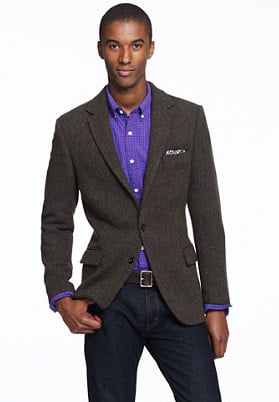
Sports jackets - These are probably the easiest way to dress up any casual outfit. Throw a blazer or sports jacket on and suddenly you’re classy. Not particularly formal, but certainly sharper than your peers, and with an almost infinite variety of colors and patterns out there to choose from you can add quite a bit of uniqueness to your wardrobe with only a few pieces.
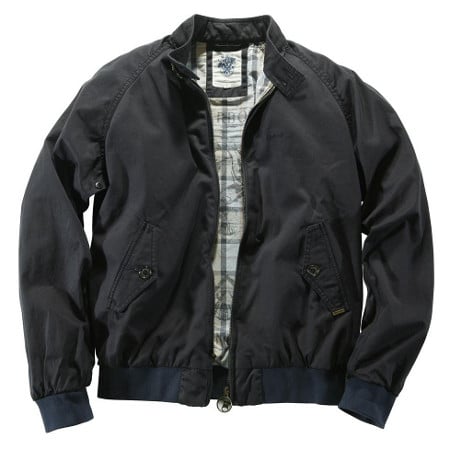
Blouson - A tight-waisted descendent of WWII-era field jackets, this is a good option for times when a sports jacket with lapels feels a little too dressy. It has a timeless feel that reminds people of old movies, war heroes, and middle America.
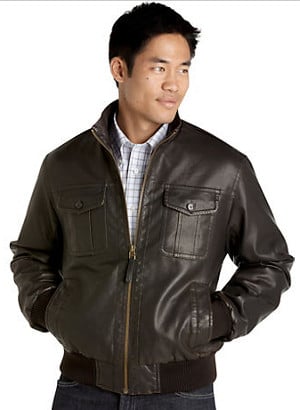
Leather jackets - Another good casual jacket option, you’ve got your choice of a couple styles, ranging from the heavy, lined bomber jacket to tight-fitted moto jackets. They have a little “tough guy” swagger to them.
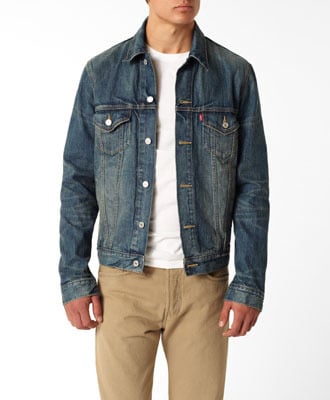
Jean jackets – Again available in lots of styles, these shouldn’t be worn with matching denim (blue jeans and a blue jean jacket is no good), but look great with slacks, corduroys, or in some cases, darker denim, though mixing denims should always be done carefully.
Overcoats - A long wool overcoat is something many young men lack, and something that becomes invaluable in cold or wet weather when you’re dressing up. Throwing a puffy winter parka over a suit or nice jacket ruins the whole look. Keep an eye on second-hand shops if you can’t afford one new off the rack — a good Chesterfield or polo coat is the ideal companion to your nicer outfits.
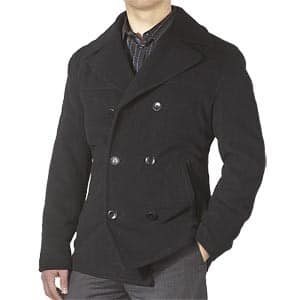
Pea Coats – Originally worn by sailors, pea coats are often made from navy-colored or black heavy wool, and feature broad lapels, double-breasted fronts, and large buttons. Looks sharp, and pulls together both casual and slightly more formal outfits.
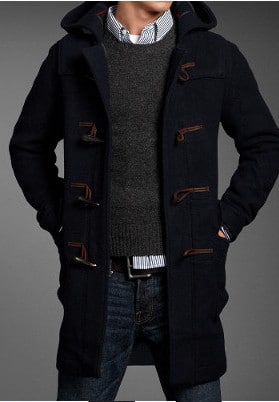
Duffle coats – Also called toggle coats for their typical style of button, duffel coats were originally military surplus and later became a staple of European intellectuals and students. They’re still classic campus wear, and striking these days for their uniqueness (especially on American campuses, where they were never quite as ubiquitous).
Barbour jackets – Wet weather gear from England, the Barbour has various imitators from brands like L.L.Bean and Land’s End, but the originals are sturdier – being made with waterproofed cotton with a quilted lining. They look rugged and outdoorsy, and have the added benefit of keeping you dry without being a shiny plastic poncho or something similarly unstylish.
Want more help dressing for cold weather? Visit this classic AOM article.
Trousers and Pants
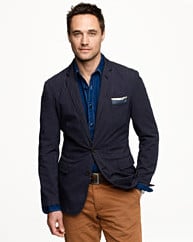
Odd trousers - This is the catch-all term for pants that don’t match your jacket, but generally implies casual wool trousers. Blue jeans worn with a jacket are technically odd trousers, but most people wouldn’t say that. Instead, you should be thinking about colored and patterned wool or cotton slacks — everything from plain gray flannel trousers, to plaids and houndstooth is fair game, and looks good paired with a casual jacket.
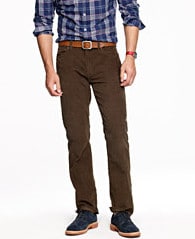
Corduroys – These can come in any color, ranging from staid earth tones to neon-bright primary colors. The former is a good casual companion to a tweed sports jacket; the latter works well in lively evening outfits with a sharp blazer or casual shirt. In either style they’re comfortable, sturdy, and more breathable than denim, making them a good alternative to jeans.
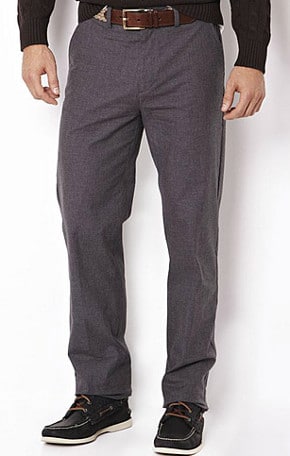
Gray flannel trousers - A staple that every man should own, these are for when you want to look dressy and a little more conservative and/or grown-up. Pair them with a decent dress shirt and a blazer and you’re set for a work day in most offices; skip the blazer and wear a more casual collared shirt (plaid “lumberjack” shirts work well) for an off-duty look. Curious as to why flannel trousers are so hard to find? Read my post here.
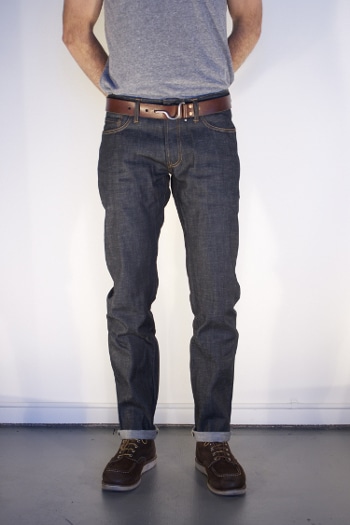
Fitted jeans – Looser jeans are fine for manual labor and very casual wear, but most of your jeans should be fitted to your side, with a bit of taper in the lower legs and no sag in the crotch or bottom. That makes them dressy enough to pair with casual sports jackets, particularly if the jeans are in a dark color. Deep indigo is your best bet, though black and gray have their roles as well, and daring men can go for white jeans with a dark top.
Cargo pants – Have a pair for doing manual labor in, and don’t be afraid to wear them from time to time with a collared work (not dress) shirt in blue or plaid. Multiple pairs are appropriate if you’re someone who does a lot of physical labor.
Shirts and Tops
Dress shirts – Everyone needs one or two in plain white for dress occasions; for the rest go for light patterns and colors. They should still be based in white or a very light pastel, but both stripes and checks are fine for most occasions.
Casual collared shirts - Useful for evening casual wear in particular, shirts that have the same basic cut as a dress shirt but a bolder pattern or color go well with everything from gray wool slacks to blue jeans. Variegated stripes (multiple stripes of varying width and color), deep colors like purple and red, and figure patterns (repeating designs rather than line designs like stripes and checks) are all good options for casual collared shirts.
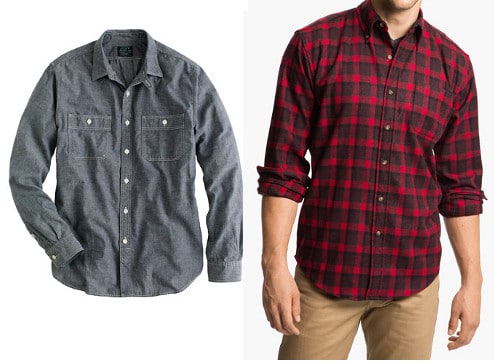
Work shirts - Another collared style, these are made of softer cotton or denim. Chambray shirts have become more popular in style, and blue Oxford workshirts are a classic, as are plaid “lumberjack” shirts. The latter are sometimes made in virgin wool instead of cotton, as with the iconic Pendelton brand.
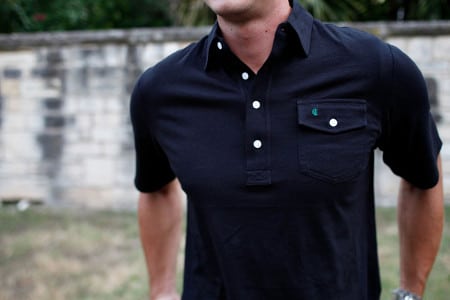
Polo shirts – Useful for all warm weather needs, everyone should have a few. One in white, one in a solid dark, and one with a few narrow stripes (the classic golf look) is a good start to the collection. Avoid wearing polos with a company logo on the chest unless you’re actually on the clock and working for that company.
Rugby shirts – Something like a long-sleeved polo shirt, these usually have broad horizontal stripes and in some cases, a team logo or school crest on the left breast. They’re good for a collegiate look that doesn’t rely on a hoodie or T-shirt.
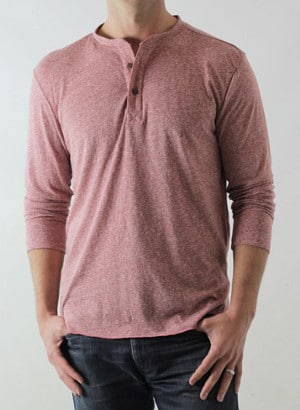
Henley shirts – Similar to a T-shirt, but with a small, buttoning “fly” in the front, below the ring collar. They can be long- or short-sleeved, and both are a nice alternative to a plain tee.
Breton top - Familiar to most people as “the French shirt” — a three-quarter length sleeve shirt with horizontal stripes in alternating white and navy blue (or white and black; other colors are occasionally seen as well). A unique and eye-catching look for bold dressers. Don’t pair it with a beret unless you’re trying to look like a caricature of a Frenchman, or are a mime.
Guayabera – A traditional Mexican style also called a Cuban shirt. Guayaberas have multiple front pockets, a soft collar, and decorative columns of pleats or embroidery, and can range from plain white to brightly colored and extravagantly decorated. It’s a good touch of the exotic for a North American’s summer wardrobe.
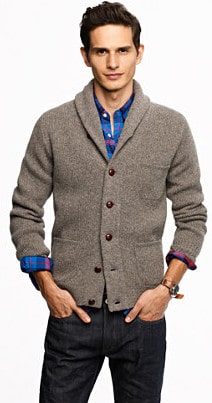
Cardigans - Buttoned or zippered sweaters that open in the front. No college student should be without a thick, loose, blanket-like wool one. Nothing is better for draping around a girlfriend’s shoulders, or just looking stylish on the way to class. Lighter, more fitted versions in cotton or light wools, like cashmere, are good for fall and spring.
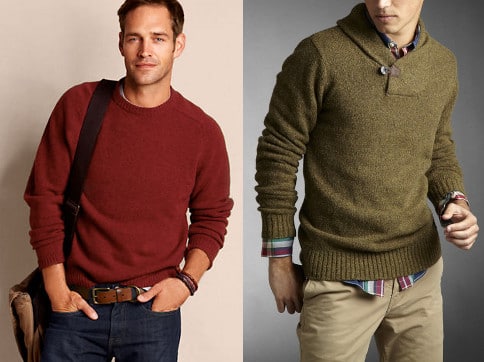
Sweaters – Any style of pullover sweater can work well either on its own or paired with a sports jacket. For more on sweaters visit this classic AOM piece.
Footwear and Accessories
Work shoes - Dark leather with a rubber sole and thick stitching, for a look that’s sturdy but not sloppy. An ideal alternative to sneakers in almost any outfit, work shoes are made for work and often incorporate nonslip soles and steel toes. Doc Marten is the iconic brand here, developed by a German named Dr. Klaus Marten in 1943 and later acquired by an English company who transformed them into a staple of the young working class, football hooligans, and musicians.
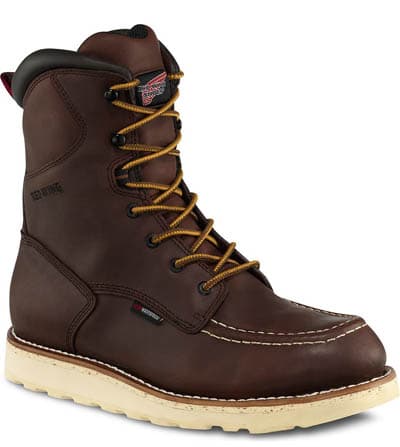
Work boots – Similar to work shoes but thicker, taller, and sometimes more varied in color. For the most part practical in use, but throw them on with jeans and a lumberjack shirt when you just feel like looking tough and outdoorsy (even if you’re just walking down to the store or across campus). I am a fan of Red Wing boots – still made in Red Wing, Minnesota.
Sandals - A good pair with dark leather straps keeps you looking sharp in the summer. The Birkenstock brand isn’t required, but it’s a good example of the style, and the soles are comfortable.
Canvas sneakers - A pair of colored canvas sneakers like the Converse Chuck Taylor All-Stars is good for dressing down an outfit. Throw them on with a blazer and odd trousers or even a suit for a nightclub/concert look. Just don’t wear them with jeans and a T-shirt unless you’re trying to look sloppy.
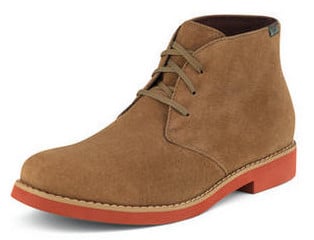
Chukka or desert boots – Desert boots are a practical sub-species of chukka boots, which are a low-ankled, loosely-tied style of casual leather boot. They’re good for both practical outdoor use and casual social wear, and make a nice alternative to casual leather shoes.
Leather shoes - Everyone needs a pair of plain black Oxford Balmorals for dress purposes, but beyond that it’s good to have a few pairs with casual accenting. Brogues (shoes with perforated patterns), saddle shoes (two-tone shoes with a horizontal band across the upper), wingtips, and other styles that feature strong, decorative elements are all good for wear with everything from blue jeans on up.
Dress watches - Stay within your budget, but have one. Either a metal or a leather band is appropriate, though you should always match your leathers. Anything from a good Timex to a Rolex can work, but stick to small, simple faces so that you can wear it with suits as well as your day-to-day gear.
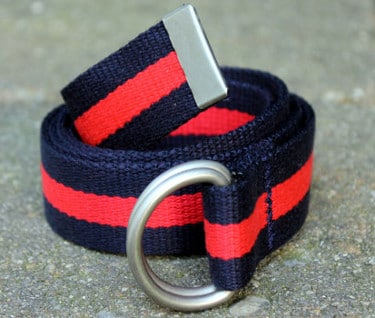
Decorative belts - Again, everyone needs at least one in black leather, but for casual wear consider stamped or tooled belts, or plain leather ones with interchangeable buckles. Colored leather, canvas, or cloth belts can be a great way to turn an outfit from just “sharp” to “unique,” so long as you don’t go overboard (the belt should never be the most noticeable piece).
Metal pens - A seemingly small touch, but one that makes a great impression. Have a good, metal-barreled pen in your jacket pocket any time you wear one. That way you always look prepared, and when you pull it out you look a bit fancy, unlike someone with a plastic Bic.
Pocket squares – A final accent, and one you should have every time you wear a sports jacket, blazer, or suit jacket. Own a couple in plain white and then as many as you want in colors and patterns. Your jacket isn’t complete without one. And know how to fold your pocket square!
Dressing for Special Occasions
Dressing for Class (High School)
High school fashion is a rough game! Too sloppy and you’re just another dude in the crowd, but too natty and you’re likely to get teased (or worse).
Dark-colored jeans or corduroys and an untucked dress shirt is a good middle ground, especially when worn with casual leather shoes of some kind – it’s clearly different from your classmates, but it’s not stuffy. And if you find yourself in trouble with a teacher or administrator, you can tuck the shirt in quickly for an instantly respectable look.
- Things you should definitely own: Dark indigo jeans, colored corduroys, or cotton slacks; casual collared shirts (both dress shirts and softer, thicker workshirts work well).
- Things you should avoid: Blazers or sports jackets (unless part of the school uniform), neckties (way too stuffy, and likely to get pulled on as well), very fancy leather shoes
Dressing for Class (College)
Ah, college. Master of your own fate at last. For most of us, this is our first chance to dress ourselves and head out into the world without any input from anyone, and there’s usually no dress code to worry about unless you picked a very conservative school.
But nothing attracts a professor’s negative attention like a stereotypical college slob – you show up in sweat or pajama pants, a hoodie, and flip-flops, and you’re basically taking points off your grade in the form of his or her lowered expectations. If your professor thinks you’re a slacker, he or she reads your paper like a slacker’s – just looking for opportunities to dock points.
So raise the bar at least a little. You also want to make a good impression on any potential romantic prospects you meet, so don’t be afraid to out-dress your peers. Sure, they might give you a hard time if you show up in a sports jacket, but they’ll get over it – and you’ll still look good.
The ideal college look is usually something a little more formal than jeans and an untucked shirt, and a little less formal than a tucked-in dress shirt and navy blazer. Good middle ground options include colored and patterned dress shirts (tuck or untuck it depending on how sharp you want to seem), very casual sports jackets (tweed and corduroy are your friends here), dark jeans, colored cotton slacks, and cardigans or pullover sweaters.
- Things you should definitely own: At least one or two sports jackets (seriously, try it if you haven’t), dark jeans, some decent cotton slacks, maybe a pair of gray wool trousers; sweaters for the cold months.
- Things you should avoid: Neckties (although a colored bowtie can look whimsical and fun, if you wear it with confidence), matched suits, severe leather dress shoes (casual styles with some decorative elements to them are fine); ratty blue jeans and hoodies (too sloppy).
For more style tips for college students, check out this classic AoM article.
Dressing for Graduate School
At the point where you’re out of undergrad the responsibilities change, even in academia — you’re no longer just responsible for yourself. Graduate students are almost always either part of a research team, part of a teaching team, or both. You end up representing a lab, a department, or a particular professor, and you need to be making a good impression. You probably won’t get thrown out of your program for being sloppy…but if the research isn’t going well or you screw something else up, it sure won’t help your case.
Grad students who teach undergrads need to look dressier than their students. That means wearing either a jacket or a tie – you don’t need both, though you can wear both if you want to. If you don’t have either you’re probably underdressed.
If you don’t teach class sections but you do work in a shared lab or office, you can relax a little – tucked-in collared shirts are probably fine, though a sweater or jacket will certainly make you look sharper.
The ideal look for a grad student at work is usually a sports jacket or blazer (with a pocket square – always a good way to improve the sharpness of your look), a dress shirt tucked in, and either wool or cotton slacks. Dark, fitted jeans can work, but at that point you’re almost looking like a well-dressed undergrad. Dress slacks will give you a little more authority.
- Things you should definitely own: A couple of good blazers and sports jackets, plenty of colored/patterned dress shirts, leather shoes and belts; a few neckties and pocket squares.
- Things you should avoid: Matched suits (except at formal presentations), sweatshirts or performance fleece, sneakers; blue jeans.
Dressing for Work: Office Casual
Obviously, not everyone’s going to have an office job. “Dressing for work” could mean everything from a bespoke suit on down to a pair of hip-waders, depending on your employment.
But for the most part, recent graduates end up somewhere in between those extremes, in an environment where full suits and ties aren’t required but jeans and a T-shirt would be frowned upon.
It’s a range filled with boring options, so rely on variety and details to spice your outfits up. Also rely on jackets, which no dress-casual worker should be without. They give you a sharper body shape than a guy in just a dress shirt, and they add the possibility of a pocket square, which is one of the most stylish accents out there for men.
Blue jeans might be allowed in some workplaces, but they don’t ever look particularly professional, so go for wool trousers or cotton slacks instead. Neckties may or may not be mandatory, and if they’re not, consider wearing one anyway – at least a few days a week, enough to make it clear that you enjoy the added style. The first time you try it someone will probably tell you, “Oh, you don’t need to wear a tie,” but you can just reassure them that you felt like looking a little sharp anyway.
- Things you should definitely own: A pair of gray flannel trousers (really, every man needs one at some point in his life), a couple sharp-looking blazers, light-colored or lightly-patterned dress shirts, leather dress shoes; plenty of pocket squares.
- Things you should avoid: Suits (unless you need them for meetings or the like), blue jeans, sweatshirts or performance fleece; sneakers.
Dressing for the Weekend: Daytime Errands
When you don’t have class or work, it’s tempting to wear the oldest and most comfortable clothes in the wardrobe, but try to save those for working around the house. When you go out in public, it’s worth a little time and effort to look sharper than the average guy on the street. You never know who you might run into, after all – friends, bosses, maybe even a future spouse. Who knows? That’s sort of the point – and the reason you want to be nice-looking any time you venture out.
“Nice” in this case definitely doesn’t mean “dressy.” Wear something like blue jeans and a sports jacket that’s making a nod toward nice dress without being too formal.
Most people aren’t trying to wear their most eye-catching styles during the day (save those for socializing in the evening), so jeans or plain-colored slacks are usually the best trouser option, paired with just about any kind of shirt you please and a jacket or sweater on top. Shoes can be leather or stylish canvas sneakers.
- Things you should definitely own: A couple pairs of well-fitted jeans (deep indigo is best, but a lighter blue is fine during the day), comfortable walking shoes, casual sports jackets.
- Things you should avoid: Dressy blazers or suits, brightly-colored trousers, sweatshirts/hoodies or T-shirts with nothing over them.
Dressing for the Weekend: Evening Socializing
When you head out at night with friends, it’s time to look your best. Not your most formal, necessarily (though you may need a suit and tie at some specific events and establishments), but well-styled and striking.
That means breaking out the more unique wardrobe items: patterned blazers, colored trousers, and deeply-colored shirts. You don’t have to wear all the colors of the rainbow – just gray slacks, a black shirt, and a light-gray blazer can look plenty sharp – but you should be wearing an outfit that you definitely wouldn’t wear to work.
This is where a lot of guys run into trouble since our “dressed up” wardrobe tends to also be our “work appropriate” one. It’s worth investing in some blazers, shirts, and pants that you wouldn’t necessarily wear outside of a social setting so that you’re not one more guy in khakis and a blue button-down when you go out for the evening.
Casual suits aren’t something that every guy owns, but they can be a good look for the evening. The trick is finding one that’s clearly not a business suit – the fit should be close, and the color or pattern should be obviously informal. Worn without a necktie, you can look pretty sharp in a close-fitted leisure suit (a phrase with unfortunate associations from the 1970s, but as long as you steer clear of polyester and bright colors you’ll be fine).
- Things you should definitely own: Colored/patterned/textured blazers, colored trousers, casually-patterned shirts; colored canvas sneakers or casual leather shoes.
- Things you should avoid: Solid-color dress shirts, plain blazers or jackets, work shoes.
Dressing for a Date (or When You’re Looking for a Date)
Ahhh, romance! A part (hopefully) of every young man’s life at one point or another. But how to dress for love?
Happily, the outfits for going out stag and hoping to find a date are basically the same as the outfits you’d wear on most first dates (unless you do very fancy first dates). A pair of dark jeans or cords, a light-colored or lightly-patterned dress shirt, and a casual sports jacket or sweater will keep you looking both “nice” and “relaxed” – the two traits you really want to be projecting when you’re looking for love.
A sharp-dressed guy who seems to care about his appearance is much more attractive than one who’s sloppy with his grooming, so pay attention to your details. A recent haircut, trimmed nails, a good shine on the shoes, and, of course, a colored pocket square to liven up the jacket all speak well of the man wearing them.
Avoid deliberately “sexy” looks, however. Whatever television has told you, most girls are not looking for skintight pants and shirts unbuttoned halfway to the navel. Look comfortable, confident, and neat, rather than slick. Seriously.
- Things you should definitely own: Dark jeans or corduroys, sports jackets and blazers, lightly-colored dress shirts, casual leather shoes; pocket squares.
- Things you should avoid: Light-colored jeans, T-shirts, sweatshirts and performance fleece, sneakers or athletic shoes; business suits.
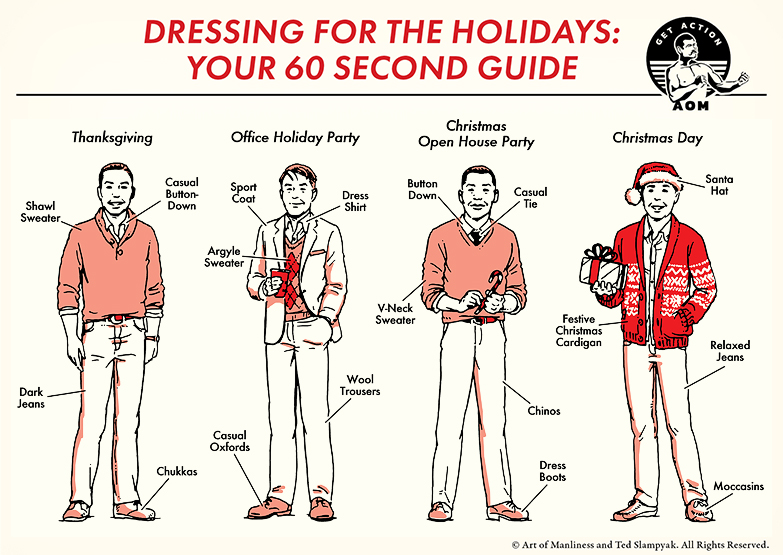
For more tips on dressing for a date, see this AoM article or check out this “60 Second” guide for a quick crib sheet.
Dressing for a Job Interview
The basic rule for interviews is “wear the uniform of the job you want, plus one level of formality higher.” So if you’re applying for a job as a high school teacher, where you’d expect to wear collared shirts and either a jacket or sweater most days, you show up at the interview in a suit. If you’re applying to dig ditches with the state Department of Transportation, on the other hand, you probably don’t want to show up in anything fancier than khakis and a button-down.
That said, most job interviews for the kinds of jobs young men gravitate toward are suit-and-tie affairs. It rarely hurts to be a little overdressed, and you make the best impression you can when you’re wearing a sober, well-fitted suit.
As a result, most young men benefit from owning an “interview suit” even if they have no other need for a suit. The basic interview suit – acceptable everywhere – is either charcoal gray or navy blue, single-breasted, two-button, and has notch lapels. Some small variations are fine – you’re not going to lose a job opportunity because you wore peak lapels – but that basic formula is always reliable and conservative enough for anyone’s tastes.
You should wear the suit with a necktie; if you feel the interview is too casual for a tie it’s also too casual for a suit. Suits without ties speak of leisure, which isn’t the image you want to project. For a non-suit interview, wear a pair of plain-colored slacks and a dark blazer instead, with a light-colored or lightly-patterned dress shirt and an open collar underneath.
FYI – I cover dressing for a medical industry interview, engineering interview, law school interview, or business school interview here.
- Things you should definitely own: At least one good, simple suit in a plain, dark color; black Oxford Balmoral dress shoes.
- Things you should avoid: Casual suits, suits without neckties, jeans, casual shoes.
Dress Young, Dress Sharp: The Varied Wardrobe
No matter what you’re dressing for, the key for a young man is to have options. Most of your peers are dressing alike: if they’re in school they’re wearing jeans and sweatshirts; if they’re working in an office they’re wearing khakis and button-downs.
There’s a whole lot more options out there. Corduroys, cardigans, sport coats, blazers, loafers, canvas shoes, belts, polos, Henley shirts, saddle shoes, dress boots, cashmere sweaters, topsiders – the list goes on and on, and you should experiment freely.
Because as a young man, you’ve got everything to gain by standing out – and your poorly-dressed peers are making it easy on you.
Watch a video summary of the post:
Your Thoughts?
OK – so now I want to hear from you.
Which of the above categories should we write about in greater detail? Do you need more for high school students? The young man working his first sales job? What about for the young man working on his Ph.D and starting to interview?
Let me know in the comments!
Written by Antonio Centeno
Founder, Real Men Real Style
Creator of the internet’s largest collection of FREE Style Videos





{ 177 comments… read them below or add one }
Next Comments →
Stay classy
“Fashion changes, but style endures.”
More for high school students! The advice here is great, but it can be tough to sit on the line between too dressy and too casual, and to find good looking, inexpensive clothes.
Somebody please tell me what brand that duffle coat is. I was thinking about buying one and that one looks really awesome.
Thanks for putting this on AOM Brett. As a 23 y.o. male I really like the style and fashion articles on AOM but couldn’t really see wearing most of the stuff on the day-to-day. This much more suits the demands of my working life. Keep up the good work. Been reading your articles since the early days of AOM and you haven’t lost your touch. Keep up the good work.
GREAT article. However, i’d have liked more research on the use of informal neckties. My style at work is like the first guy, formal/informal shirt with bluejeans and formal light brown shoes to match my watch’s band and belt. However, i’m interested in trying those 60′s like thin ties, what do you have to comment?
Didn’t mean to leave out Antonio. Well written and good content to the article. If it wasn’t for AOM I would probably never be able to find articles like this one without vigorously searching the internet and pouring over useless articles from GQ that tell me what I already know about the modern fashion trends (which I really can’t afford). So as much as I gave my kudos the Brett, all due credit goes to Antonio on this one. Should have caught myself sooner.
Well, the young man working on his Ph.D. would be a very welcome topic for me, being such a man. Or what about a topic on dressing for academics or scientists in general? It is my impression that, compared to men in the ‘business’ sector, many men in the ‘intellectual’ sector tend to dress like tramps.
Hello Antonio,
I thoroughly enjoyed reading your article as it spoke deeply to my day-to-day needs and actions. Thank you for your great work!
I am an engineering student at a state university and I often dress to impress when going to class, especially since my school is located at the heart of Chicago. I often see people on campus who dress in a range of different styles, and as you said – “this is our first chance to dress ourselves and head out into the world without any input from anyone.”
Although this plethora of styles serves to show the diversity of personalities on campus, it also brings up an issue of lack of definition. By that I meant there are too many styles and ideas flowing around when it comes to dressing but nothing seems to be definite.
That’s is why I’d like to suggest that you write in greater detail about college students – more specifically about how to strike that balance between causal and formal dressing.
Once again, thank you for a great article!
Renan
@Neil-
I found the toggle coat here:
http://flawlesscrowns.com/2011/11/11/abercrombie-fitch-douglass-mountain-toggle-coat/
It’s apparently from Abercrombie and Fitch, although I can’t find it on their site. Also, as a note to others, I put links in the images to where I found the specific things (when I could remember where I found them, and the item was available), if people want to know where to get them.
@Mike-
Glad for your second comment directing the glory to Antonio — he really deserves it! I don’t know where AoM would be if I hadn’t found him, since my own style knowledge is minimal. And you simply can’t find a man willing to happily write an almost 5,000 word post for you on style anywhere else! We treasure him.
I was wondering, what is your stance on bowties for job/internship interviews? I have a friend who has worn them and he tells me he has had good results. I, on the other hand, feel that I would not be taken seriously while wearing a bowtie in that setting.
This was a great article. Something I’ll come back to, I’m sure. As a 24yr old, it can be hard to find the right fit style wise. I work in rural church, both as a preacher and with teenagers and as a graduate student. My work can take me from office to public speaking, to hospital, to coffee shop, to diner, to living room, to a farm, to football game, almost all in the same day. Needless to say, its hard to find the right fit in all that. Thanks for the article. Seriously great!
Where can you get the coat underneath “pea coats,” a link was not provided. Thanks anyone who can help.
I was a little disappointed with the comment about pastels and white dress shirts… I don’t mean to be rude, but that would make me look and feel like a haphazard frat boy. I think men should be more willing to embrace a vibrant color, not neon yellow, but a strong maroon, or forest green can really look good and still be casual. It also sets you apart from a crowd of pastel. You can look good, and casual, but still individual at the same time.
also i feel i should mention that most of these items are far beyond the reach my shallow college student pockets… Believe me I have checked. A decent pair of grey wool trousers or colored cotton pants will run at least 50 bucks on a good day… Plus the gas to get to the destination where they can be bought… I have 100 bucks to my name. All my money goes straight to school. I mean, realistically, if you’re in college the only way you can afford these is with a REALLY good job, or “outside financing.”
Nice
Great post, Antonio.
I’ve got a couple observations: Young guys should always keep an eye on the local thrift stores. I spent good money on my blue blazer (which I wear often), but I’ve also given myself lots of options (2 tweeds, a corduroy, and a grey blazer) for $5-$10 each. Also, +1 on the cardigans.
That being said, I’m not planning on wearing any of them much right now — my Letter jacket just came in! It’s senior year and I’ve worked my tail off as a 3 year varsity starter. I’m wearing this thing. :-D
What a useful, info-packed article. I’m back in the business casual world after having to follow a very strict (and foolish-looking, of course) dress code for my last job, plus I’ve slimmed down quite a bit, so I’m slowly replacing everything in the closet but my shoes. This is some great guidance. Dressing in an informal yet business-appropriate way can be a one-way ticket to Drabtown; this should help me choose another way. By the way, I’m 40, and other than the school-specific parts, this is good advice for a man of nearly any age.
Great article! I’ve always wanted a concise guide to modern men’s clothing and this is a great help.
Odd thing, though. After I graduated from college, I developed a strong dislike of polo shirts. Haven’t bought one since and seldom wear the few I still have. I just prefer other styles for some reason.
Great article as usual… I would also recommend more for High Schoolers…
I have a huge piece of advice for everyone looking to class up their clothes: thrift stores, thrift stores, thrift stores. I shop almost exclusively there and have bought over 25 blazers. It’s complete overkill but none of them cost more than $10. I buy shirs pants and sweaters there too. I can take some risks and know I’m not out a ton of money if it doesnt work. Look around and you’ll start to learn quality brands. For jackets never turn down a Harris tweed.
I think job interviews for different career fields would be interesting and useful to many.
Looking for a good cardigan to give my wardrobe a little boost, can someone link me to the one in the picture, or alternatively another cardigan of a similar style that can be purchased in Canada? Thanks!
@Neil Wu here is the duffle coat:
http://www.abercrombie.ca/webapp/wcs/stores/servlet/ProductDisplay?catalogId=10901&storeId=11306&langId=-1&categoryId=12221&parentCategoryId=12221&topCategoryId=12202&productId=972983
Thank you guys (Antonio, Brett, and anyone else who may have helped) for this article. As a college student I’ve really been trying to step up my game, and become a man. This site (and especially articles like this one), has really been helping me dress better, and be a better man.
Thank you guys,
Luke p.
What’s the brand of that Blouson jacket? I love it.
I’d love to see more for high school/college guys! Keep up the good work!
No mention of sweater vests? I love to see a guy in a sweater vest!
Nonetheless, great article, thanks!
Hmm, what about the 40 year old who never learned all the rules and doesn’t have the build to wear those classic, slender-boy styles?
I’m glad for the mention of Barbour jackets! although they are rather expensive, they are unmatched in quality, practicality, and style…plus a fantastic warranty service.
While this article is great, some attention needs to be paid to where you live. Out here in dress down Colorado (and most of the US west outside of LA, SF, and the pacific NW) some of the suggestions would be laughable.
Where is that cardigan from?
I’ve looking for a good casual fall jacket and really like the Blouson shown in the article. Anyone know where to find that one or one like it? Google searches haven’t yielded many good results…
As a collage student, I found this article to be dead on, I wear a lot of dark Denim with dress shirts and casual collared shirts. I tend to stay away from Polo shirts due to a overexposure in private school. There are some pieces in this article that I now would say I really need to get
Am I the only on who finds clothing such as the Pea Coat and/or the Guayabera feminine? Not to knock ‘em but I just don’t really see them as masculine attire…
Antonio,
I just want to thank you for one of the best articles on the topic I’ve seen.
I recently gained a position as an intern in the US Senate for the upcoming year. I’m planning on going on a fairly large purchasing spree to buy all the clothes that I feel will be necessary to stand out as a sharp, upwardly mobile young man. As such, I’d love to see more articles about the essentials for the “business casual” man, how to dress nicely, but also with a distinct style, while remaining practical.
Thanks,
Ben
I’m in my second year of public highschool and every day I wear a tucked in ironed shirt, (with shirt garters), creased dickies work pants, a necktie with a simple silver tie bar centered between the fourth and fifth buttons. Along with lightly shined work shoes. Girls and my teachers love it, and that’s what matters. Give it a try sometime.
What are everyone’s suggestions for warmer weather? Texas (College Station) can never quite decide whether the weather is going to be seasonal or not. I’d love to stock up on cardigans, blazers, suits, and cords but I often find it too warm for anything more than shorts and a lightweight shirt (even now that it’s November the temperature is still mid 70s).
A. On Wisconsin!
B. Cover more about shoes. I am trying to find a 1. dressy/casual 2. not too expensive 3. leather shoe (4. that wont make my feet sweat all day.)
I feel like my only options are to go with a black shoe, but that feels too conventional. Is it still against the rules to wear a black belt with brown shoes, even if they are leather?
Great article. We’d like to see more for teenage boys. We share your posts with our growing boys and find many of them most helpful. A “tutorial” on how to build a wardrobe (and why it is important) for teen boys would be great. They get tired of hearing from us parents…especially on the details (example: why it is not appropriate to wear white athletic socks when dressing for church or a formal event). Perhaps using the 60-second visual guide format. Thanks!
Super article. Yet again this site proves to be my go to place for good fashion advice.
My closet is pretty well set for the cold but more advice on clothes suitable for hot conditions would be great. Are there any alternatives to some plain light shorts, flip flops and a T on a stinking hot day?
Also I recently bought my first set of grey flannel pants and find them really sharp, classy and are a simple great way to stand out from others. However I have to pair them with a leather dress shoe as I find my casual leathers just don’t go. Any tips on other casual shoes which they could go well with?
You forgot Chinos, I’m 18 and they’re a staple of my wardrobe. They’re extremely versatile and can be dressed up or down, depending on the occasion.
“Jean jackets – Again available in lots of styles, these shouldn’t be worn with matching denim (blue jeans and a blue jean jacket is no good), but look great with slacks, corduroys, or in some cases, darker denim, though mixing denims should always be done carefully.”
i disagree, Antonio. Actually I only wear my denim jacket with jeans. Denim jackets are work clothes and in my opinion they should be worn with work pants (ie jeans). Actually I basically wear mine when I’m getting my hands dirty. Wearing them with slacks or corduroys, in my opinion, is mixing different degrees of casualness and it looks awkward.
Kyle wrote: “While this article is great, some attention needs to be paid to where you live. Out here in dress down Colorado (and most of the US west outside of LA, SF, and the pacific NW) some of the suggestions would be laughable.”
Kyle, as someone who’s not from the US West, which suggestions do you think would be laughable? They all look pretty discreet to me….
Thanks so much for including my belt on your amazing website. Just sent the link to every man I know. As a mom of 3 sons, I can only dream my boys will care about style one day.
One of your more comprehensive how-to’s; consider it bookmarked for later reference.
Great article in general.
I would say that new graduate students should evaluate the norms of their department before following Antonio’s advice, though. It’s possible that at some universities/colleges that his advice would be reasonable but in my experience even professors only wear a blazer if they’re going to be on TV or are going to a thesis defense. Any graduate student who wears a blazer on a regular basis in my department would probably be hurting his long term career goals because his future colleagues would remember him as an out of touch square who they wouldn’t want to hire/collaborate with in the future.
I would recommend dressing only somewhat better than your peers and doing so by avoiding ratty unflattering clothes instead of dressing too formally. Quiet taste is the key here.
More on where to find and how to choose outfits like these please (eg. How to tell if this sports jacket is too big? to small?)
A great article, but as someone that loves going to concerts I’d have to say some of my favorite t-shirts are ones I pick up at shows, just as something to remember the time there.
Of course, I usually wear them under casual button-ups, so the collar area is really the only part anyone else ever sees.
Another awesome article from what is easily the best site on the web for men. I can’t tell you how much I enjoyed seeing this article on here.
If possible, I’d like to see something related to the IT industry. From interview to management positions. I’ve been on many interviews and the dress code seems to go from very dressy to very casual. Obviously I’d like to hit the balance between the two in the most stylish way. Some info there would be greatly appreciated.
How about something for the portlier guy? I’m barrel chested and have the buddha belly, so a lot of these styles make me look like I’m swimming in my shirt or else make me incredibly hot. Otherwise, I absolutely LOVED this article, and am getting the grey flannel pants today.
Wholly agree with your recommendation of Doc Martens! I bought their air-sole model a year ago and they’re still the toughest, most comfortable shoe I own. Some other models can be really heavy, but they last a lifetime. Definitely worth the cost!
First, great article. Conservative, classic style endures time. Second, I would like advice on transition. What’s the most efficient purchase for the college student who just got a entry level position? The high schooler becoming a freshman? I know it varies by school and profession, but budget constraints are tight universally.
My only disagreement with this article is that a man should never go outside in cargo pants/shorts unless he is doing work.
A man should only wear what he needs to, the extra pockets on cargo pants serve no purpose unless the man is using it to put tools or other work items in them. The pockets ruin the lines of your legs and make you appear to be larger, something you would not want to look like when out.
This article is just what I was looking for. I, too, am a college student. I dress well, but this reminded me of what real men dress like. I really appreciated how you broke down the various stages men are in, what we represent, and what we should have. Today, I’m planning to clean out my closet of un-manly clothing and work my way up. Thanks so much.
P.S. Can you talk about the best stores to purchase some of these items as well as the price range we should look at? I know some men’s wear is pricey, but makes the difference.
This article is fantastic! Though dressing up today for young men like seems more of a feminine idea, its actually pretty darn manly. Everyday I see them wearing OBEY snap-backs, cargo shorts, and brand name graphic tees. But there’s a certain flavor of respect when a young man takes pride in how they appear. And to the young men like me who are deciding whether to give in always remember this: Girls love stylish men.
Good job Antonio.
Excellent article, full of great ideas. I also appreciate the very first comment, about fashion vs. style. That is one of several guiding principles that helped me transition from wearing oversized tarps from Old Navy into style that gets me compliments every day. Here are a few of my general suggestions:
1) Collaborate. That’s why your here, isn’t it? You know you can always learn something from someone else. Well dressed people talk to each other to pick up wardrobe ideas and purchasing tips. Jump in the conversation!
2) Dress timelessly. Certain styles are always “in” — this is the difference between fashion and style. Gingham, argyle, puppy-tooth, and pin-stripes — know them, love them.
3) Since you’re dressing timelessly, don’t buy cheap, disposable clothes. Build your wardrobe slowly, around quality pieces from well-reputed retaliers. The further away from your body (sweat) the article is, the more you should be willing to spend. A $50-$100 Merino Wool sweater should last you at least 5 years. On the other hand, get your undergarments from Fruit of the Loom or Hanes.
4) Rather than paying full retail price at Kohl’s, look for bargains at high-end retailers. Never, ever pay the original price for anything, especially clothes. If you wait for a good sale or buy from the clearance rack at, say, J. Crew or Nordstrom, you can dress very well and do so very affordably.
5) Match your leathers. Belt matches shoes. No exceptions. No colorful belts, either.
6) Pay attention to complexion. Research this on your own — there is a wealth of information on the internet.
7) Know your measurements (length of arms/legs, circumference of neck/chest/waist/hips). There’s no point in buying nice clothes if they don’t fit well — but wait until you’re done growing or dieting.
8) You only need to outdress your friends. (… and always do so :)
9) Shock with socks. Buy the most outrageous socks you can, and it will give your timeless attire the edge necessary to turn heads. Google “Happy Socks,” and thank me later.
10) V-necks > Crew necks. Show that tie off with a V-neck sweater (or half-zip). If you’re a hairy sumbitch, keep your T-shirts in the crew-necked variety — otherwise, let that manly collarbone breathe!
Antonio, as a long time reader, when I got a promotion that required meeting with C-level customers, this is the first place I came. I read through your past aaticles, and have since built a wardrobe that I could wear for anything. The only thing missing is a Tuxedo (but I do have a spiffy double breasted Navy Blazer). that being said, my collection of pocket squares sits at twenty or so. I still have a hard time matching them up. Do I shoot more for the colors in the tie, or closer to the tone of the shirt? An article strictly on pocket square matching (or at least pointing me to one already written) would be a huge help.
I completely agree with @Nick. I’ve always heard, “The only thing cargo pant/shorts cannot hold is a woman’s attention.”
In your fitted jeans section – what belt is that? I must know! The buckle is so intriguing; I’ve never seen anything like it.
This is a great writeup, thank you for bringing all this information together in one place!
As a 20-something grad student who is building a wardrobe for teaching, thrift stores are my best friend. Like you, Spencer, I don’t have the money to go out and buy -any- of this stuff at retail. But careful thrifting has really paid off (for example, several pairs of gray wool trousers for under $10/ea, nice shoes for $5-15, $5 sport coats, etc). If you’re a size L/XL (say, 42-46″ chest, 34-36″ waist, 16″-17″ neck), you’ll be able to find a ton of good stuff easily anywhere. It’s harder for smaller guys like me (I wear a hard to find 36″ jacket, alas), but there’s still so much to be found that I rarely buy anything new these days.
Because the advice in this article is so classic, most of this stuff can be found in a thrift shop.
I personally, would like to hear more about how to dress if you have a short torso. Sweaters are too often miles long on a short torsoed guy. Also, how to dress like you suggest, without breaking the bank.
The best duffel coat brand is Gloverall, they made the original Montgomery coat.
Cheers.
You broke the cardinal rule when you recommended wearing cargo pants for anything except hiking or fishing. Don’t ever try to wear them with a collared shirt, or any other time when you want to look nice.
Say no to the polo. I dislike when people wear polo tee-shirts i feel that it is a lazy way to feel slightly dressed up. 90% of the people i see that wear them buy the shirts way too big, or the collar is twisted up, or the shirt is really worn down. Nearly every time i see someone wearing a polo, it makes them look like they are trying to look fancy because they have a collar but they are too lazy to button up a shirt. if you do buy polos get the right size.
Very disapointed that headwear did not even merit a casual mention in the article. What better way to distinguish yourself among men than choosing the right hat for the right occasion? Most men could really use some good help in this area.
I am a freshman in college, and I can attest to the importance of dressing nicely. Coming into college, many upperclassmen friends of mine told me that it was imperative to not dress up the first day of class. Doing so would instantly label you a freshman. Being the aspiring man that I am, I wore a suit and bow tie. I also made it a point to be seen with those who told me not to dress up. To this day, people still greet me with “Aren’t you the guy who wore a suit on the first day?”
First, love it. Second, hate it because I need to spend some money now.
I am in an ‘in-between’ area here. I am volunteering and trying to get into grad school. I want to echo the dressing the part being a key to success. Currently, I dress better than the professor that I am working with. Boy, does it ever help! People assume that I am sharp, on time, and reliable (I actually am, but they assume it first). Also, if you are volunteering and don’t have a ‘real reason’ to be on campus, the sharp dressing helps cloak you in an air of respect. I never get asked by guards, janitors, or grad students why I am here or there. The sharp dressing gives me a free pass.
Great article! I really have never watched your videos but only read the Articles. Watched the video this time and found out you’re from Wisconsin (go badgers)! I have to say, here at UW Madison, style is pretty relaxed, but I do appreciate dressing nicer. Great guide… now only if I could afford to pick up some new clothes.
Antonio,
The article was great; very informative and very eloquent. An article I would like to see is the type of clothes, and consequential attitude, a young man should don at his job when his students are closer to his age than almost all his co-workers. As a grad student teaching at a middle/high school, I would love your advice.
TJ
Nice, great post and very informative. However, I don’t think “cargo” shorts or pants are ever needed, they look terrible and people never really use the pockets.
I know I might be a bit of a special case, but I’m an undergrad at a co-op university, where I switch between classes and an office work environment every three months. Since I’m moving between two different roles all the time, it can be hard to find clothes that I can wear year-round in both places, that last through all of the packing/unpacking, and that don’t break my college budget. I would love to see some more articles on how to build a wardrobe with these in mind, especially on clothes that give you the most bang for your buck.
I believe that hats should have been addressed in this article. Men need to start looking beyond the ball cap for something to top their head.
Also, I’d like to see an article on vests: different styles, when/when not to wear them, what to wear them with, etc. I bought a simple navy blue vest for a costume, and I fell in love with it.
Agree with most EXCEPT that photo of the guy wearing skinny jeans! aka “fitted” jeans. Baggy never looks good. I’d rather see a guy wearing looser jeans that hang nice and straight with a few tucks at the shoeline than whatever’s in that photo.
Maybe I’m a bit prejudiced, my boys had muscular thighs, they couldn’t even fit in jeans like that. At least they always wore their pants somewhere around their waists. They both also had part-time jobs as dj/lighting guys in the music ndustry since they were 15…. their work pants were tuxedo pants.
What’s interesting is that EXCEPT in the human world, the male is always the sex that is spiffed out!
Y’all take care and wear color. The idiot that said blue and green don’t go together never looked at a meadow in summer!
Mary aka Krashdragon
I just wanted to say thank you for this great article. As a high school student, it bugs me that style has taken a back seat to trying to look like the latest popstar or hollister model. But maybe thats just my ocd.Thanks again and any more articles adressing young men or highschoolers would be nice.
P.S. does anybody know of a good brand for ivy caps? I’ve been trying to find a nice one and have hit a dead end.
More for High School students!
Loved the article. I have been waiting for this one for a long time.
Antonio, Great article. The range you provide is excellent. I am a Junior at Washington University in St. Louis and have a slightly different take. I think a young man can wear suits and tie’s even to class. While this may not always be best, it does create an impression especially with professors. I have found that it has given me a unique style. As long as people understand that it is really an expression of yourself its fine. Also, it would be good to provide good cost options.
Antonio,
Thank you so much for this article. I look forward to new articles from you all of the time.
I was glad to see your post regarding the difficulty in locating grey flannel trousers. I would love a pair or two, but have had a hard time finding any. I’m glad to see that you are making them available, but even at $200 a pair or so, the price is hard to swallow. I don’t have a lot of money with which to build my wardrobe. I’m challenged also in that I do not fit the vast majority of off-the-shelf pants. I generally end up getting a larger waist than needed to compensate for a larger buttocks. This of course results in the belt bunching up the waist and difficulty keeping the pants up. It’s a vicious cycle.
Not really something you asked for opinions on, but I would love to get some guidance on how to “buy for alterations”. Meaning, while I cannot afford custom, I can probably afford retain and alternations to get the fit I need. But, how do I buy with that in mind? I’m not sure how to gauge the size needed to allow enough extra fabric for alterations without going too big and causing aesthetic issues when altering. Any help would be greatly appreciated.
Thank you!
Matt
This article is everything I’ve been looking for, what a great read!
Being a college student, I’d have to say that more articles revolving around college fashion would be awesome.
Thank you! I have been waiting for this. I am a 19 year old freshman in college. I always go out of my way to look good for class. But, the issue I run into is that its hard to find nice v-necks and Henleys that aren’t from Hollister or AE. I want to look good, but not too look like I’m trying to wear the labels.
I would like to know if there is anyone that has a professional opinion on how to dress casual or business casual when you are completely covered in tattoos i.e. what styles of clothing and colors can be worn without clashing with my “permanent accessories”.
What is the brand of the blouson jacket?
Epic post, Antonio! Need to get me some new Henleys and different types of sweaters. Really like that duffle coat too.
Might one argue that these tips could help men of all ages? Definitely good for younger men, but this article should be required reading for every guy.
-B
This is a strong primer, and I agree with most of your advice. However, I one point needs clarification: A Henley shirt, particularly the one you pictured are fine, but wearing one in an oxford cloth in lieu of a proper dress shirt is a definite no go.
As a college student one of the reasons i wear my sweaters less often than I might is the wash, I constantly fear ruing them in the washing machine (i’ve done that with one too many sweaters), so I send them to the dry cleaner. An article on sweater care would be much appreciated.
Antonio,
Like a couple of previous posts have mentioned, some of us live in warmer climates and would appreciate some advice.
Is it ok to wear shirts untucked? If so, what are the “rules”?
Thank you.
Hey, I think the style articles are great. Real and practical advice can be hard to come by, but this is comprehensive!
How about some style tips for men in the ‘creative’ fields; eg. architecture, graphic design, and advertising.
more on highschool please
I think every guy should have a good pair of cowboy boots. I don’t like the converse style or the tennis shoes with the jeans. But wearing boots automatically makes you look a lot better, even if your just wearing a T shirt. After you have worn your boots while, then they get really comfortable.
High school students are in class every day and need hundreds of possible outfit combinations in their wardrobe. Usually they dress ultra-casual; how can “teenager” clothes look stylish?
Gabriel wrote:
“My style at work is like the first guy, formal/informal shirt with bluejeans and formal light brown shoes to match my watch’s band and belt.”
Blue jeans with formal shoes? I wouldn’t do that, stranger!
As for skinny ties, in my opinion, for all it’s worth, I would avoid them for more formal occasions, except perhaps knitted ones, and even those are a notch more informal than regular ties.
Good article. Unfortunately I am a young man who works both in an office setting and outdoors 50/50. Any suggestions for more rugged business casual style?
Great article! I love my cardigans, they are great for cool weather when a heavy jacket is too warm. They can be worn around the house or out on the town and give you a smarter, more sophisticated look.
American Apparel makes them in all colors and sizes, and of course 100% made in the USA
I like these kinds of articles, but I had one complaint:
You talked about the relative lack of flannel trousers for under ~$250…and then post a link to where you offer them for about the same price? I’d much rather see where I can find affordable ones. I understand the need to promote your business but I was hoping for a little more insightful article on that particular subject.
If you don’t mind used clothing, thrift stores are great places to find enduring pieces. I bought a vintage 60′s wool pinstripe suit for around $50 and had it tailored. After 12 years, it is still in perfect condition. I also purchased a beautiful gray wool overcoat a number of years ago. Additionally, EBay presents some excellent deals not only on used clothing, but discounted brand new clothes of good quality.
I would say that more info for high school students would be a great addition, including those at schools where a stricter dress code and/or uniform is applied.
Good advice except for the graduate students. It really depends on the discipline. If you’re teaching undergraduates business management, then sure, a blazer is fine. If you’re teaching them chemistry, you look like a tool not to be taken seriously.
Great article!
I really like the look of the Pea Coat shown in the image.
Does anyone know where I can buy that particular one?
(Preferably on-line)
No. Sandals. Ever!!
Great article….. but no mention of cowboy boots?!
Next Comments →