Editor’s note: This is a guest post by John Berardi, PhD.
When we were kids, Mom was always looking out for our health. Chew your food. Eat your vegetables. And always eat breakfast because it’s the most important meal of the day.
As busy grown-ups, a good breakfast often falls victim to the time crunch. Who has time to cook and eat a breakfast of champions? It’s so much faster and more convenient to just grab a coffee and a bran muffin.
Of course, deep down we know it’s not right. Not only would Mom disapprove, that pudgy physique in the mirror deserves better, too.
So what’s a guy to do? Get up earlier and make it happen, right? Perhaps not.
Lately, some really fit guys–men with muscles, visible veins, and abs so sharp you can grate carrots on them–are doing something a whole lot different. They’re not eating breakfast. Healthy or otherwise. In fact, they’re not eating at all for extended stretches. And they’re getting leaner, more muscular, even healthier.
This practice is called Intermittent Fasting–IF for short–and it’s challenging everything nutritionists, dieticians, and your Mom ever told you about healthy eating.
Going Against the Grain
Typical dietician dogma involves eating small meals spread two to four hours apart, starting with a nutritious breakfast. This, we’re told, stimulates the metabolism, so we burn more calories throughout the day. It’s also supposed to make us less likely to binge on cookies and ice cream at night.
It’s sound advice that’s been field-tested by thousands of fit, healthy, hard-bodied people.
Proponents of IF, on the other hand, eschew the idea of small, frequent meals. They claim to have achieved quicker fat loss and better health by deliberately skipping breakfast. Some even go entire days without eating.
The experts are skeptical. They call IF extreme, impractical, even harebrained–and yet no one can dispute their results. Or that the number of IF converts is growing.
I was also a skeptic. I built my reputation on recommending small, healthy, frequent meals, starting with breakfast. And that strategy has definitely worked well for most of my clients.
But the track record of certain Intermittent Fasting protocols, both in scientific publications and in real-world practice, seems pretty impressive too. That’s why I decided to put some of these protocols to the test. I wanted to answer the following questions: “Is IF just another fad diet? Or is it something health and body conscious people should consider?”
My Fasting Experiments
To this end, I spent the last 9 months testing the most popular Intermittent Fasting protocols on myself. In the end, I tried 8 different fasting protocols.
At times I was consuming nothing but calorie-free beverages for a full 24-36 hours. (Mercifully that was only once per week.) Other methods had me fasting for much shorter periods, yet more frequently.
While each method was basically a spin on not eating a thing, the varying effects were fascinating. Some methods made me feel energized, strong, and focused. Others simply left me lethargic, weak, and very, very hungry.
Of the 8 different protocols I tried, there are three main variations:
The trial fast: This is where I recommend you start if you’re interested in this approach. Just try going 24 hours without food. I did my first trial fast on a Sunday. I set it up by having a small meal on Saturday night at 10pm, and then didn’t eat again until another small meal on Sunday night at 10pm. (I did drink green tea and water throughout the day.)
The periodic fast: If you survived the trial fast without breaking down and cleaning out the refrigerator, then you can try this. Simply do the trial fast above once in a while. It could be once per month. It could be once per week. (More frequently than once a week, however, is a mistake. I tried to do it twice a week and it was a disaster. More isn’t better.)
The daily fast: This is a more advanced way of doing things. Here we cut the fast from 24 hours to 16-20 hours (say 8pm to noon to 4pm the following day) but we do it every day. Ideally, most days there’s a workout at the end of the fast, followed by some pretty large meals during the 4-8 hour feeding window. (As complicated as this system sounds, I found myself actually gaining muscle and losing fat at an alarming rate.)
So what’s the conclusion? What did I learn?
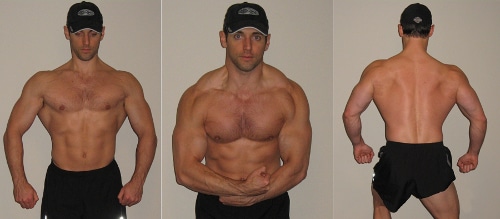
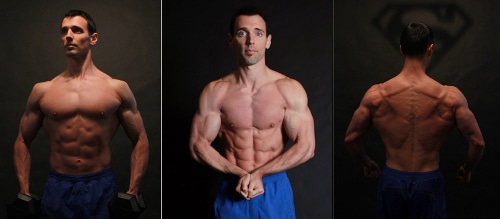
Well, for body transformation, Intermittent Fasting works. Over the course of my experiments, I dropped twenty pounds of weight, from 190 pounds to 170 pounds, and I was pretty lean to start with. I also reduced my body fat from 10% to 4% (measured via a well-validated ultrasound protocol) while maintaining most of my lean mass. And I kept it off. In addition, I saw some interesting improvements in my health profile.
You can check out my before and after pics below for some visual evidence:
Beyond vanity, the reported health effects of an intelligently designed Intermittent Fasting program read like a laundry list of live longer, live better benefits including: reduced blood lipids, blood pressure, markers of inflammation, oxidative stress, and cancer. Increased cell turnover and repair, fat burning, growth hormone release, and metabolic rate. And improved appetite control, blood sugar control, cardiovascular function, and neuronal plasticity.
Wow is right! At this point, if your wheels are turning, that’s a good thing. But be careful. This article isn’t designed to persuade you to try Intermittent Fasting right away. Rather, it’s designed to simply get you thinking about your own eating plan. And, if it needs improvement, how you can think about starting.
Fasting Best Practices
If you’re a busy guy, work 50 plus hours a week, and spend most of your free time shuttling kids around and working the honey-do list, working out daily and eating 6 meals a day may be challenging. So skipping a few meals and looking like the Men’s Health cover model may sound pretty appealing.
But not so fast. You can’t just skip meals willy-nilly and get awesome results.
Remember, some of these fasts follow very specific protocols. Just eating haphazardly and then not eating is what gets many people overweight in the first place. But if you’re keen on giving IF a try, here are 9 things that you must first consider.
1. Food choices matter. Just because you’re not eating often doesn’t mean the basic rules of good nutrition don’t apply. Fasting for 20 hours and then spending 4 hours eating pizza, Twinkies, and half your kid’s Halloween loot won’t get you lean. You need to focus on good sources of protein, healthy fats, high quality carbohydrates, and lots of fruits and veggies. (Your mom was right about that one.)
2. Be patient. If you’re a big fan of breakfast, fasting is going to be a major test of willpower–especially for the first few weeks. In my case, the early stages left me suffering from massive stomach rumblings, hunger cravings, and big-time morning moodiness. I did my best to stave off the breakfast cravings with a few cups of green tea or coffee, but I still felt really bad. Luckily, I told my friends and family what was going on, and they’re a pretty understanding bunch. But here’s the good part. It gets better–much better–after 14 days or so. Stick it out. You’re not dying –you’re just hungry.
3. Exercise helps. The best fasting protocols had me hitting the gym as hard as ever, empty stomach be damned. There’s a reason for that –exercise drives the fat loss bus.
4. Timing is everything, but not the only thing. I experienced the best results when I fasted for around 16-hours per day, followed by an 8 hour eating window. I usually ended my 16-hour fasts with a workout. Then I ate my largest meal of the day. However, other less stringent protocols also delivered results. Experimentation is the key.
5. Progress slowly. It’s important to start with the trial fast and allow yourself to get “good at it” before graduating to more frequent or complicated fasting protocols. Many find going just a few hours without eating unbearable. It takes practice and willpower, so be patient. Dominate the easy steps before moving further up the fasting ladder.
6. Don’t overdo it. In my case, after achieving great results with a weekly fast, I tried doubling the frequency to twice a week to see if I’d get twice the results. It didn’t happen. More isn’t necessarily better.
7. Eat meat. I ate upwards of three pounds of meat a day to get my calorie and protein requirements. Now, I’ve always been an omnivore, but during extended fasts, where meals are so infrequent, eating meat is even more important. Of course, you can still do this if you’re following a vegetarian diet. It’s just more difficult to meet your calorie needs for the day.
8. It’s still a lifestyle. There are no diets, only lifestyles. And any diet that you couldn’t theoretically follow for the rest of your life is doomed to failure. During my first few fasts I was convinced that there was no way I could eat like this for life. But after a few weeks, I was loving it, and it was a breeze.
9. Some shouldn’t do it. I think anyone and everyone should attempt the trial fast. Trust me, you learn a lot about yourself when you go without food for a full day. However, for the more regular or more extreme forms of fasting, I’ve found they’re more successful when:
- You have a history of monitoring calorie/food intake (i.e. you’ve “dieted” before).
- You’re an experienced exerciser.
- You’re single or you don’t have children.
- Your partner (if you have one) is extremely supportive.
- Your job allows you to have periods of low performance while you adapt to a new plan.
Granted, these are just observations. There are folks who have kids, busy careers, and tons of responsibility who love IF. And again, the real rough period usually ends after two weeks or so. However, if it’s not for you, it’s not for you. Again, there are other ways to eat and exercise to develop a lean, strong, healthy body.
Remember the Basics
One more thing. It’s important to remember that there’s no magic pill (or magic eating plan), and when all’s said and done, mastering the basics is still your best approach. What are the basics?
- Eating good quality food. Fresh, unprocessed, nutrient-dense food is a must, regardless of eating style. So make food awareness a priority and make the best choices you can afford.
- Eating slowly. Rushing through meals impairs digestion and confuses satiety centers in the brain. So slow down. It helps control intake and improve your enjoyment of eating.
- Eating reasonable portions. When calories are controlled, progress is made. Overeating is still possible with IF, just as it is with every other eating style. So pay attention to food amount.
- Eating when you’re hungry, and not eating when you’re not. Learning to tune into your appetite and listen to your true hunger is important. Using mindfulness during meals is a best practice for healthy eating.
- Regular exercise. Of course, exercise and healthy eating are two sides of the same coin. They both help promote health and a lean body but in different ways. So use both.
Interestingly, these things are enough for most people to get in the best shape of their lives. No Intermittent Fasting required. I know that because I’ve been in this business for 20 years and have helped a lot of clients achieve success in fat loss and improving health. Very few of them did any more than the trial fast, but all of them are taught those essentials. So, if you’re a beginner, please start with these.
However, if you’re a little further down the fitness path, I will say this. For a very specific demographic–people with fitness and exercise experience who also consider breakfast 15 minutes they’ll never get back–IF could be a very effective approach. Maybe even the best approach.
Just don’t tell Mom, okay?
_______________________________________
If you’re intrigued by Intermittent Fasting and want to learn more, Dr. Berardi has published an absolutely free e-book on the subject called Experiments with Intermittent Fasting. In the book, he gets into all the different fasting approaches he tried, including details of his exercise programs and his exact eating plans, as well as which ones could work best for you. There’s also a great section on nutrition best practices and self-experimentation.


{ 188 comments… read them below or add one }
Next Comments →
No love for Martin Berkhan?
I’ve been doing IF for a about 6 months now and I love it. I feel healthier and more focused and I find I have greater energy and better control over my appetite. I will do this the rest of my life.
Very interesting article. I’ll have to look into this. I already eat very well (vegan, minimally processed grains, and no junk food whatsoever) and I work out multiple times a week.
I’ve tried fasting for one day before, and, WOW, it was difficult! With the potential results you mention, though, I think I might give it another try.
Thanks for the detail!
If you’re interested in IF, look at Eat Stop Eat by Brad Pilon.
I was just reading about IF today at leangains.com. Looks like something worth trying.
I’ve been doing this for over 10 years (started in high school) and had no idea this was becoming some sort of new “it” thing. It just always sort of came naturally to me.
If I may make a few notes based on my experience with eating like this and exercising: eat lots of high protein meats and fish such as salmon specifically, lots of healthy fats (nuts, avocados, etc), and fruits like papaya, mango, berries. If you choose to eat carbs, go light.
I was always working on gaining muscle instead of reducing fat, though, so please take that into consideration depending on goals.
Also, if you can get buffalo, wild boar, or deer, those have higher protein content per weight (in that order) than beef, pork, chicken (in highest to lowest protein vs weight).
Best of luck!
If you guys find this hard get some help and advice from a Muslim friend.
Muslims do this lots at different levels, bare minimum being Ramadan 30 days of fasting Other Islamically prescribed fasts include 3 times a month when the moon is full (cops will tell you crime spikes on these days for some mysterious reason and the fasting may affect this), every Monday and Thursday, every 3 days, every 2 days, and the best fast is every other day called the fast of the Prophet-King David (Dawud), and not surprisingly there are medical studies on fasting alternate days extends life expectancy. There are other fasts like the perpetual fast which is every single day (except certain days like Eid) which go on for decades. But these arent merely physical, they have psychological, social, spiritual dimensions too. You cant lie, gossip, argue and at a higher level you must be vigilant over your thoughts and fast mentally so you focus on remembering God alone.
Discipline? You bet!
I would check out Martin Berkhan at leangains.com, also. Very informative stuff. He should have a book soon, but don’t ask him about it.
“There are no diets, only lifestyles.”
There is so much win in that statement right there.
Hi,
Interesting article. You explained IF very well there. Just one thing: you said you gained muscle and lost fat, I think you did lost both fat and muscle. At 190lb and 10% body fat you had 171lb of lean body mass, while at 170lb and 4% body fat you had 163.2 lean body mass. Although your physique looked more ripped I think it has more to do with less body fat. I am hesitant about IF because I’m afraid of losing the lean body mass i gained(I was very skinny a few years back). Working out hungry is also not my style, I think we need enough fuel for our powerlifts. I still see value in IF though and I might try it out too when I get achieve my fitness goals. Good luck to those who will try IF and well done to those who have succeeded!
The daily fast sounds a lot like a diet described in a Pavel book which recommends no meals or small, light snacks followed by one satisfying healthy meal at the end of the day.
IF? Try Intermittent Anorexia.
Anything can be good in moderation -I’m not saying IF doesn’t work, nor that it can’t be done in a healthy way; just don’t let this kind of regimin get away from you -take it from someone who knows – this kind of thinking can be dangerous.
This is a certified great lens. Food really counts if your starting to build up your body. In 3 years I’ve been experimenting ways on how i could fin myself slim and fit. Until i got to try ways that made so much changes thanks to http://www.curbburn.co.uk/ it paved the way for me. And somehow for this great tips i’m still going to apply with the concern of the meals i have.
Although he is really lean, he is cheating on the before/after part:
With the difference in background and lighting. Try it yourself in front of a mirror, first in daylight and then at night using a spotlight from above. Your muscels will be accentuaded by the shadows..
Nice post though, I might give IF a try!
Although he is really lean, he is cheating on the before/after part:
With the difference in background and lighting. Try it yourself in front of a mirror, first in daylight and then at night using a spotlight from above. Your muscels will be accented by the shadows..
Nice post though, I might give IF a try!
Sorry but I’m calling fad. Especially from the “Chief Science Officer” from an internet diet program with “five easy steps” that he won’t mention til you sign up and pay. That is one step off an informercial. Losing weight isn’t rocket science people. Energy out > energy in. Simple formula I’ve given you there. Now give me five easy payments of $49.95 and wait for the DVD to arrive in the mail.
Nice, now you’re taking nutrition advice from someone who is an avid user of Anabolic Androgenic Steroids? not that I condemn steroids, but fasting without steroids leads to very different results WRT lean body mass, and you can’t workout intensely after 16 hours of fast without stimulants and steroids.
(Google is your friend, if you don’t believe this guy is a heavy user)
Eat less.
Eat better.
Move more.
Why the fuck are people making this complicated? Seems to me that if someone is limiting the period in which can eat to only 8 hours per day, they’re probably going to be eating fewer total calories than they would otherwise.
This is probably the most sensible advice. http://www.theonion.com/video/fda-official-just-eat-a-goddamn-vegetable,18905/
It’s not a question calories in=calories out – I strongly advise to read Gary Taubes Good Calorie/Bad Calories.
Since I stopped counting calories and focusing on good food I just have the weight I want and I do not suffer.. About the article, I think it is kind of substandard for Aom… 1 – There are evidences out there that IF can improve lot of things but almost nothing is in the article. 2 – The photos are just ridicolous. I mean what’s the point of doing photos with such different lighting. Even if there were huge differences, everybody would think that was just for the lighting.. Anyway I will read the ebook and see…
Joe – I think you’re thinking about the “Warrior Diet” by Ori Hofmekler.
It’s easy to read something that goes against everything you’ve been doing to reach your goal (ie eating 6-7 small meals). If you’ve already met your goals, awesome, keep it up.
But if you’re sticking with the same thing that hasn’t gotten you to meet your goals, new information or a different way to approach it isn’t a bad thing.
The author says it, but it’s just not thrown directly at you…experiment and see what works for you.
This was basically what I ended up with after experimenting last year. I had it working pretty well by the time I found a job. I have to start back up again. I’ve been getting a little round since I lost said job.
I usually do the half day fast. After dinner/last time I eat, I don’t eat until breakfast. Seems pretty easy to do but you never realize how much you eat before bedtime.
Hey, do you recommend this plan for teenagers?
Logically, it seems impossible to gain muscle when starving your body. Fat loss? Sure. Muscle gain? Doubtful.
Sounds to me a lot like changing the oil in car. Once in a while you have to drain it completely, but then it runs better.
The IF – particularly the half day -sounds a lot like what doctors and health experts already say, when you think about it slightly different.
Follow me for a minute, here. Fasting for 16 hours? How long do most people sleep? 8? So that leaves 8 hours out of the day that you fast. You could say you don’t eat anything for 8 hours before you go to bed. Or for four hours on either end of sleep. That’s just what medical experts say, anyway – to help with better sleep!
If you go to bed at 10 pm, and bookend your sleep with the fasting period, that means you can eat anywhere between 10 am and 6 pm. That’s enough time for a few small meals… or two big ones – breakfast, and an early dinner/late lunch (what I usually do).
There’s a reason it’s called breakFAST.
The laws of thermodynamics can not be superseded. IF just makes it harder to do so. Ergo the benefit for you fat loss folks.
On the other hand it is possible to get fat and get lean mass or do whatever you want on IF. Just pay attention to thermodynamics and it doesn’t matter when you eat what you eat.
I think this can be a great plan for people who are busy. Its easy and sustainable and after your hormones adjust to the new ‘feeding’ times you will literally not be hungry ever. (I did IF all through college (except I didn’t know it)) The dining hall was open from 11-2 and 5-7 so that’s when I ate haha if only I knew I was on the cutting edge at the time…
Kris, you aren’t starving yourself when you don’t eat breakfast. You are starving yourself if you don’t eat for three days. Muscle gain is absolutely possible (just eat more)
I can also attest to this diet, er, lifestyle.
I’ve been doing IF for the past year and a half and instead of gaining 10 pounds every winter, I’ve gone from 200 to 185 and am staying there with zero effort.
A few things to add from my experience that might help someone:
1. The first week is the toughest. Use the Power of Implementation Intentions from one of the previous AoM articles to help get through it as your mind/body adjusts. If you’re still starving during your fasting window after a week or so, you’re probably not eating enough or enough of the right foods (protein) during your eating window.
2. I don’t think this article stressed the importance of exercise enough. Even if you’re really heavy, at least get out for daily walks but weights are better as muscle will burn more calories, even while resting. Cardio only burns calories while you’re doing cardio. Better yet, do both on alternating days for starters.
3. Have a cheat day. If you start this on a weekend (recommended), then the following weekend, eat whatever the hell you want. I’ve not given up pizza or fried chicken, bread or even sweets; I just don’t eat it that much anymore, so I don’t feel deprived and it’s a great reward system.
I just turned 42 a few weeks ago and am seriously in better shape than I was 10 years ago, thanks in part to IF.
Go for it!
For any of you gentlemen of the Christian persuasion, check out http://www.E5men.org. I have fasted one day a week (only liquids) for my wife, my daughter, and my mother for three years. The days I fast, I feel more focused, and full of energy, knowing that I am offering something for the women in my life.
Gentlemen,
One HUGE caveat is missing from this post.
Unsupervised fasting is not a good idea for anyone who is diabetic. I’m not speaking of an occasional missed meal, but to do routine one or two day fasts can really mess with your blood sugar levels. You need to consult with your physician (or endocrinologist) on how to manage the condition during a fast.
I’ve heard of IF and its benefits–and while I haven’t tried it yet (still researching) it looks pretty legit. http://www.marksdailyapple.com/fasting/#axzz1kTvkDhrw
(On a purely aesthetic note: I really prefer the ‘before’ picture. When a person can count every bone in their spine, there’s something a bit grotesque about it….but that’s just me.)
IF + Paleo = Crazy Success
The guys who do fights at our MMA school do various forms of this for a few months prior to a fight. Even our head instructor was experimenting with it. But Rickson Gracie, who won more than 400 professional bouts of MMA and jiu jitsu, and who is our inspiration, never cut weight.
Personally I think your “before” pictures look healthier. But I’m not a bodybuilder. Performance in martial arts is my emphasis.
@recoveredanorexic – Have some arsenic “in moderation”. Or chow down on some lead “in moderation”. Uranium? No problem. “In moderation”.
All or nothing. Moderation is B.S.
Sometimes I like to preoccupy my mind with a project for an afternoon and evening and “forget” to eat dinner. Then after a full night’s sleep I feel great in the morning.
I’ve been fasting on and off for 15 years now. After the 3rd day of not eating you don’t even feel hunger any more. Food becomes an after thought. The trick is getting past the 3rd day. If you don’t make it 3 days, try again and again until you do. After that you won’t feel weak or light headed and your stomache stops growling. and after the 3rd day of fasting, a glass of water or beer will make you feel like you ate a thanksgiving dinner. you will limit yourself to half a glass of water so you don’t feel that full again.
I’m a Lap Band patient that has had some pretty awesome success with my surgery. I don’t eat a lot anyway so cutting it down to nothing wouldn’t be something too difficult. Would “IF” be something I should consider since my stomach has been altered?
I’ve done this and it works. It is however very dangerous. I wouldn’t recommend it to anyone without having access to a REALLY good doctor.
Now, years later I’m stuck with medical problems I wouldn’t have thought of back then, all due to fasting without REALLY knowing what I was doing.
When you fast you don’t just lose fat; you lose muscle as well. Your heart is a muscle, and you don’t want to screw with your heart.
I know, lots of people fast and may never have ill effects. Cultural aspects may play an important role in this, or any number if things including genetic makeup and a predisposition for certain diseases.
Bottom line, this is terrible advice to generalize about.
Like using steroids, better to think this through and understand your physical and psychological makeup before starving yourself.
IF works well, but I wouldn’t recommend it for someone who has not been training for at least a year. If you are fat and weak, do not do this to start a training and nutrition program. The metabolism must be stimulated initially with frequent, small feedings. Once there is some muscle mass involved, then IF becomes a great option.
Also, to the author, before and after pics should be with the same lighting so as not to skew the results. Good progress, though. Thanks for the article.
Thanks to everyone for your feedback about the article!
At this point, a lot of your questions (and all of your concerns) are well-addressed in the free e-book myself and my co-authors published on this subject.
Obviously, it’s impossible to get into all the details of a 9 month long experiment – along with all the research support – in a single blog post. That’s why I highly encourage you to check out the book before rushing to judgement.
In the book, we discuss, in detail:
-The different protocols we tried
-The research support for these practices
-The impact of IF on health and wellness
-The impact of IF on muscle gain and fat loss
-The cautions we have for different populations trying IF
-Which authors most influenced our practices
-And much, much more
In the end, the book is totally free – you don’t even have to share your email address to get access to it. And we wanted it to be free because IF is becoming a very, very popular practice in the fitness community and we wanted to share an important resource on the topic with as many people as possible.
Here’s the link:
http://www.precisionnutrition.com/intermittent-fasting
This sounds like it should appear in Men’s Health, not AoM. It seems pretty inconsistent with the rest of the site’s philosophy.
wait, what….. you mean if i dont eat meals, i’l lose weight? You dont say.
As far as the comments on the nature of the photos – I totally get what you’re saying.
By way of explanation, at the end of my experiments, I was really proud of my results. So, instead of doing regular photos, I did a professional photo shoot to document my physique changes. These are the photos I got.
Although there are lighting differences – and shadowing as well – if you really examine the photos, they do show some pretty marked differences that lighting alone cannot explain.
Plus, in the free book I publish all my weight, body comp, and health data. So you can see that I’m not trying to trick anyone here.
This is an honest experiment, with a real transformation, with verifiable data – and it’s all published for free.
Yes, I know the fitness industry is generally full of shady individuals of ill repute. So it’s completely justifiable that some of you may come into articles like this with profound skepticism.
However, that’s not what our organization is about. Precision Nutrition is the world’s largest online nutrition coaching company and we believe strongly in our mission of bringing life-changing, research-driven, nutrition coaching for everyone.
Hope that helps.
If you are planning on training while fasted it is best to remember to take some BCAAs and some caffeine. The BCAAs will help you body to keep from breaking down muscle and the caffeine will help keep your energy up. Without food training can be a real bear.
Brad Pilon was all over IF years ago when PN was still preaching eating every 3-4 hours or you would be “start losing muscle”.
The fitness / diet industry has a horrible track record of deliberately convoluted systems, basically because you can’t sell a book that only says “eat less food and go for a run”.
The main issue for me is that anyone advocating a for eating food in a complicated, highly specific way really needs to show why the highly specific way of eating is actually necessary.
The myth of having to eat multiple times a day: http://examine.com/faq/do-i-need-to-eat-six-times-a-day-to-keep-my-metabolism-high.html
And Francisco – every single study shows that it is about calories in-vs-out in the long run: http://examine.com/faq/what-should-i-eat-for-weight-loss.html
LOl at the differnce in lighting between the before and after pics. That instantly makes me question this guys credibility.
That kind of trick belongs in the shady ads for useless supplements you find in Bodybuilding mags, not on a site like this.
Wow, what a terrible article to have on a website like this. Let alone if it works or not, this is advice for people who are already incredibly focused on their diet and exercise.
Not only that, but it really should be accompanied by an article by Ben Goldachre, Tim Caulfield or someone else experienced in interpreting science for the layman. Without a proper sample size, or any attempts at blinding, all this tells us is that these guys don’t know how to properly perform an experiment.
Have we become so out of touch with our bodies that we need directions on how not to eat?
No one needs to show why! He isn’t telling you to do it. He’s not saying it’s the only way. He wrote an article about his experiment with it. VERY open-minded of him… since like he said, he built his career & helped many with his “eat every couple hours”. What?? You have never changed your mind or tried something different? It’s simple, if you already have the answer than this article is not for you. If you are still looking for an answer, then MAYBE this article is for you. Try it or don’t. It really is that simple.
@Monique:
That’s all fine and well until you bring career into this. It’s not open minded or doing people a favour to tell people about the thing you’re selling — it’s your job. There’s skin in the game here.
As potential customers we’re simply turning around and asking “sure, but what does the special thing about your product actually do?” If you’d ask it before buying a washing machine or a car you owe it to yourself to ask it before putting yourself through a diet plan.
Just coming off a 21 day Daniel fast with my church. Great info…looking forward to trying this.
I have a question! What about sleep time? Does it affect how many hours you need to be fasting for this to work properly?
I was thinking that if my daily 16 hours fast period was, let’s say, 5pm to 9am, and I wake up at around 8am to do a daily excercise routine, followed by a big, healthy breakfast… then that wouldn’t be too different to what I do normaly, I’m just asleep for at least halft the period of fasting.
Lots of great feedback here – on both sides of the fence.
In the end, this article isn’t intended to promote any one specific way of eating. Nor is it here to sell a product. Again, the e-book we link to from the article is absolutely free.
Rather, this article is here to act as a gateway toward discovering interesting and useful ways to manage health, body composition, and performance.
If the article’s not for you, no problem. If it is, I highly encourage you to check out the actual book. Again, it’s freely available to anyone visiting the link in the article above. With no “catch.” And it’s full of great nutrition advice, whether you choose to try IF or not.
Again, I get that the fitness industry is full of questionable advice and smarmy marketing pitches. And that many of you are highly skeptical of this. However, if fitness is a priority in your life, there’s something interesting to be learned here if you keep an open mind.
Myself and my co-authors are experienced nutrition coaches (having worked with over 8,000 clients in the last 4 years), our coaching and research team is legitimate, with MDs, PhDs, RDs and more, and we deeply care about helping further the health and nutrition field.
So, thanks again for all of your feedback. And for those interested and curious for more information, please visit our free e-book.
Best!
@NicoR: great question, one we answer completely in the free e-book. In essence, most people find that this practice is easier when they are sleeping during a large portion of their fast. Hope that helps.
@Stephen: you’re absolutely right.
However, in this case, we’re not selling anything. The information about our experiments, as well as the studies that we reference in this article, are completely free. We don’t sell any products or services related to intermittent fasting.
Of course, we do have a nutrition coaching and education business. However, we consider it an important part of our business to offer lots of free education.
So, if you’re looking for useful, well-researched information on fitness and nutrition, we offer lots of it on our site for no charge.
@Jeff: Yes, indeed. Many people have lost touch with how to eat and how not to eat. And, beyond those that need help with the basics, many others are looking for some guidance on how to eat and exercise for optimization.
@Keith: I encourage you to find out a little more about us. I’m a PhD trained scientist and do respect the scientific method. This project was a case study, also a legitimate scientific exploration. And, as discussed in the free e-book, we’re following it up with further university studies.
@Shano: I address the lighting thing some posts above. Nothing shady here. And, even with the lighting changes, the physical changes aren’t subtle. Further, all the actual data are presented in the free e-book.
@KK: Brad Pilon, Martin Berkhan, Ori Hofmeckler, and a host of others are mentioned in the free e-book. If you’re looking for a review of the different IF systems, you’ll enjoy the one we published there.
Further, PN does still recommend eating every few hours – for certain individuals. For others, less frequently. Again, the details are outlined in the book.
@Mike: great point on the use of BCAAs during the fast or during fasted training! We outline all our best practices in the free e-book. We’re only scratching the surface with this post.
@Jason: Agreed on the fact that IF isn’t for everyone. We detail the ideal conditions in the free e-book.
As far as the idea that small, frequent feedings stimulate the metabolism – that has been debunked by recent science. That doesn’t mean that small frequent feedings is bad. Rather, it simply doesn’t impact the metabolism significantly.
@Hal: You’re right, this isn’t something to just try without some best practices in place. For those looking to try this out, please read the free e-book. It goes into much more detail than we can here.
@Rodney: IF is probably not for you because it’s characterized by larger meals, eaten less frequently. For your situation, you probably want to eat smaller meals, more frequently. Hope that helps.
@Ian: I’m a track and field athlete, not a bodybuilder. So I need to be light and lean for my sport and my performance. I go into all this in the free e-book.
@Native son: you’re right…with medical conditions it’s important to check with your doc before starting any new training/nutrition plan.
@Kris: we’re about to publish a study on our web site showing an intermittent fasting plan that helped a client gain 20lbs of lean mass very quickly. It involved periods of overfeeding, underfeeding, and fasting. So, yes, muscle can be gained if using intelligently designed fasting programs.
@Sam: teenagers can certainly do fasting, as long as they do it intelligently. I highly encourage you to read the free e-book linked to above to see if it’s right for you. And, if it is, how to do it.
@Mushon: while you have no reason to take my word for it, the entire experiment was done without anabolic steroids. I’m a 39 year old track and field athlete with a family and I have no place for anabolic steroids in my life.
Further, while I’d love it if you didn’t level accusations about illegal drug use, this is the internet after all. And it’d probably fall on deaf ears.
I can attest to some of the things he said to be true. Since December, I have been following the Primal Blueprint, and have cut out carbohydrates, e.g., pasta and bread. I haven’t had a traditional fast food meal since, and have cut out sodas.
The result: I have so far lost about 20lbs. and have gone down two pant sizes. And the funny thing is, I do not miss bread, and I am just not hungry anymore. Like the contributor suggested, I have upped my meat intake, but I also try and balance it with a good amount of vegetables. So to the skeptics, this plan does work.
John,
I find it impressive that you didn’t get snarky with the intemperate comments. Thanks for posting your article on AoM.
Rick
John – If you start with a 16 hour fast window from 8pm to Noon and but do not workout till 6pm are you defeating the purpose? I would be eating at least twice before the workout.
@John – If you start with a 16 hour fast window from 8pm to Noon and but do not workout till 6pm are you defeating the purpose? I would be eating at least twice before the workout.
“But here’s the good part. It gets better–much better–after 14 days or so. Stick it out. You’re not dying –you’re just hungry.”
This isn’t quite true John. No one in a developed country is “hungry” after 1 day of fasting. I doubt anyone even knows what it truly feels like to be hungry.
What’s actually happening is people are so sucked into running off of sugar and carbs for energy that their body doesn’t know how to use it’s fat stores.
But that’s what you want. It works best with the daily fast. Those 10-14 days of hard work are what train your body to use it’s fat stores properly. I typicallly do 8-10pm until noon or 1. so 14-17 hours or so.
The daily fast helps you get that conversion process going. Then you can live off of a much higher meat and fat diet, and any carbs you eat will go and stay with muscle stores. This is also why the exercise part is important.
I think it’s been said, but if anyone wants more info just stroll over to leangains.com. Martin is a fairly rational author. Hard to argue with the layout of his articles.
Jarret- you can wait to here John’s opinion, but that is typically what I do. I’m sure it’s better results if you follow a protocal to the T, but you don’t get zero results from what you suggest.
I typically eat at noon, workout near 4, eat enormously afterwards, and again by 8 or 9.
I will say that I don’t actively try to lose weight. But I’m generally able to eat as much as I want and maintain.
I also do not work out everyday. I follow a typical 3day a week weightlifting program. On rest days I simply dont have a 3rd meal…or if I do it’s small. I’d say read his free book, or go to leangains.com. Most of the basic questions should be easy to find answers to.
Thank Chris. I Crossfit but have worked hard on taking my strength up with that my weight has gone up. Just want to lean back down and this seems like a simple way for me to do so.
I think the most important aspect to stress is for people to discover what works best for themselves. There is no miracle cure, or even a best method.
I tried periods of IF, and It wasn’t for me. My performance, attitude and overall health did not benefit from a similar program. For some, this may very well work, but for others, the opposite is true.
While I may not have the impressive physique the author has, I have lost 95+ lbs in the last year by doing the exact opposite, eating breakfast, and smaller ,more frequent healthy meals and including a well rounded fitness routine. For some people, that method may not work either or bring results they are looking for.
At the end of the day, education and experimentation in different diet and exercise methods are keys to success, but the ultimate key is simply making healthy choices daily. If you do that, you will succeed in your mission to improve your health.
@Jarrett: you can do this dozens of different ways (check out the free e-book for more discussion). For example, you could fast from 9 pm – 1 pm, then have a meal or two, and train at 6 pm, then have your largest meal of the day after training. That would probably work just fine as long as you do a good job with your overall intake. Or you could shift your fast so that you actually break the fast post-workout at 6pm ish. Or you could just fast 1 day per week. Again, lots of ways to do this. Check out the e-book for more.
@James: well said! And that’s what we communicate in our free e-book. It’s not about following any system or method blindly. It’s about rational self-experimentation. Or even guided experimentation (if you feel you could use a coach).
This guy looks kinda weird, like works-out-too-much psych. imbalance weird.
workout ok, fast sometimes, sure, but he overdid it.
What is with the huge amount of negativity towards this article?
Firstly, John Beradi has been in the fitness and nutrition industry for a VERY long time. There are only very few people on this planet that have more experience RE body re-composition than he does.
This article is SOLID.
Really disappointed to see this kind of faddish, sort-yourself-out instantly stuff on an excellent blog like AOM.
The orthodoxy is there for a reason. Fasting done wrong can easily make you fatter by lowering your metabolism (not to mention loss of attention at work, and so on).
I feel like with an article aimed at weight loss, this site has taken a turn for iffemination. It’s like a male Cosmopolitan.
@Kim: It’s okay…folks are skeptical of the fitness industry. And, often, for good reason. So I don’t expect people to trust me or respect my work upon the first exposure – especially if they have no interest in the topic. If they are genuinely interested in this area and the go on to check out the free e-book, they’ll discover that our team is legitimate and in this to help people.
@Dane: this article is all about losing weight and getting leaner so I can improve in track and field. I’m a masters level 100m sprinter. Perhaps that’s effeminate for you, too?
@Sam: nothing faddish at all here…fasting has be practiced for FAR longer than the current nutritional orthodoxy. But you’re right, done wrong, any nutritional practice can be bad. That’s why the article goes into best practices. And even more are shared in the free e-book.
“They claim to have achieved quicker fat loss and better health by deliberately skipping breakfast.” Whose they? What are there qualifications for making this claim? Citation needed.
@John Berardi: in re:
=================
@Jason: Agreed on the fact that IF isn’t for everyone. We detail the ideal conditions in the free e-book.
As far as the idea that small, frequent feedings stimulate the metabolism – that has been debunked by recent science. That doesn’t mean that small frequent feedings is bad. Rather, it simply doesn’t impact the metabolism significantly.
=================
I should have specified that I am referring to the difference between fatties who gorge once a day waking up their metabolism by frequently feeding. Not comparing metabolic rates of normal folks eating 3-4 times a day versus 6-8.
This article reminds me of Ori Hofmekler’s book The Warrior Diet. He talks about sustained periods of calorie deprivation followed by eating lots of calories in the evening. Definitely not a new idea. For a somewhat related approach (if fasting from any and all calories is not for you) check out Tim Ferriss’ book The Four Hour Body. Tim details a nice outline for fasting from “fast carbohydrates” for 6 days and then on the seventh day of the week allowing yourself a cheat day for bad calories. I’ve experimented with both approaches mainly because my busy schedule didn’t allow me sufficient time to have a decent meal. I kind of vacilate between both “diets”. I do appreciate John mentioning that any approach to eating is more rightly labeled a “lifestyle” than a diet. I tire of the question, “What’s your diet like?” I don’t feel I can fairly call how I eat a “diet” especially because I refuse to give up beer, except maybe during Lent.
John Romaniello (Roman) just wrote about this exact same topic, he says he hasn’t eaten breakfast in 14 months… go to http://www.fatlossforever.net and you can download his free PDF about the same thing… I’m now fascinated and I think I’m going to give this a try
Very nice post!
It’s a coincidence to read this today, because last week I decided to definitely lose fat and gain some health as I was feeling fat and weak. I am doing for 10 days some of what IF does, but without knowing.
I was used to eat whatever, whenever. And when lunching home, I used to eat until tiring… So I started this, I am eating just one plate for lunch, composed mostly of salad, meat and some carbohydrate, but trying to never eat rice. Or pasta. Then I spend the entire afternoon without eating anything, just drinking some cups of coffee, then when I arrive home I dinner, with a little more fat then on lunch.
After that, I spend 18 hours fastening, until the lunch of the other day.
Although sometimes the hunger seems to eat me alive, overall I’m feeling a lot more healthy. My my mood, liveliness changed, and I am happier. Didn’t weighed yet, and still don’t see any difference in my body, but I don’t feel so heavy anymore.
Dane, I must respectfully disagree with you. While you (and I) may not 100% agree with the method listed above, nothing about weight loss in effeminate. Making smart, informed, and healthy decisions are part of being a man. A man who takes care of himself, proper nutrition, moderate exercise, makes himself a better man.
Dane,
Actually, not losing weight when overly fat is a path to a rise in the female hormones and a decline in the male. Long periods with extra body fat can often lead to estrogen dominance. Estrogen dominance, in turn, can lead to even easier fat gain, among other health problems.
Roland
I’m a major proponent of IF and I love seeing it get some mainstream recognition. However, though it’s redundant to point out now, Berardi did do some very typical modeling cheats with his before and after photos, specifically the change in lighting.
@James
Agreed. It’s really just a strange thing to say. The question is *how* should you get lean, not *if* you should.
@Stephen,
Exactly my friend! Statements that imply it is “un-manly” to worry about weight loss and nutrition set men back more than anything else. One of the reasons men have lost respect is due to society (mainly popular media) showing men to be overweight, lazy, man children. While I do not encourage or expect men to become bodybuilders or never eat cake, actually being lazy and eating nothing but poor food only helps to support those images.
I have a question John, and my apologies for not having read the free e-book yet – I intend to. WIll this method work if the fast period ends at breakfast, i.e. you exercise & eat a big meal in the morning? thanks
I am an avid Crossfitter and Crossfit coach and I just got off of a strength/bulking cycle. I just started researching IF as a way to slim down on some body fat and maintain my strength. I started doing the daily fast last week from 8-9 p.m. til 12-1 p.m. and have enjoyed it for at least this past week. I have maintained a very strict diet through my strength cycle and it has been interesting coming off that diet and cycling my carbs between workout days and rest days as well as skipping breakfast (my favorite meal hmmm Bacon). I have definitely been more mentally acute in the mornings as well as the evenings. I usually workout at 5 a.m. and then work my day job at a financial brokerage and coach two crossfit classes at night. I am a huge proponent of self experimentation when it comes to diet and exercise because a lot of my clients ask for my opinions on nutrition and diet. It will be interesting to see how this affects my performance in my workouts in the long term.
It is funny to see how people react to nutrition and dieting advice. People take it very personally and often poo poo the idea of trying different things. I could tell you to swing a dumbell between your legs and sing Winnie the Pooh to help with your biceps and people would try it, but you tell them to put down their favorite food for a few weeks and try something new and BOOM! HOW DARE YOU SUGGEST I CHANGE?!?!
As far as this not being a manly issue? Are you serious? Do you respect a man who is a physical slob?
Next Comments →